






A Partnership Solidified in the Stars
The India-US relationship has been steadily strengthening, but nowhere is the convergence of interests more apparent than in space. This collaboration is built on a foundation of key strategic agreements. India's signing of the Artemis Accords in 2023
was a landmark moment, aligning the nation with a US-led international effort to ensure sustainable and peaceful lunar exploration. This was more than a symbolic gesture; it signaled a shift towards deeper interoperability and shared goals in space governance. This framework is complemented by the Initiative on Critical and Emerging Technology (iCET), recently broadened into TRUST (Transforming the Relationship Utilizing Strategic Technology), which explicitly includes space as a pillar for bilateral cooperation alongside AI, quantum computing, and semiconductors. These agreements provide the architecture for a partnership that is moving from ambition to action.
NISAR: A Testament to Joint Innovation
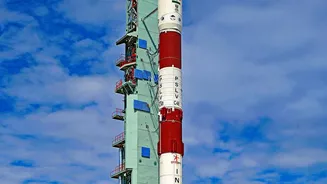
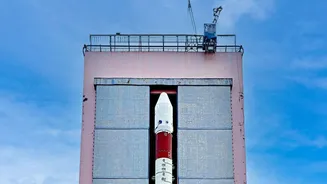
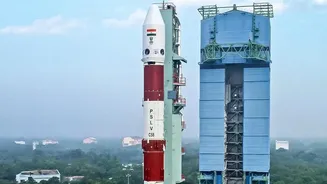
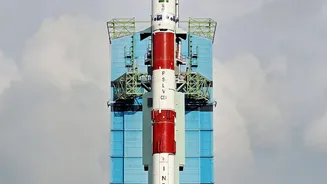
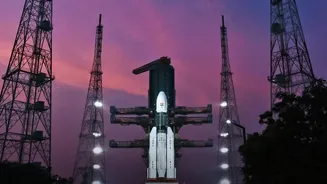
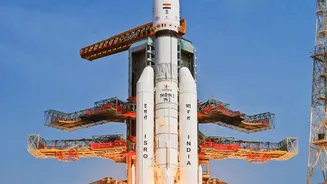
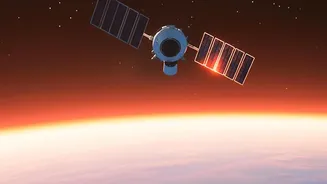
The most tangible symbol of this enhanced cooperation is the NASA-ISRO Synthetic Aperture Radar (NISAR) mission. Launched successfully last year, NISAR is the first satellite hardware jointly developed by the two space agencies for an Earth-observing mission. ISRO provided the spacecraft, the S-band radar, and the launch vehicle, while NASA contributed the L-band radar and other critical components. This dual-frequency satellite is designed to monitor changes in Earth's land and ice surfaces with unprecedented detail, providing crucial data for climate change monitoring, disaster management, and agriculture. The success of NISAR serves as a powerful proof-of-concept, demonstrating that NASA and ISRO can seamlessly integrate their technological prowess to achieve complex scientific goals. This deep collaboration on a sophisticated mission builds trust and paves the way for more ambitious joint ventures in the future.
From Human Spaceflight to a Lunar Outpost
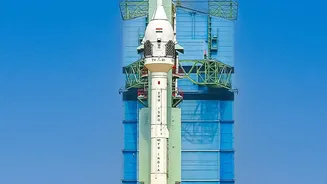
The cooperation now extends to human spaceflight, a critical domain for any major spacefaring nation. As part of the partnership, two ISRO astronauts have undergone training at NASA's Johnson Space Center, preparing for a joint mission to the International Space Station. This initiative provides invaluable experience for India's own Gaganyaan human spaceflight programme. Looking further ahead, NASA has formally invited ISRO to participate in its Moon Base program, an ambitious project to build a permanent human outpost near the lunar south pole. This invitation is a direct result of India’s successful Chandrayaan-3 mission, which made it the first country to land a spacecraft in that very region. Participating in the lunar base would not only elevate India's status as a space power but also accelerate its own long-term goals of establishing a sustained human presence beyond Earth.
Fueling a Broader Tech and Defence Ecosystem
The benefits of space cooperation are not confined to orbit. The technologies developed for space exploration—advanced materials, robotics, AI for autonomous systems, and high-speed communication—have direct applications on Earth. The iCET and TRUST frameworks are explicitly designed to leverage this synergy. For instance, the partnership includes a 'Space Innovation Bridge' under the INDUS-X initiative to connect startups from both countries in areas like satellite technology and space situational awareness. This collaboration also strengthens defence ties, with India participating in US Space Command exercises and working on data-sharing agreements to improve orbital safety. By working together on the most advanced technological challenges in space, India and the US are building a foundation of trust and technical integration that directly strengthens their broader technology and security partnerships.
The Commercial Frontier and Strategic Imperative
This government-to-government cooperation is creating significant opportunities for the private sector. With India's space economy projected to reach $44 billion by 2033, the partnership is helping to connect the mature US space industry with India's burgeoning startup ecosystem. Initiatives to promote commercial partnerships in satellite manufacturing, launch services, and space tourism are underway. India’s liberalised FDI rules, allowing 100% foreign investment in satellite manufacturing, further incentivise this collaboration. This economic synergy is underpinned by a shared strategic vision. As global competition extends into space, the India-US alliance acts as a stabilising force, promoting a rules-based order grounded in shared democratic values. This makes the partnership not just economically beneficial but strategically essential for navigating the complex geopolitics of the 21st century.