





What Exactly Is PJ.2.1?
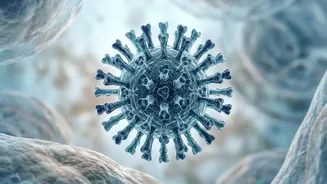
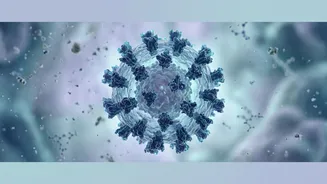
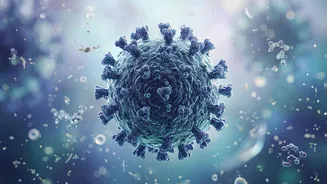
PJ.2.1 is a new lineage of the SARS-CoV-2 virus, which causes COVID-19. It is a descendant of the JN.1 family, which itself stems from the Omicron line. Researchers have described it as a 'saltation variant', which means it appeared with a large number
of genetic changes at once, rather than accumulating them slowly over time. These mutations are concentrated in the spike protein, the part of the virus that attaches to human cells. The first sample of PJ.2.1 was officially documented in Ontario, Canada, on May 2, 2026.
Where Has The Variant Spread?
Since its initial detection in Canada, PJ.2.1 has been identified across the globe. In North America, cases have been confirmed in several US states, including New York, California, and Florida, after first appearing in New York City at the end of June 2026. It is also reportedly the fastest-growing variant in the US based on wastewater surveillance data. Detections have also been made across Europe, with Spain and France reporting cases. Beyond that, the variant's reach extends to Asia and Oceania, with cases noted in Singapore, Israel, Australia, and New Zealand. There is currently no verified confirmation that PJ.2.1 has been detected in India, where the Indian SARS-CoV-2 Genomics Consortium (INSACOG) continues to monitor for new strains.
Is It More Dangerous or Contagious?
This is the critical question with any new variant. Early lab studies suggest PJ.2.1's mutations might help it bind more efficiently to the ACE2 receptor, the 'doorway' into our cells. This could potentially explain why it appears to be spreading. However, and this is a key point, there is currently no clinical evidence to suggest that PJ.2.1 causes more severe disease, a higher rate of hospitalisation, or more deaths than previous variants. A variant can be more transmissible without being more virulent. Experts caution against alarm, noting that while the virus is still around, hospitals are not seeing the same pressure as they did during the early pandemic.
What Are The Symptoms to Watch For?
Health officials, including the World Health Organization (WHO), have stated that there isn't a unique set of symptoms for PJ.2.1. The signs of an infection closely resemble those of other respiratory illnesses like the common cold and flu, making it impossible to diagnose based on symptoms alone. The most common symptoms remain what we've become familiar with: fever, cough, sore throat, runny nose, headaches, muscle aches, and fatigue. Some have noted that a severe sore throat and prolonged fatigue might be associated with this variant, but this has not been definitively established. Testing remains the only reliable way to confirm a COVID-19 infection.
Do Vaccines Still Offer Protection?
Encouragingly, early research indicates that PJ.2.1 does not appear to be significantly better at evading the immunity provided by recent vaccines. One study found that antibodies from an updated vaccine were only slightly less effective against PJ.2.1 compared to other circulating variants, suggesting that current immunisation strategies remain a vital tool. While a faster-spreading variant is worth monitoring, this early data suggests that existing vaccines continue to offer a strong defence against severe outcomes. As always, vulnerable populations, including the elderly and immunocompromised, remain at a higher risk for serious complications from any COVID-19 infection.