

Water for Life and Fuel
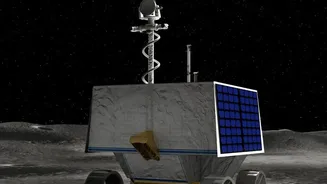
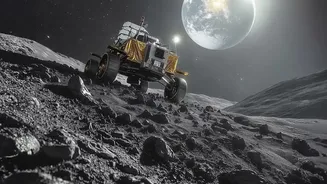
Perhaps the most crucial resource waiting to be tapped is water ice, believed to exist in permanently shadowed craters at the lunar poles. Future missions, like NASA's VIPER rover, are designed to prospect for this ice. Once extracted, water is invaluable.
Beyond the obvious use for drinking and growing plants, it can be split into its constituent elements: hydrogen and oxygen. This process, called electrolysis, provides breathable air for astronauts and the two key components for rocket propellant, potentially turning the Moon into a refuelling station for deeper space missions.
Oxygen from Moon Dust
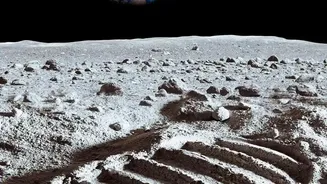
The loose layer of dust and broken rock covering the Moon, known as regolith, is surprisingly rich in oxygen. While not free-floating, the oxygen is chemically bound with metals and minerals like silicon, aluminum, and iron in the form of oxides. Various methods, including molten oxide electrolysis, are being developed to break these chemical bonds and release the oxygen. NASA plans to demonstrate this technology on the Moon, which could supply breathable air for habitats and, critically, provide the oxidizer needed for rocket fuel. This makes regolith a surprisingly vital source for life support and propulsion.
Building Habitats from Soil
Instead of hauling heavy construction materials across 384,000 kilometres, future lunar structures could be built from the regolith itself. Companies are developing 3D printing technologies that can use lunar soil as their primary building material. The process could involve heating and fusing the regolith—a technique known as sintering—or mixing it with a binding agent like a polymer to create a form of lunar concrete. These 3D-printed structures could include everything from habitats and landing pads to roads and protective berms, with robotic systems potentially doing the construction before astronauts even arrive.
Metals and Solar Cells
The same regolith that provides oxygen and building materials is also a source of useful metals. Iron, aluminum, and silicon are all abundant in lunar soil. Extracting these metals could allow future inhabitants to manufacture tools, spare parts, and structural components on-site. Furthermore, the extracted silicon opens up another exciting possibility: the fabrication of solar cells. By creating solar power systems directly on the Moon using local materials, a lunar outpost could generate its own electricity, a crucial step for surviving the long, dark lunar nights and powering all other ISRU activities.
Energy and Future Fuels
Beyond solar power, the Moon holds potential for more advanced energy sources. The lunar surface has been bombarded by the solar wind for billions of years, embedding valuable light elements into the top layer of regolith. One of these is Helium-3, a rare isotope on Earth that is considered a potential fuel for future nuclear fusion reactors, which could provide clean and abundant energy. While fusion technology is still developing, the ability to harvest Helium-3 on the Moon is a significant long-term driver for lunar settlement, offering a resource that could one day power activities on the Moon and even be transported back to Earth.