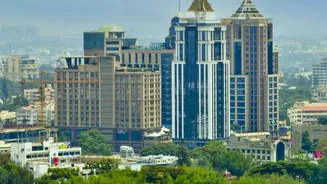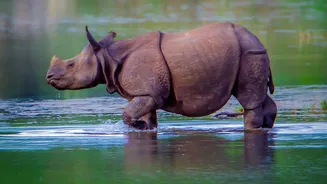






Look out your window. Past the traffic and high-rises, a hidden world is thriving. India’s bustling cities are not just home to people; they are vibrant ecosystems where a surprising array of wildlife has learned to adapt and survive.
The City as an Ecosystem
It’s easy to think
of cities as concrete deserts, devoid of nature. But ecologists increasingly see them as novel ecosystems where humans and animals share space. This field, known as urban ecology, reveals that our metropolises are far from sterile. They are mosaics of parks, gardens, wetlands, and even seemingly useless patches of land that provide refuge and resources for a surprising variety of species. Rapid urbanisation across India has fragmented natural habitats, pushing many animals to adapt or perish. Remarkably, many are choosing to adapt, turning our cities into living laboratories of evolution and coexistence.
Our Wild Neighbours
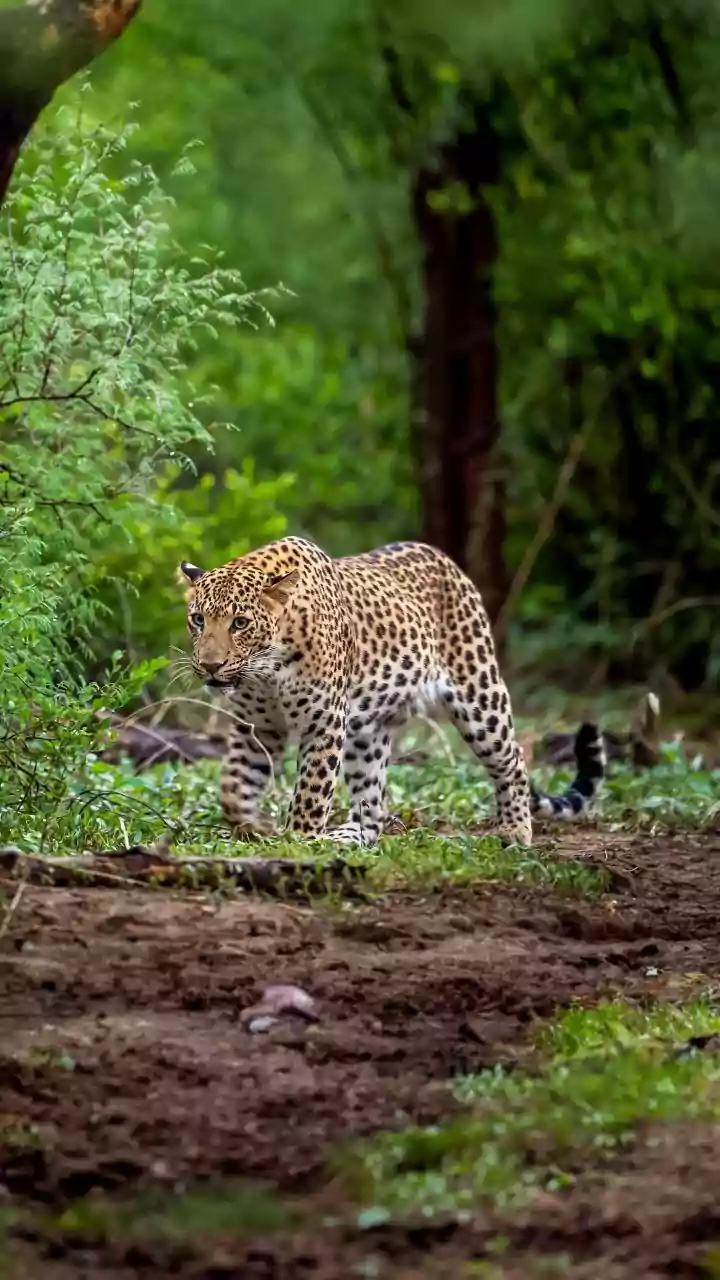
The most dramatic example of this coexistence comes from Mumbai, where the Sanjay Gandhi National Park (SGNP) sits in the heart of the megacity. Recent surveys confirmed a healthy population of over 50 leopards living within the park and its periphery. These adaptable predators navigate the city's fringes, often preying on stray dogs and livestock, which are abundant food sources. Delhi is not far behind, where its vast green spaces and biodiversity parks host species like golden jackals, nilgai (blue bull), and even the elusive striped hyena. Meanwhile, Bengaluru's citizens recently catalogued over 240 bird species, from the common Black Kite and Asian Koel to rarer finds, proving the city remains an important habitat for avian life.
Masters of Urban Adaptation
How do these animals manage to thrive amidst the noise, light, and constant human activity? They are masters of adaptation. Many species, like leopards, become more nocturnal in urban areas to avoid human contact. They learn to use man-made structures as pathways, with railway lines and storm drains serving as wildlife corridors. Their diet also shifts. In the absence of traditional prey, they make do with what the city provides, including refuse from garbage dumps, rodents, and domestic animals. Birds in cities have been observed changing the frequency and timing of their songs to be heard over the din of traffic. This ability to change behaviour is key to their survival in a world dominated by humans.
A Fragile Coexistence
While this urban wildlife story is fascinating, it is not always a peaceful one. The close proximity of humans and animals inevitably leads to conflict. Leopards occasionally attack humans, snakes are often killed out of fear, and monkeys in cities like Delhi and Jaipur can become aggressive. Animals face their own dangers from vehicle collisions and habitat loss as cities continue to expand. However, the relationship isn't entirely negative. Wildlife provides essential ecosystem services, such as pollination and pest control, while also offering residents a vital connection to nature that improves mental and physical well-being. The presence of biodiversity is an indicator of a city's overall ecological health.