





1. The Gentle Neck Tilt
One of the first places to feel tension is the neck. This simple tilt helps release that strain without any harsh movements. Sit up straight with your feet flat on the floor and relax your shoulders. Slowly tilt your head, bringing your right ear toward
your right shoulder. Stop when you feel a gentle stretch, never forcing the movement. Hold for 15-20 seconds, breathing deeply. Return to the center and repeat on the left side. This exercise improves flexibility and eases the tightness that builds from staring at a screen.
2. The Seated Shoulder Roll
Hunching forward is a common desk posture that can lead to rounded shoulders and upper back pain. Shoulder rolls counteract this by loosening the trapezius muscles. While seated or standing, gently lift your shoulders up toward your ears in a shrug. Then, slowly roll them backward in a circular motion, squeezing your shoulder blades together as they move down. Do this five times, then reverse the direction and roll them forward five times. This movement helps reset your posture and relieves tension across your shoulders.
3. The Seated Spinal Twist
A stiff back is a hallmark of a long day of sitting. The seated spinal twist gently mobilizes your torso, increasing flexibility in your spine. Sit tall at the edge of your chair with your feet flat on the floor. Keeping your hips facing forward, slowly twist your upper body to the right. You can place your left hand on your right knee for a gentle assist. Look over your right shoulder and hold for 15 seconds. Slowly return to the center and repeat on the other side. This awakens a spine that spends most of the day rounded forward.
4. The Upper Back Arch
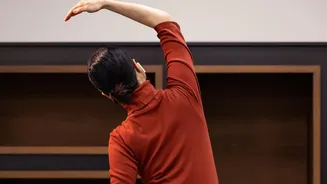
This exercise is a direct antidote to the forward slump we all fall into. It opens the chest and stretches the muscles in the upper and mid-back. You can perform this seated in your chair. Clasp your hands behind your head with your elbows pointing out to the sides. Gently lean back, arching your upper back over the top of your chair. Lift your chest toward the ceiling, feeling a stretch across your chest and shoulders. Hold this for 10-15 seconds while breathing deeply, then return to your starting position. Repeat this a few times throughout the day.
5. The Wrist and Finger Stretch
Typing and using a mouse can put repetitive strain on your wrists and forearms. This two-part stretch provides much-needed relief. Extend your right arm in front of you with your palm facing down. With your left hand, gently bend your right wrist down, feeling a stretch in your forearm. Hold for 15-20 seconds. Then, flip your hand so your palm faces up, and gently pull your fingers back toward your body. Hold for another 15-20 seconds. Switch hands and repeat the sequence.
6. The Seated Cat-Cow
Borrowed from yoga, this movement is excellent for improving spinal mobility and relieving lower back tension. Sit at the edge of your chair with your feet flat and hands on your knees. On an inhale, arch your back, push your chest forward, and look slightly up (Cow). On an exhale, round your spine, tuck your chin to your chest, and let your back curve (Cat). Flow between these two positions slowly for 5-8 repetitions, letting your breath guide the movement. It's a fantastic way to wake up your entire back.
7. The Seated Figure-Four Stretch
Sitting for long periods can tighten your hip and glute muscles. The figure-four stretch targets these areas effectively. While sitting, cross your right ankle over your left knee, making sure your left foot is flat on the floor. Keep your back straight and gently lean forward until you feel a stretch in your right glute and hip. Don't round your back; hinge from your hips. Hold for 20-30 seconds, breathing into the stretch. Release slowly and then switch to the other side.