




The First Ten Seconds: A Losing Breath
The most immediate and catastrophic threat in space is the complete lack of atmospheric pressure. On Earth, the 14.7 pounds per square inch of pressure is something we never notice, but our bodies are perfectly adapted to it. In the vacuum of space, this
external pressure disappears entirely. The first instinct might be to hold your breath, but this would be a fatal mistake. The air trapped in your lungs would expand violently, rupturing the delicate tissues in a catastrophic barotrauma. Instead, one would need to exhale completely. Even so, with no oxygen to breathe, the oxygen already in your bloodstream would be used up with shocking speed. You would lose consciousness in as little as 10 to 15 seconds. This rapid onset of hypoxia makes any self-rescue impossible.
The Unsettling Truth About Ebullism
Shortly after losing consciousness, a gruesome process called ebullism would begin. With the external pressure gone, the boiling point of the liquids in your body would plummet to your own body temperature. This doesn't mean your blood would vigorously boil like water in a kettle, a common misconception. Rather, the water in your soft tissues and bloodstream would begin to turn into gas, forming bubbles. This would cause your body to swell up to perhaps twice its normal size, though your skin is elastic enough to prevent you from actually exploding, another myth popularised by films. This internal vaporisation would be devastating, creating gas embolisms that would block blood flow and cause widespread tissue damage.
Surviving the Temperature Swings
Another common sci-fi trope is a body instantly freezing solid in space. The truth is more complex. While space can be incredibly cold, dropping to -150°C in the shade, heat doesn't transfer away from your body quickly in a vacuum. There are no air molecules to conduct the heat away. So, you wouldn't freeze instantly. However, you would face a dual threat. In direct sunlight, with no atmosphere to filter the Sun's rays, temperatures can soar to 120°C, causing severe burns. In shadow, you would slowly but surely lose body heat through thermal radiation, eventually freezing. Neither outcome is survivable, but neither is instantaneous.
The Invisible Danger: Radiation
Even if you could somehow survive the pressure and temperature, space is flooded with invisible dangers. Outside of Earth's protective magnetic field and atmosphere, astronauts are exposed to intense radiation from solar flares and galactic cosmic rays. This radiation shreds DNA, damages cells, and can lead to cancer, cataracts, and central nervous system damage over the long term. A sudden, powerful solar particle event could deliver a lethal dose in minutes. Spacesuits and spacecraft are built with shielding to mitigate this threat, but an unprotected body would be completely vulnerable. Adding to this are micrometeoroids, tiny particles of rock and debris travelling at tens of thousands of kilometres per hour, which could pierce tissue like a bullet.
The Suit: A Personal Spaceship
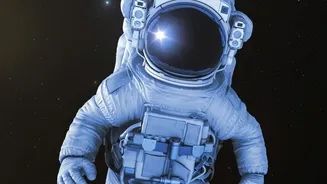
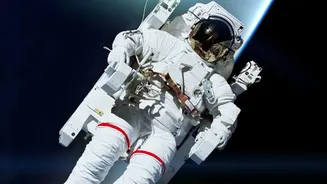
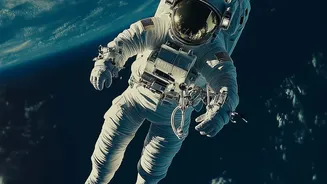
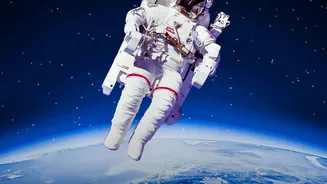
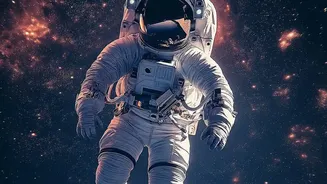
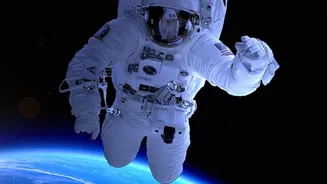
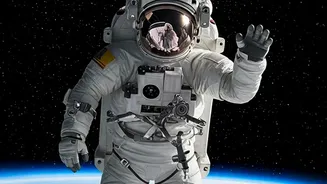
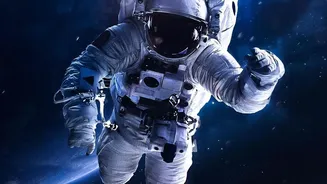
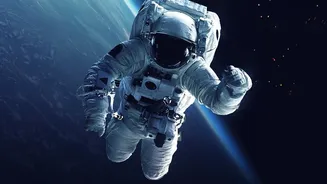
The modern spacesuit, or Extravehicular Mobility Unit (EMU), is not merely a set of clothes. It is a personalized spacecraft, providing everything a human needs to survive the hostility of open space. It delivers a pressurized, oxygen-rich atmosphere, preventing ebullism and hypoxia. It has a complex thermal control system with liquid-cooling garments to regulate body temperature against the extreme heat and cold. It includes multiple layers to shield against micrometeoroids and provides some protection from radiation. It even contains a water supply, waste collection, and a communications system. Each suit is a marvel of engineering, a self-contained world that allows a fragile human body to function in the most unforgiving environment known.