







Colour and Texture: More Than Meets the Eye
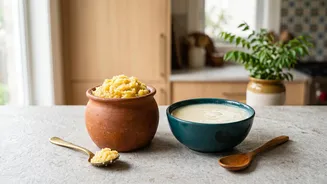
The most obvious difference is colour. Cow ghee has a distinct yellow hue, while buffalo ghee is creamy white. This isn't about purity but biology. Cows pass the beta-carotene (a pigment found in their fodder) into their milk fat, giving the resulting
ghee a golden colour. Buffaloes, on the other hand, have a more efficient digestive system that converts beta-carotene into colourless Vitamin A, which is why their milk fat and ghee are white. In terms of texture, buffalo ghee is generally denser and firmer, especially in cooler weather, due to a higher concentration of saturated fats. Cow ghee tends to have a softer, more granular texture.
A Look at the Nutritional Profile
Both types of ghee are nearly 100% fat and have similar calorie counts per spoon, so neither is inherently 'healthier' on this front. The key differences lie in the composition. Buffalo ghee has a slightly higher fat content overall. This makes it more calorie-dense, which can be beneficial for those needing more energy or looking to gain weight, like athletes. Cow ghee is comparatively lighter and is often preferred for those with more sedentary lifestyles or who are managing their weight. From an Ayurvedic standpoint, cow ghee is considered lighter and easier to digest, making it a common recommendation for children and the elderly. It's also often praised for its 'Sattvic' qualities, believed to promote positivity.
Best Uses in the Kitchen
The differences in flavour and composition make each ghee suitable for different culinary jobs. Cow ghee has a milder, more delicate flavour that makes it an excellent choice for daily use, such as spreading on rotis, drizzling over dal and rice, or for light sautéing (tadka). Its flavour complements other ingredients without overpowering them. Buffalo ghee has a richer, more intense flavour and aroma. Its higher fat content gives it a longer shelf life and makes it ideal for making rich, decadent sweets like halwa and ladoos, as well as for creating flaky parathas. While both have high smoke points suitable for Indian cooking, buffalo ghee's is slightly higher, making it a good, though not necessary, option for deep frying.
The Ayurvedic Perspective
Traditional Ayurvedic texts often hold cow ghee in higher esteem for medicinal purposes. It is considered tridoshic, meaning it's generally balancing for all body types (Vata, Pitta, and Kapha), and is used as a carrier for many herbal preparations. It is often recommended to improve digestion and for treatments like 'Nasya,' where it is used as nasal drops. Buffalo ghee, being heavier and more energy-giving, is traditionally recommended for those who are highly physically active or during winter to help keep the body warm. It is considered beneficial for balancing Vata and Pitta doshas but can increase Kapha.