


An Icon in a Slow Decline
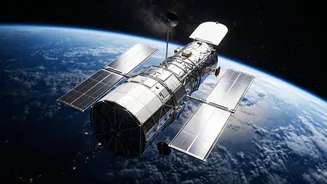
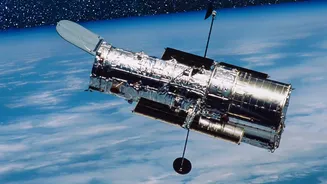
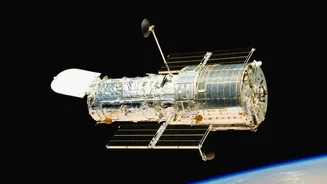
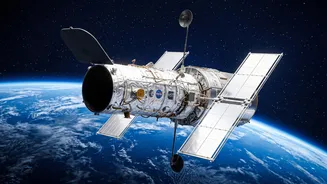
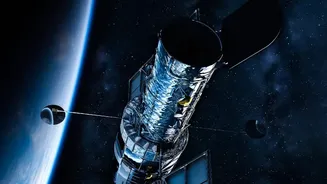
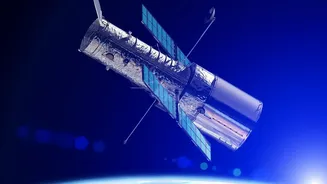
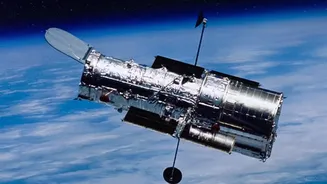
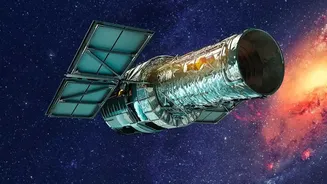
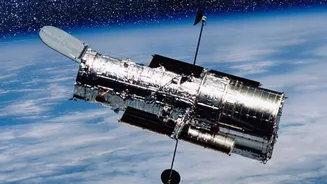
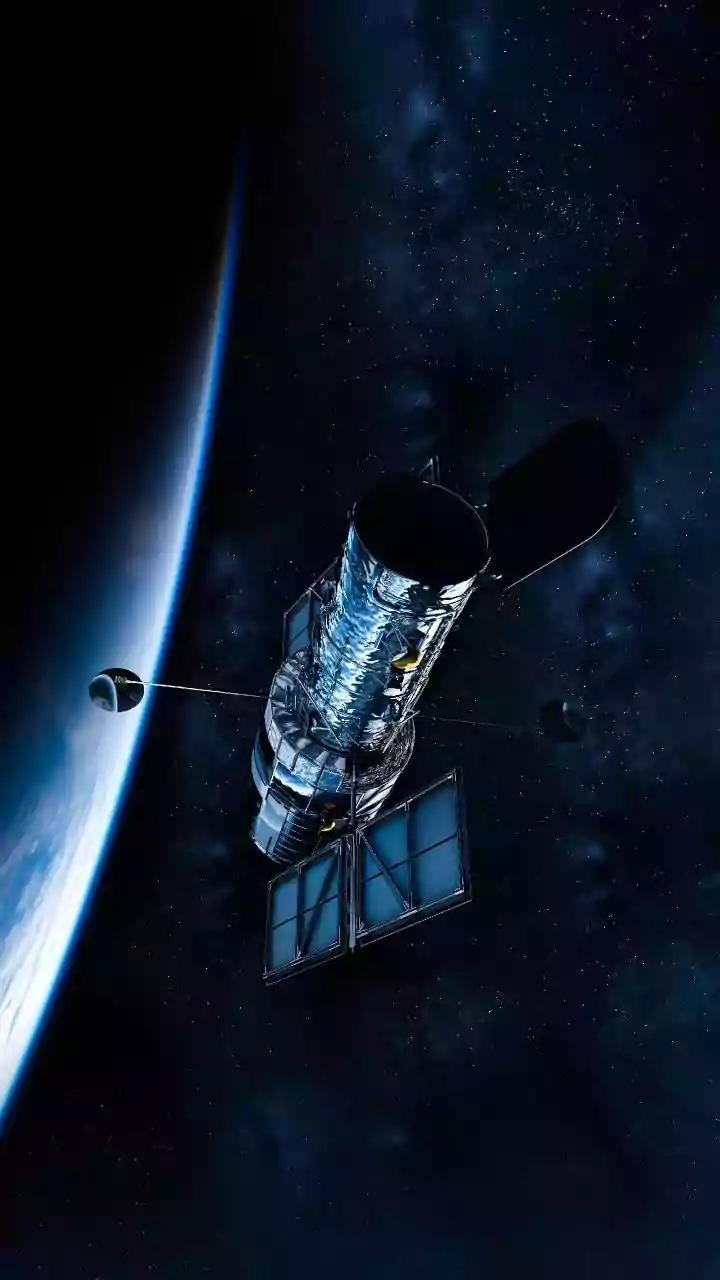
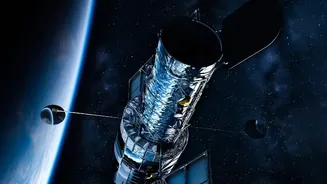
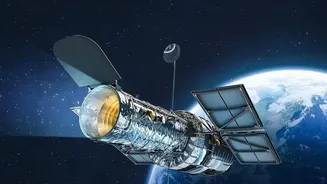
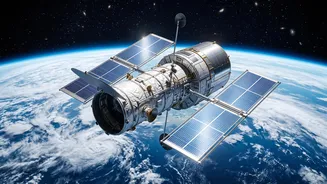
The Hubble Space Telescope is one of the most productive scientific instruments ever built, but it has a problem that no software patch can fix: gravity. Like all satellites in low-Earth orbit, Hubble is subject to atmospheric drag — the faint pull of Earth's
upper atmosphere that gradually slows it down. Without its own propulsion system to counteract this, Hubble's orbit is slowly decaying. Originally placed at an altitude of over 600 kilometers, it now orbits at well under 500 kilometers. NASA predicts that without intervention, the legendary telescope could make an uncontrolled re-entry into Earth's atmosphere between 2033 and 2034. This ticking clock is the primary reason NASA is now seeking outside-the-box solutions. The telescope itself remains scientifically valuable, with demand for its observation time far exceeding availability, but its operational life is limited by its orbit.
A Call for Ideas, Not a Contract
In late October 2026, NASA officially issued a Request for Information (RFI), a formal way of asking the commercial space industry for ideas. It is crucial to understand that this is not a contract for a rescue mission. Instead, it's a market research exercise to understand what is technically and financially feasible. The agency has outlined three broad possibilities: a reboost mission to push Hubble into a higher, more stable orbit; a servicing mission to potentially upgrade its aging components; or a mission to ensure its safe and controlled de-orbit at the end of its life. By boosting its orbit to 600 kilometers, its life could be extended by 15 to 20 years. Companies have until November 30, 2026, to submit their concepts, which will help NASA decide if a public-private partnership is a viable path forward.
The Commercial Contenders
This isn't the first time a private rescue for Hubble has been discussed. In 2022, NASA and SpaceX conducted a joint study to explore the feasibility of using a Dragon spacecraft for a reboost mission, an idea championed by the Polaris Program, funded by billionaire and current NASA Administrator Jared Isaacman. That study concluded that such a mission was technically possible. While that specific plan was not pursued at the time, the new RFI opens the door to a wider range of companies and concepts. Potential players could include SpaceX, with its crewed Dragon capsule, or companies specializing in robotic servicing, which could offer an uncrewed solution to rendezvous with and dock to the telescope. The challenge is immense: any vehicle would need to safely approach and grapple a 12,000 kg observatory moving at over 27,000 kilometers per hour without causing any damage.
A New Model for Space Exploration
This initiative represents a significant shift in NASA's strategy. During the Space Shuttle era, NASA conducted five complex, crewed servicing missions to repair and upgrade Hubble, the last of which was in 2009. With the shuttle's retirement, NASA lost that capability. Turning to the commercial sector reflects the rapid growth and evolving capabilities of private spaceflight. As Nicky Fox, an associate administrator at NASA, noted, the commercial industry has matured significantly in recent years, offering new possibilities for in-space servicing. A successful commercial mission to Hubble would not only save a priceless scientific asset but also set a powerful precedent. It would demonstrate a new, cost-effective model for maintaining and extending the life of critical infrastructure in orbit, moving from disposable assets to sustainable ones. This move is seen as a test case for the future of maintaining humanity's most valuable machines in space.