




Understanding the Standing Torso Twist
The standing torso twist is a dynamic exercise that involves rotating your upper body from side to side while keeping your lower body stable. It's a foundational movement that targets the muscles responsible for twisting and turning, which are crucial
for everything from carrying groceries to playing sports. Unlike exercises that require you to lie on the floor, this one can be done anywhere, anytime, making it a highly accessible option for a quick warm-up or a dedicated core workout. The primary muscles worked are your obliques, the muscles along the sides of your stomach, but it also engages your deeper core stabilisers and lower back. By training your body in this rotational plane of motion, you build strength that is often neglected in common exercises like squats and push-ups.
The Core Benefits of Rotational Training
Incorporating twists into your routine offers significant benefits beyond just toning your waistline. This type of movement directly enhances spinal mobility, which can help reduce stiffness and improve posture. A strong, flexible spine is better equipped to handle daily stresses and strains, potentially reducing the risk of back pain. Furthermore, strengthening your obliques and transverse abdominis—the deep core muscles that act like a natural corset—improves overall stability and balance. This translates to better performance in other athletic activities and a reduced risk of injury, as your core becomes more adept at stabilising your body during complex movements.
Perfecting Your Form
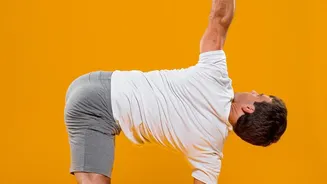
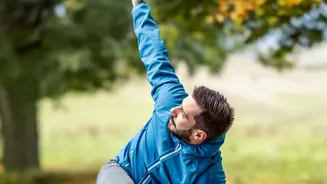
Proper form is crucial to maximise benefits and prevent injury. To perform a basic standing torso twist, stand with your feet shoulder-width apart and your knees slightly bent. Place your hands on your hips or cross them over your chest. Engage your core by pulling your navel towards your spine. Initiate the movement by slowly rotating your upper body to one side, making sure the twist comes from your mid-section, not from swinging your arms. Keep your hips and legs facing forward as much as possible. It's important to control the motion, moving slowly rather than using momentum. Breathe out as you twist and inhale as you return to the centre.
Twist Variations Without Equipment
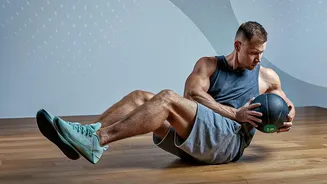
The principles of the standing torso twist can be applied to a variety of equipment-free exercises to challenge your core in different ways. A 'Squat and Oblique Twist' involves performing a squat and, as you stand up, bringing one knee up towards the opposite elbow, adding a lower-body component. For a floor-based option, the classic 'Russian Twist' can be done without weights by sitting on the floor, leaning back to a 45-degree angle with knees bent, and twisting your torso from side to side. Another effective variation is the 'Lunge and Twist', where you step into a lunge and then rotate your torso toward your front leg, which challenges your balance and stability.
Common Mistakes to Avoid
One of the most frequent errors is using momentum instead of muscle control. Swinging your arms or twisting too quickly reduces the engagement of your core muscles and can strain your back. To correct this, slow down the movement and focus on feeling your obliques do the work. Another mistake is moving your hips along with your torso. The goal is to isolate the rotation in your upper body, so try to keep your hips square and stable. Finally, avoid hunching your back. Maintain a tall, straight spine throughout the exercise to ensure you are targeting the correct muscles and protecting your back from injury.