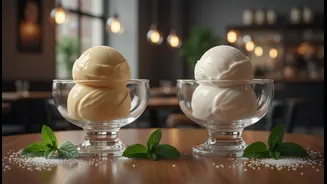



The Dairy-Free Texture Problem
For anyone avoiding dairy, the frozen dessert aisle can be a source of constant disappointment. The problem with most plant-based ice creams and gelatos lies in their composition. Traditional gelato relies on the fat and proteins in milk and cream to create
a stable emulsion—a blend of fat and water that results in a smooth, rich mouthfeel. When dairy is removed, the water content often becomes too high, leading to the formation of large, crunchy ice crystals during freezing. This is why many non-dairy alternatives feel icy or lack the satisfying density of their dairy-based counterparts. Achieving that perfect, scoopable texture without milk fat has been the primary challenge for vegan dessert makers.
Why Cashews are the Creamy Solution
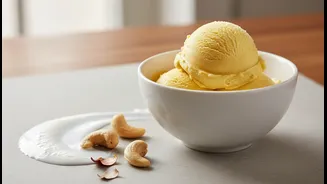
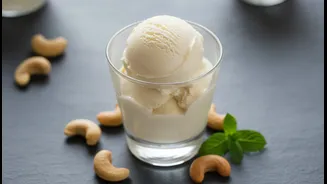
Enter the cashew. Unlike many other nuts and plant-based milk sources, cashews are uniquely suited to mimic the role of dairy. The secret lies in their high content of 'good' fats, primarily monounsaturated fats, and natural starches. When raw cashews are soaked and blended with water, they break down into an incredibly fine, silky cream. This process creates a rich base with a fat content and structure that functions similarly to dairy cream. Their neutral, subtly sweet flavour is another major advantage, as it allows other ingredients, like high-quality chocolate, pistachio, or fruit, to shine without being overpowered by a nutty taste.
The Science of a Silky Scoop
Artisanal gelato makers harness the natural properties of cashews to build a luxurious texture from the ground up. The process begins by creating a 'cashew milk' or 'cashew cream,' which is far richer than the store-bought varieties. This involves soaking high-quality raw cashews and then blending them with water until completely smooth. The fats and starches in the nuts act as natural emulsifiers, helping to bind the water and fat molecules together into a stable, homogenous mixture. This prevents separation and is crucial for minimising ice crystal formation during churning. Some producers might also use natural stabilisers like guar gum to further enhance the texture, but the heavy lifting is done by the cashews themselves, creating a product that is dense and rich, not icy.
Mastering the Artisanal Process
Creating premium cashew gelato is a craft. Gelaterias that specialise in this take great care in their process. After creating the smooth cashew base, it's often combined with sugars like dextrose or glucose syrup, which not only add sweetness but also help control the freezing point, ensuring the gelato stays soft and scoopable. The base must be thoroughly chilled before being introduced to the batch freezer. Gelato is churned at a slower speed than American-style ice cream, which incorporates less air and results in a denser, more flavourful product. For cashew-based gelato, this slow churning is key to developing its signature velvety consistency, making it feel just as, if not more, indulgent than traditional dairy versions.
Not Just a Substitute, but an Upgrade
Initially seen as a mere alternative, cashew milk is now viewed by many in the culinary world as a premium ingredient in its own right. It doesn't just replace dairy; it offers its own unique, buttery richness that can elevate a frozen dessert. This shift in perception is allowing artisanal makers to move beyond simple dairy-free versions of classic flavours and into more creative territory. The clean, creamy canvas provided by cashews allows for nuanced and complex flavour profiles that appeal to all customers, not just those with dietary restrictions. The result is a gelato that stands on its own merit, celebrated for its texture and taste rather than just for the ingredients it lacks.