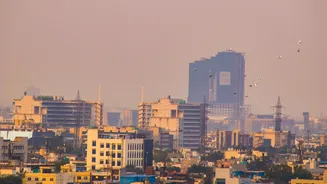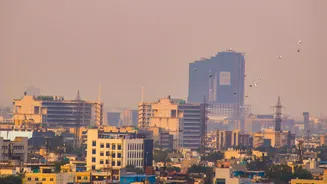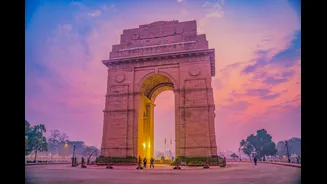





The Great Wall of Delhi
Entering the national capital has become a complex and costly affair for commercial vehicle operators, especially those not destined for the city itself. In a determined effort to curb its notorious air pollution, Delhi has erected a virtual wall of regulations
that transporters must navigate. The most significant of these is the Graded Response Action Plan (GRAP), which intensifies restrictions as air quality worsens, particularly during the winter months. As of late 2026, rules have been tightened further. From November 1, 2026, most commercial vehicles with BS-IV or older emission standards registered outside Delhi are barred from entry. Only vehicles running on CNG, electricity, or those compliant with the newer BS-VI standards are permitted. During severe pollution spikes under GRAP Stage IV, even more stringent bans are enforced, halting almost all truck traffic except for those carrying essential goods or using the cleanest fuel types. For a transporter, violating these rules isn't just a slap on the wrist; it can result in hefty fines of up to ₹20,000 and the impounding of the vehicle, leading to significant delays and financial loss.
A Ring of Relief: The Peripheral Expressways
The answer to this regulatory maze lies in two massive six-lane highways that form a colossal ring around Delhi: the 135-km Eastern Peripheral Expressway (EPE) and the 135.6-km Western Peripheral Expressway (WPE). Inaugurated in 2018, these expressways were designed with a clear purpose: to divert over 50,000 heavy vehicles not bound for Delhi away from the city's congested and polluted arteries. The EPE, also known as the Kundli-Ghaziabad-Palwal (KGP) Expressway, connects Sonipat to Palwal via Ghaziabad and Greater Noida. Its counterpart, the WPE or Kundli-Manesar-Palwal (KMP) Expressway, completes the western loop. Together, they form the largest ring road around the capital, providing a seamless, signal-free corridor for transit traffic. For transporters moving goods between states like Haryana, Uttar Pradesh, Punjab, or Rajasthan, these expressways offer a legitimate and efficient alternative to cutting through the capital. This bypass is not just an option but often a necessity, especially as GRAP measures explicitly direct non-destined traffic towards them.
The Calculation: Time, Fuel, and Predictability
While avoiding bans and fines is the primary driver, the decision to use the outer expressways is also rooted in sound business logic. Navigating Delhi’s internal traffic is notoriously unpredictable, with journeys often taking hours longer than expected due to congestion. The peripheral expressways, with speed limits of up to 100 km/h for commercial vehicles, offer what every logistics operator craves: predictability. A journey that could take five to six hours through the city can be completed in under two hours on the bypass. This time-saving translates directly into fuel savings and better utilisation of the fleet. Furthermore, the smooth, continuous drive reduces wear and tear on vehicles compared to the stop-and-go conditions of city driving. While there are toll charges on these expressways, many operators find that the combined cost of Delhi's entry tolls, the Environment Compensation Charge (ECC), and the financial risks associated with delays and potential fines makes the expressway route more economical in the long run.
A Forced Choice with Mutual Benefits
From the perspective of transport associations, this shift isn't entirely a free choice but a response to stringent regulations. The industry has had to adapt to a new reality where bypassing Delhi is essential for business continuity. However, this adaptation has created a win-win scenario. Delhi benefits from a significant reduction in vehicular pollution and traffic congestion; estimates suggest the expressways divert lakhs of vehicles daily, cutting traffic in the city by around 30%. For the logistics sector, it has streamlined inter-state freight movement, making supply chains more resilient and efficient. This strategic rerouting is a clear example of how targeted infrastructure development can solve complex urban challenges, allowing the nation's economic engine to keep running without choking its capital city. The system allows diesel trucks to halt outside the city limits, with cleaner last-mile vehicles potentially taking over for local deliveries, a model Delhi aims to expand.