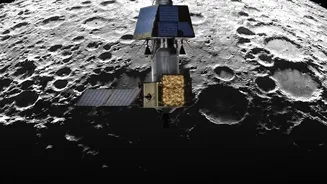



After a triumphant mission returning samples from asteroid Ryugu, Japan's Hayabusa2 spacecraft is not retiring. Instead, it is on a decade-long extended mission to intercept one of the most peculiar objects in our solar system.
A Hero's Second Act
The Japan Aerospace Exploration
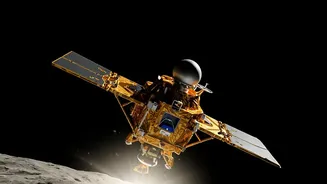
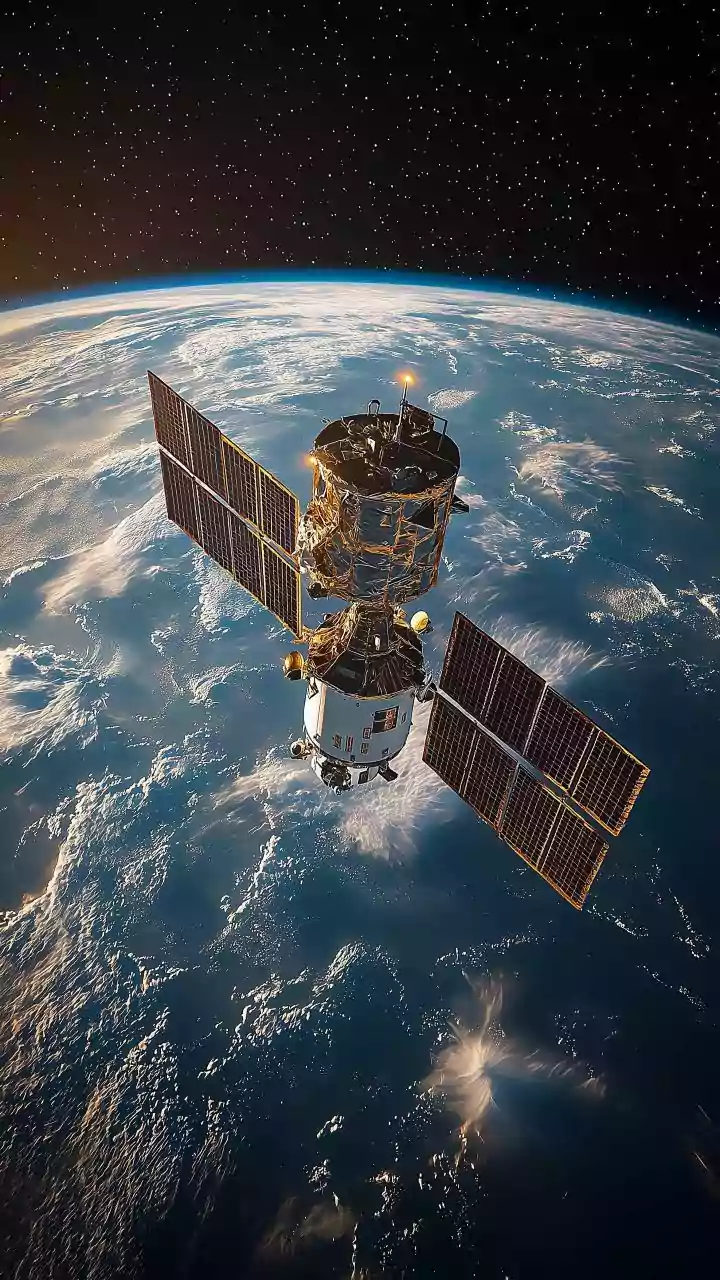
Agency's (JAXA) Hayabusa2 mission already has a place in the history books. Launched in 2014, it rendezvoused with the near-Earth asteroid Ryugu, deployed rovers, and, in a feat of incredible precision, collected surface samples. In December 2020, it successfully delivered this precious cargo back to Earth, providing scientists with pristine material from the solar system's early days. But with the spacecraft still healthy and about half of its ion engine fuel remaining, JAXA opted for a bold sequel: the Hayabusa2# (or SHARP) extended mission. This new journey involves multiple flybys and gravitational assists before its ultimate destination in July 2031: a tiny asteroid known as 1998 KY26.
The Puzzling Target: 1998 KY26
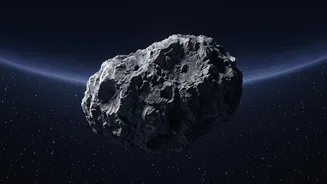
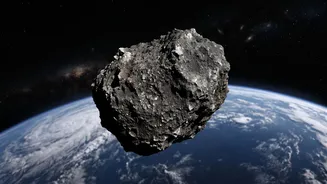
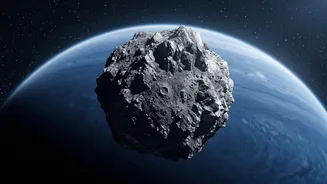
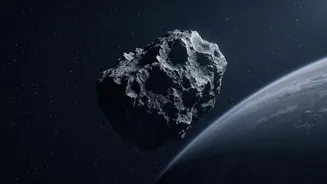
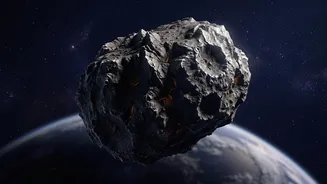
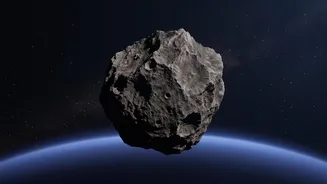
So, what makes 1998 KY26 worth a ten-year chase across hundreds of millions of kilometres? The answer lies in its bizarre properties. For years, scientists believed it was about 30 metres wide, but recent observations with powerful telescopes, including the European Southern Observatory's Very Large Telescope, have revealed it is much smaller—only about 11 metres across. That makes it small enough to fit inside the dome of the telescope that observed it. When Hayabusa2 arrives, it will be the smallest asteroid ever visited by a spacecraft. Adding to the mystery is its astonishing rotation speed. A 'day' on 1998 KY26 lasts just over five minutes, making it one of the fastest-spinning objects ever documented in the solar system. This rapid spin is so extreme that if the asteroid were a loose collection of rocks, or a 'rubble pile', it would have flung itself apart long ago.
Monolith or Something Else?
The incredible rotational speed suggests that 1998 KY26 is not a gravitational aggregate but a single, solid piece of rock—a 'monolith'. This structure would give it the tensile strength needed to hold together. But this raises more questions. How did it form? Scientists theorise it could be a fragment from a much larger asteroid, blasted off during a violent collision. Another puzzle is its unusual brightness and an unexplained acceleration in its orbit, which led some to speculate it could be a 'dark comet'—an object that looks like an asteroid but is venting gases that give it a tiny push. However, a recent study suggests the asteroid is too warm to hold the subsurface ice needed for this to be true, deepening the mystery.
The Challenges and Rewards of 2031
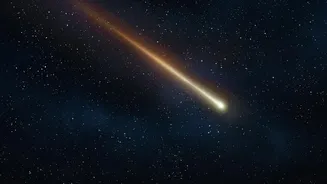
The new data showing a smaller, faster spinning target makes Hayabusa2's rendezvous in 2031 even more challenging. Intercepting and observing such a tiny, rapidly moving object will be a significant operational feat for JAXA. The fast rotation will make any attempt at a 'touchdown' manoeuvre to study its surface incredibly difficult. Despite the hurdles, the scientific payoff is immense. Studying 1998 KY26 up close will provide the first ever in situ data on this class of micro asteroids. These objects are common, and some are on Earth crossing orbits. Understanding their composition—whether they are solid rock or something else—is crucial for planetary defence. An asteroid of this size is comparable to the one that exploded over Chelyabinsk in 2013, and knowing their structure is key to predicting how they might behave if one were to enter Earth's atmosphere.