




The Body's Battle in Zero-G
For decades, scientists have known that space is tough on the human body. Without the constant resistance of Earth's gravity, astronauts' muscles and bones begin to waste away. Astronauts can lose up to 20% of their muscle mass on long missions, while
bone density can decline at a rate of over 1% per month. This rapid deterioration is a major concern for future long-duration missions, such as a trip to Mars, which could take years. Despite rigorous exercise regimens, the problem persists, leading researchers to look for the root cause at a much smaller scale. The effects are so pronounced that they are often compared to accelerated aging, providing a unique environment to study conditions that take decades to develop on Earth.
A Look at Our Cellular Engines
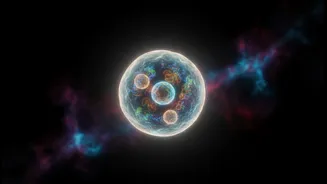
Recent research has zeroed in on a likely culprit: the mitochondria. Often called the 'powerhouses' of the cell, mitochondria are responsible for generating most of the cell's supply of adenosine triphosphate (ATP), used as a source of chemical energy. However, their job doesn't stop there; they are also crucial for signaling, cell differentiation, and managing oxidative stress. A wave of studies, including a landmark analysis of data from 59 astronauts, has revealed that a central theme of space travel's biological impact is mitochondrial dysfunction. The combined stressors of microgravity and space radiation disrupt the normal activity of these vital organelles. This disruption appears to be a shared mechanism behind many of the health issues seen in astronauts, affecting everything from muscle and liver tissue to the immune system.
From Dysfunction to Solution
Identifying mitochondria as the central hub of spaceflight's biological impact opens the door to developing targeted countermeasures. Scientists are now exploring several promising avenues. One approach involves the use of mitochondrial-targeted antioxidants to protect against the oxidative stress that damages cells during spaceflight. Another strategy being tested involves drugs designed to support mitochondrial function and stimulate muscle repair, with some early experiments on 'muscles-on-a-chip' aboard the International Space Station showing partial success. More radical concepts are also on the table. NASA's Innovative Advanced Concepts (NIAC) program is funding a project called 'MitoMars,' which is investigating a potential therapy to transplant healthy mitochondria, harvested from an astronaut before their mission, back into their cells to restore function after radiation damage.
The Future of Astronaut Health
This focus on mitochondrial health represents a significant shift in space medicine. Instead of just treating the symptoms, like muscle atrophy, the goal is to protect the body's fundamental energy systems. Researchers envision a future where astronauts could receive a personalised 'mitochondrial cocktail' of supplements and therapies to bolster their cellular resilience. Furthermore, integrating real-time monitoring of mitochondrial function into health checks could allow for early detection of problems and timely interventions, ranging from nutritional adjustments to pharmacological treatments. Developing these strategies is not only critical for enabling sustained lunar missions and human exploration of Mars but also has significant benefits for Earth. The accelerated aging effects seen in space provide a powerful model for studying age-related diseases like sarcopenia and developing therapies that could help everyone on the ground live healthier, stronger lives.