




Many swimmers feel a constant battle between speed, form, and breathing. But what if they aren't separate skills to master, but a single, connected system? A controlled session focused on all three can unlock new levels of efficiency and endurance.
The Foundation of Efficient Swimming
At
the core of a great swim is not brute strength, but breath. Proper breathing technique is the foundation upon which endurance and speed are built. Many swimmers, from novices to experienced athletes, unknowingly sabotage their efforts with poor habits like holding their breath or lifting their head too high to inhale. This disrupts body alignment, creates drag, and leads to rapid fatigue. The key is to see breathing not as an interruption to your stroke, but as an integral part of its rhythm. When your breathing is calm and controlled, your body remains relaxed, your movements become more streamlined, and you can sustain your effort for far longer.
Mastering the Exhale
The most common mistake swimmers make is focusing on the inhale. The secret to better breathing lies in the exhale. Holding your breath underwater causes a build-up of carbon dioxide, which creates a feeling of panic and a desperate gasp for air on your next breath. Instead, the goal should be to exhale continuously and steadily through your nose and mouth the entire time your face is in the water. By the time you rotate to breathe, your lungs are already empty and ready for a quick, relaxed inhalation. A simple drill is to stand in the shallow end, take a breath, submerge your face, and hum or sigh until you've completely emptied your lungs, noticing how the inhale becomes a natural reflex. This practice builds comfort and control, turning a frantic action into a smooth, automatic process.
Refining Technique with Drills
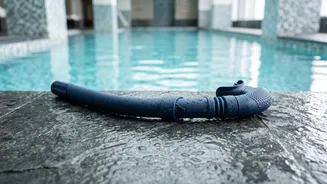
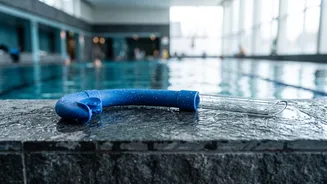
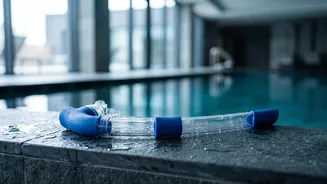
Good technique makes everything else easier. Drills are essential for slowing down and focusing on specific parts of your stroke without the pressure of speed. The 'Catch-Up Drill', where one arm remains extended forward until the other 'catches up' before starting its pull, is excellent for improving extension and body alignment. Another effective drill is 'Single-Arm Freestyle', where you swim a full length using only one arm while the other rests at your side or extended forward. This isolates each side of the body, highlighting imbalances in your pull and rotation. Using tools like a snorkel can also be beneficial, as it allows you to concentrate purely on your body position and arm mechanics without worrying about turning to breathe.
Pacing for Endurance, Not Just Speed
Swimming fast is not about going all-out from the start; it's about distributing your energy intelligently. This is the art of pacing. Instead of fighting the clock on every length, focus on maintaining a consistent effort level. A common strategy is 'negative splitting', where you aim to swim the second half of your distance faster than the first. This requires control and awareness in the initial laps. You can practice this by trying to hold the fastest sustainable pace across a set of repetitions, known as 'best average' swimming. Paying attention to your rate of perceived exertion or using a waterproof heart rate monitor can provide valuable feedback, teaching you what different levels of effort feel like and helping you avoid starting too fast and fading early.
Putting It All Together: A Sample Session
A structured workout allows you to practice these elements in a focused way. Every session should have a clear purpose, moving beyond 'garbage yardage' where you swim laps without a goal. Here is a simple framework:
Warmation (10–15 minutes): Start with easy swimming, mixing in different strokes to loosen up your muscles. Incorporate a few lengths of the 'sink down' exhalation drill.
Technique Set (15–20 minutes): Focus on one or two drills. For example, swim 4 x 50 metres of the Catch–Up Drill, resting for 30 seconds after each. Concentrate on long, smooth strokes.
Main Set (20–30 minutes): This is where you work on pacing and breath control. Try a set like 8 x 100 metres on a fixed interval (e.g., leaving every 2 minutes and 30 seconds). Aim to keep your time and effort level consistent for each 100 metres. Focus on your steady exhalation.
Cool–Down (5–10 minutes): Finish with very slow, relaxed swimming to bring your heart rate down and flush out lactic acid.