


More Than Meets the Eye
Almost everything we know about the universe comes from studying light. But the rainbow of colours we see, known as visible light, is just a tiny sliver of the full electromagnetic spectrum. This spectrum ranges from long, low-energy radio waves to short,
high-energy gamma rays. Objects in space, from planets to entire galaxies, emit light across this entire range. Because our atmosphere blocks many of these wavelengths, including most infrared, ultraviolet, and X-rays, we have to send telescopes into space to get a complete picture. By observing a galaxy in different wavelengths, astronomers can piece together a more complete puzzle of its structure, composition, and evolution.
Visible Light: A Galaxy of Stars
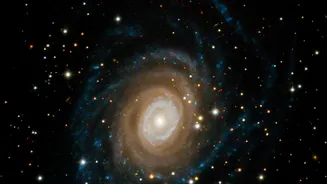
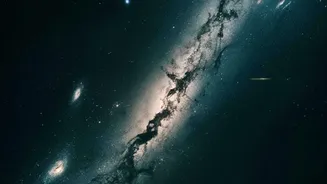
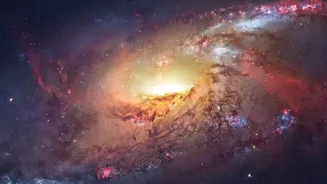
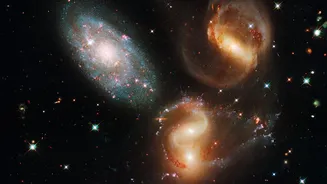
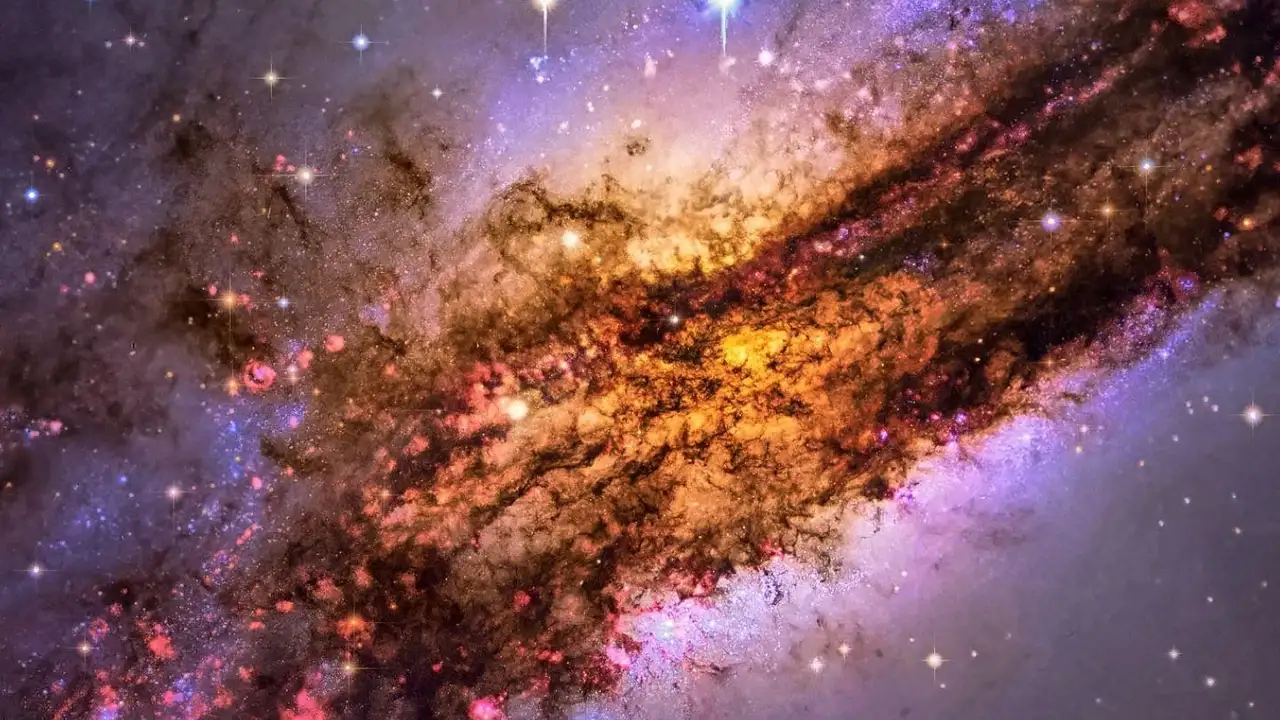
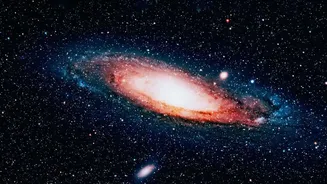
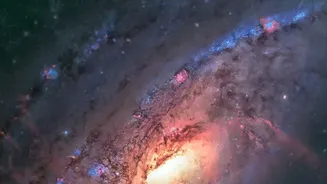
Visible light, the kind detected by our eyes and telescopes like the Hubble Space Telescope, primarily shows us the stars within a galaxy. The colours we see in these images give clues about the stellar population. Bright, blue regions often indicate areas of active star formation, full of hot, young, massive stars. In contrast, a reddish or yellowish glow usually points to older, cooler stars. Dark lanes that snake through a galaxy's spiral arms are not empty space; they are dense clouds of dust that block the visible light from the stars behind them. While beautiful, a visible-light image is like looking at a city at night and only seeing the streetlights, missing the underlying infrastructure.
Infrared: Unveiling Dust and Birth
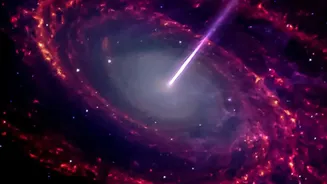
To see what’s hiding in those dark dust lanes, astronomers turn to infrared light. With its longer wavelength, infrared radiation can pass through cosmic dust clouds that obscure visible light. This is why telescopes like the James Webb Space Telescope (JWST) are revolutionary; they are primarily infrared instruments. An infrared view of a galaxy reveals its dusty skeleton, showing where the raw materials for new stars are located. These wavelengths trace the glow of cool dust and the formation of new stars, which are often completely hidden inside their dusty cocoons. In infrared, areas that appeared dark and empty in visible light can blaze brightly, revealing bustling stellar nurseries.
X-Rays and UV: The Most Energetic Events
At the higher-energy end of the spectrum, ultraviolet (UV) and X-ray light reveal a galaxy's most violent and energetic processes. UV light is a key tracer of the hottest, most massive, and youngest stars, offering another way to map star formation. X-rays, observed by satellites like the Chandra X-ray Observatory, take this a step further. They trace matter heated to millions of degrees. This allows astronomers to spot phenomena like the superheated gas swirling around a supermassive black hole at a galaxy's core, neutron stars, or the remnants of exploded stars (supernovae). An X-ray image often shows a galaxy that appears smaller and more condensed, highlighting only these extreme-energy hotspots.
Radio Waves: The Raw Fuel
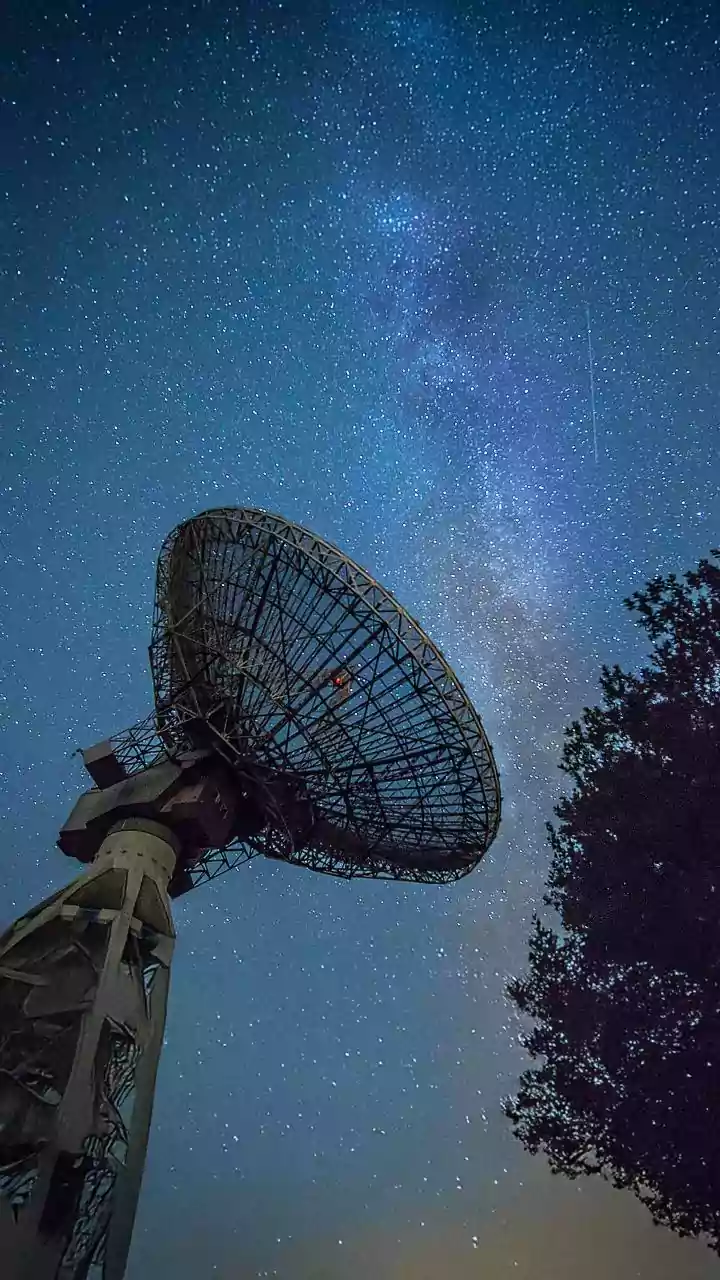
On the opposite end of the spectrum, long-wavelength radio waves allow astronomers to map the vast clouds of cool hydrogen gas spread throughout a galaxy. This gas is essentially the cold, raw fuel reserve for future generations of star formation. Since radio waves can also penetrate thick dust, radio astronomy was one of the first methods used to map the spiral structure of our own Milky Way. Radio telescopes can also detect highly magnetised, spinning stellar remnants called pulsars, which flash like cosmic lighthouses. A radio image of a galaxy looks vastly different from an optical one, often appearing as large, diffuse clouds instead of pinpoint stars.
The Full Picture
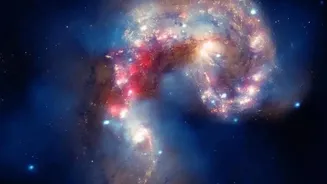
No single wavelength can tell the whole story. Astronomers create composite images by combining data from different telescopes, assigning visible colours to invisible wavelengths to translate the data into a picture we can appreciate. For instance, they might colour X-ray data blue, visible light green, and infrared red. The result is a multi-hued, breathtaking image that represents different materials and processes. The red glow of dust, the yellow light of old stars, and the blue tinge of X-ray gas all combine to give us a comprehensive understanding of how a galaxy lives, breathes, and evolves over billions of years.