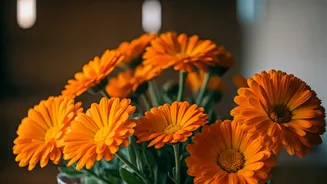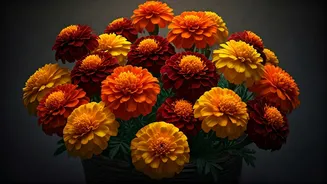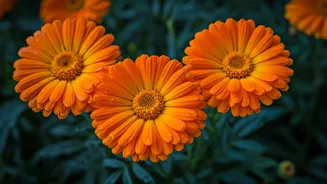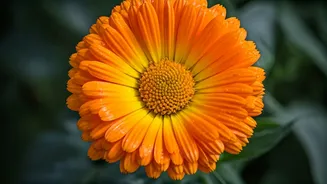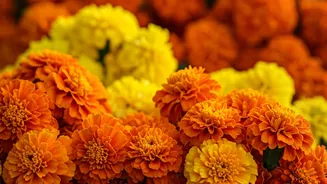









A Flower of Faith and Festivity
The marigold, or genda phool, is deeply woven into the fabric of faith in India. Its saffron and yellow hues are considered highly auspicious, symbolising the sun, positive energy, and surrender to the divine. This is why it's a favourite offering for
several deities, including Lord Vishnu, Goddess Lakshmi, and Lord Ganesha, who is the remover of obstacles. When offered in temples or used in home pujas, the flower is believed to bring peace and attract divine blessings. Beyond daily prayers, marigolds are the visual signature of almost every major festival, from Dussehra and Diwali to Navratri and Pongal. Garlands, or 'torans', are hung across doorways not just for decoration, but to welcome prosperity and ward off negative energy. This constant presence at life's most important moments has made the marigold synonymous with celebration itself.
The Hardy Hero of Indian Floriculture
A significant reason for the marigold's popularity is purely practical: it's an incredibly resilient and accessible flower. Originally introduced to India by Portuguese traders in the 16th century, the flower adapted exceptionally well to the country's diverse climates. Today, it is one of the most widely cultivated commercial flowers in states like Karnataka, Tamil Nadu, West Bengal, and Maharashtra. For small-scale farmers, marigold cultivation is a low-investment, short-duration crop that provides quick and reliable returns, especially with demand peaking during festival and wedding seasons. Unlike more delicate blooms that wilt quickly, marigolds stay fresh for days after being plucked, making them ideal for elaborate decorations and long ceremonies. This combination of durability and affordability ensures a steady supply from farms to local markets, making them the default choice for households and event planners alike.
More Than Just a Pretty Petal
The marigold’s value extends far beyond its decorative and religious roles. It is a flower with a purpose. Traditionally, its strong, sharp fragrance has been valued for its ability to act as a natural insect repellent, a useful feature for large outdoor gatherings and ceremonies. Furthermore, marigold has a place in traditional medicine. According to Ayurveda, it possesses healing properties that can help with skin infections, wounds, and rashes. The petals contain lutein, a pigment related to vitamin A, which is beneficial for eyesight. In the commercial sphere, this same pigment is extracted for use as a natural food colouring and as an additive in poultry feed to enhance the colour of egg yolks. Some varieties are even edible, used to add colour to teas and other dishes. This multi-purpose nature elevates it from a simple flower to a genuinely useful resource.
An Everyday Symbol of Joy
While grand festivals see the highest demand, the marigold is a constant presence in the daily lives of many Indians. It appears in everything from the garlands adorning auto-rickshaws and new vehicles to the floral arrangements at political rallies. Its presence signals a moment of importance, whether personal, public, or spiritual. The flower's round, full bloom is sometimes seen as a symbol of the completeness of life. Unlike rarer flowers reserved for special occasions, the marigold is an everyday symbol of faith and joy, accessible to everyone. It has become a visual language understood across the country, signifying welcome, blessing, and auspiciousness without a single word being spoken. Its journey from a foreign bloom to India's most beloved festival flower is a testament to its perfect blend of cultural meaning, resilience, and utility.