







The Moon's Ultimate Local Resource
The entire lunar surface is covered in a layer of fine, grey dust and rock fragments called regolith. Formed over billions of years by micrometeorite impacts, this material is a mix of rock, minerals, and glass. For decades, scientists have seen it as both
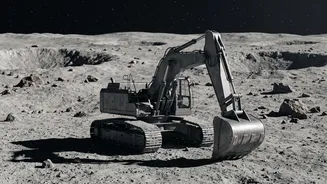
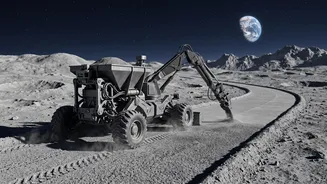
a nuisance and a treasure. While its sharp, abrasive particles can damage equipment, its composition—rich in silicon, aluminum, iron, and even oxygen—makes it an ideal raw material for construction. The concept, known as In-Situ Resource Utilization (ISRU), is simple: use what you find in space to build what you need in space. By turning lunar dust into landing pads, habitats, and roads, NASA and its partners can dramatically reduce the cost and complexity of future missions, paving the way for a long-term, sustainable presence on the Moon.
Printing a Home on the Moon
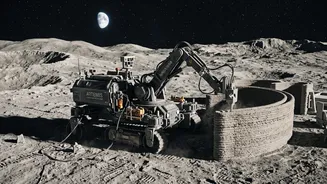
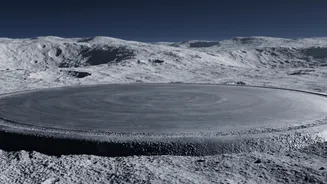
The leading technology to transform regolith into structures is large-scale 3D printing. NASA has partnered with companies like ICON, a Texas-based construction technology firm, on projects to make this a reality. One of the most prominent initiatives is ICON's 'Project Olympus', which is developing a 3D printing system designed to work in the harsh lunar environment. The process involves a high-powered laser that melts the lunar soil, which then cools and solidifies into a hard, ceramic-like material. This technique, sometimes called sintering, creates durable structures without needing traditional binders like concrete, which would require water—a precious resource in space. The goal is to create an automated system that can build everything from landing pads that prevent dangerous dust plumes to habitats that shield astronauts from radiation and extreme temperature swings.
From Earthly Prototypes to Lunar Plans
Much of the groundbreaking work is happening right here on Earth. Researchers use 'lunar regolith simulants'—materials specially formulated to mimic the chemical and mechanical properties of actual Moon dust—to test their technologies. ICON has already used its systems to 3D print full-scale homes in the US, proving the viability of the core technology. NASA's Moon to Mars Planetary Autonomous Construction Technology (MMPACT) project is also developing and testing regolith-based concretes and construction methods. These Earth-based tests are crucial for understanding how the material behaves and for refining the robotic systems before they are sent to the Moon. Through programs like Commercial Lunar Payload Services (CLPS), early missions will gather more data on regolith properties at potential construction sites to reduce uncertainties for engineers.
Hurdles on the Lunar Frontier
Despite the progress, significant challenges remain. Lunar regolith isn't uniform; its composition and properties can vary from one location to another, which affects how it melts and solidifies. The Moon's environment is also unforgiving. The lack of atmosphere leads to extreme temperature fluctuations, from over 120°C in sunlight to below -130°C in shadow, which can cause materials to expand and contract, potentially damaging structures. The fine, statically-charged dust is incredibly abrasive and can jam mechanical parts and wear down equipment. Furthermore, the energy-intensive process of melting regolith will require a powerful and continuous energy source, likely a lunar nuclear fission reactor, which itself is a major engineering challenge.