






The Promise of the Autonomous Agent
First, let's define our terms. An AI agent is more than just a chatbot; it's a program designed to understand a goal, make decisions, and take actions across multiple steps to achieve it. The hype suggests a near-future where you can simply tell an AI,
'Book me a weekend trip to Goa for next month', and it will handle everything from flights and accommodation to restaurant reservations, all without further input. Tech leaders have painted a picture of agents joining the workforce and fundamentally changing how companies operate. The excitement is palpable, with startups raising billions on the promise of creating these powerful, autonomous assistants that could one day become the primary interface for how we interact with the digital world.
Uber's Reality: A Tale of Two AIs
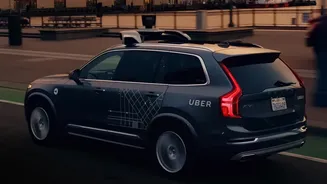
Uber's use of AI agents provides a perfect snapshot of the current landscape, revealing a split between internal efficiency and external adoption. Internally, AI agents are having a massive impact. The company has deployed systems, sometimes called 'Minions', to help engineers with tasks like writing and fixing code. In a few short months, one such agent went from contributing less than 1% of code changes to over 8%, with a human engineer simply reviewing and approving the work. However, on the customer-facing side, the story is starkly different. During its busiest week in October, Uber revealed that out of 320 million trips and deliveries, AI agents were used to book only four rides and about 500 Uber Eats orders. CEO Dara Khosrowshahi acknowledged the traction was 'very, very early and very limited'.
DoorDash and Airbnb: Practical, Not Magical
The pattern of modest, practical implementation continues at DoorDash and Airbnb. DoorDash has rolled out AI-powered features like a conversational assistant to help users discover restaurants and build grocery carts. The company has even enabled ordering via text message, where an agent translates a user's request into an order. But CEO Tony Xu noted these agents have generated only 'several hundred orders' in total, a tiny fraction of their overall volume. Similarly, Airbnb CEO Brian Chesky described agent-driven bookings on his platform as 'very non-material'. Instead, both companies are heavily investing in AI for internal and operational gains. DoorDash is building a complex internal agent platform to help employees access scattered data. Airbnb is using AI to help hosts with dynamic pricing, generate listing descriptions, and has reduced the cost of customer support by over 17% through AI improvements.
Why Hype is Outpacing Reality
So, why the enormous gap between the vision of all-powerful agents and the reality of a few hundred food orders? The challenges are both technical and organizational. Firstly, building reliable agents is incredibly difficult. They can 'hallucinate' or make up information, which is a major risk when dealing with customer orders or financial transactions. Secondly, the cost can be unpredictable and hard to justify without a clear return on investment. For many simple tasks, like ordering an Uber, existing apps are already incredibly efficient—taking a median of 50 seconds—so a conversational agent doesn't add much value. Finally, companies are grappling with significant challenges around governance, data security, and integrating these new systems with legacy technology. It's estimated that for every hour spent developing an AI model, four hours are spent on the 'sociotechnical' work of making it function safely and reliably in the real world.