



Catching a Planet's Shadow
Before scientists can study an exoplanet's atmosphere, they first need to find it, and one of the most successful methods is called the transit method. Think of it like watching a moth fly in front of a distant streetlamp. From far away, you can't see
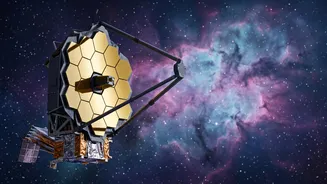
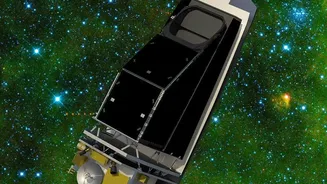
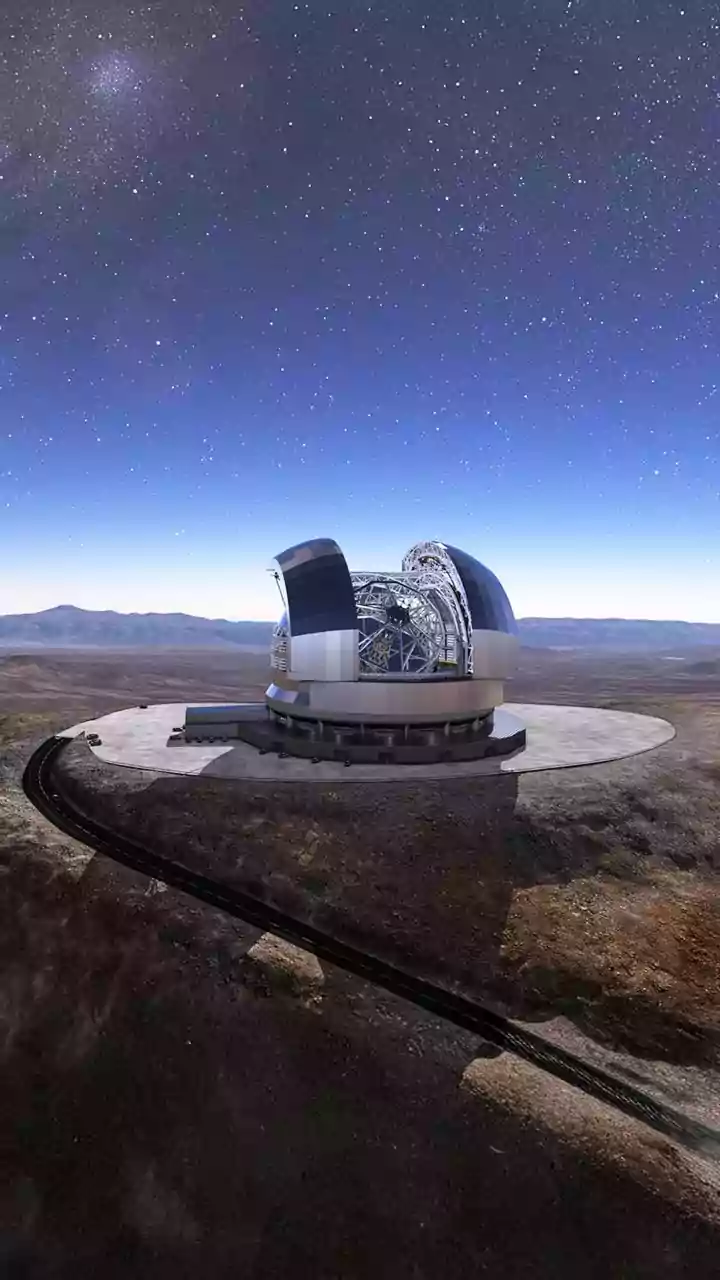
the moth itself, but you notice the lamp's light dim slightly as it passes. Astronomers use telescopes like the James Webb Space Telescope (JWST) to watch stars for these periodic, tiny dips in brightness. This dimming signals that a planet is orbiting the star, passing between the star and our line of sight. This technique not only confirms a planet's existence but also tells scientists its size and how long its year is, setting the stage for a much deeper investigation.
Decoding a Barcode of Light
Once a transit is confirmed, the real detective work begins. As the exoplanet passes in front of its star, a tiny fraction of the starlight filters through the planet's atmosphere. Scientists use a technique called transmission spectroscopy to analyse this light. In simple terms, the gases in the planet's atmosphere absorb specific colours, or wavelengths, of the starlight. Each gas—like water vapour, carbon dioxide, or methane—has a unique absorption pattern, like a chemical fingerprint or barcode. When telescopes split the starlight into a full spectrum, these fingerprints appear as dark lines. By reading these lines, astronomers can determine exactly what gases are present in the atmosphere of a world they will never directly visit.
From Gases to Supersonic Gusts
Detecting gases is one thing, but tracking their movement is the next level of cosmic meteorology. To do this, scientists don't just observe a single transit; they watch the planet through its entire orbit. By measuring the light from the planet at different phases, they can create a 'weather map'. For example, as the planet's day-side rotates into view, the telescope can measure the heat radiating from it. By combining this thermal data with spectroscopy, they can see how heat is distributed across the planet. Hotter spots and cooler spots reveal how winds are carrying energy from the scorching day-side to the frigid night-side on tidally locked planets. Some studies have even detected winds moving at kilometres per second, creating what can only be described as supersonic weather systems.
The 'Hot Jupiter' Laboratories
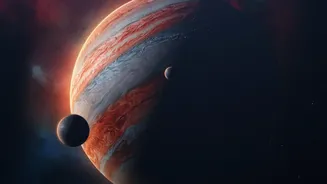
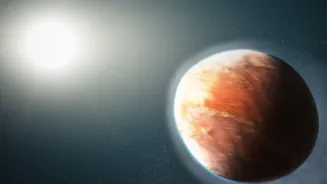
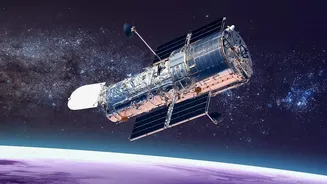
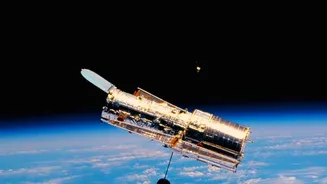
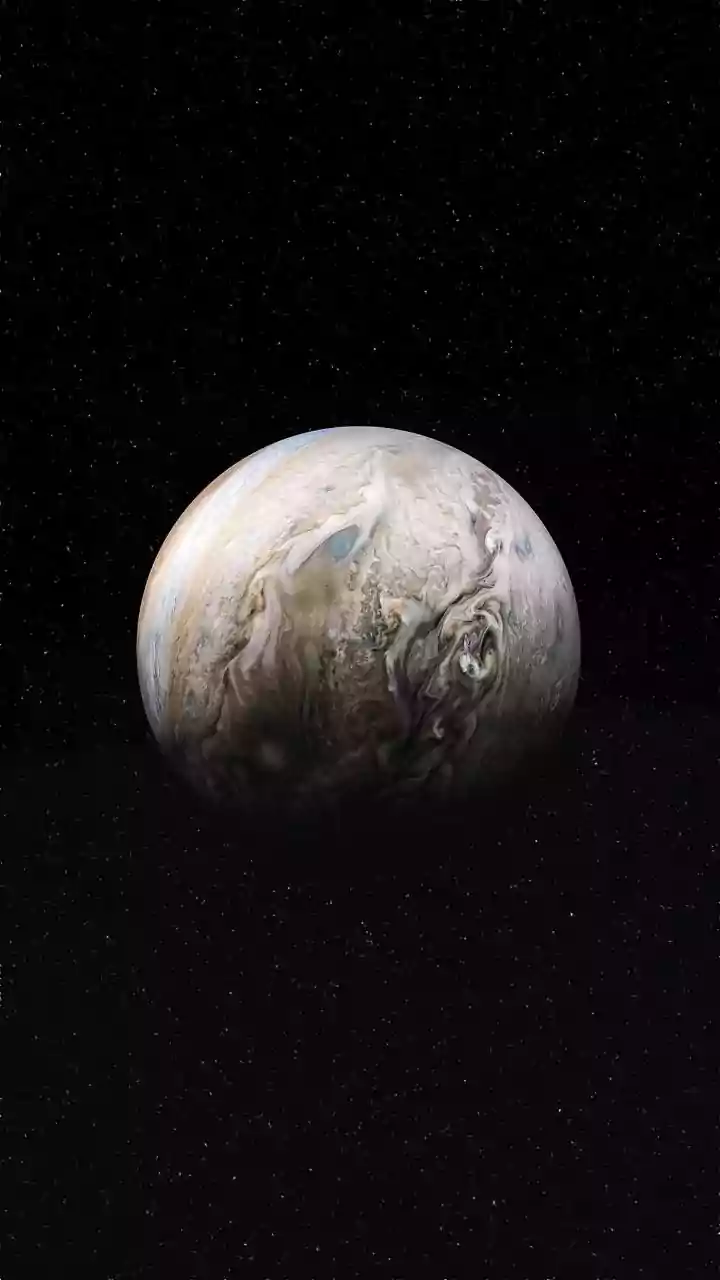
The "extreme exoplanets" in the headline often refer to a class of planets called 'hot Jupiters'. These are gas giants, similar in size to our own Jupiter, but they orbit incredibly close to their parent stars—some completing a full year in just a few Earth days. This proximity makes them blisteringly hot, with temperatures soaring to over 2000 Kelvin. While hostile, their extreme nature makes them perfect subjects for atmospheric study. Their puffed-up, expansive atmospheres provide a larger target for starlight to pass through, making the chemical signals easier for telescopes like Hubble and JWST to detect. Planets like WASP-121b and WASP-39b have become benchmark laboratories for testing theories of atmospheric physics under conditions unseen in our solar system.
Why Study a Distant Storm?
You might wonder why we spend so much effort studying the weather on a giant, scorching planet light-years away. The answer is that these extreme worlds push our understanding of planetary science to its limits. They help scientists refine their models of how atmospheres work, which is crucial for understanding planet formation and evolution. Furthermore, the technology and techniques developed to study these hostile giants are the same ones that will one day be used to search for 'biosignatures'—signs of life like oxygen and methane—in the atmospheres of smaller, rocky, Earth-like planets. Each discovery on a hot Jupiter is a step toward answering the ultimate question: are we alone in the universe?