





The First Test: Understanding the Labels
The first step to finding gear that lasts is decoding the jargon. You'll see terms like 'water-resistant' and 'waterproof', and they are not the same. Water-resistant gear can handle a light drizzle for a short time, but it won't stand up to a proper
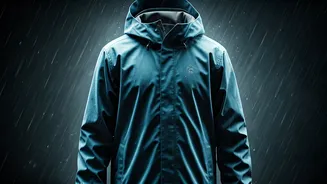
downpour. True waterproof fabric is rated using a hydrostatic head test, measured in millimetres (mm). This number shows how much water pressure a fabric can take before it leaks. For daily commutes in moderate rain, a rating of 5,000mm to 10,000mm is a good starting point. For heavy, persistent rain, especially during monsoon season, look for jackets rated 10,000mm and above. Anything over 20,000mm is designed for extreme conditions. This rating is your first clue to whether a jacket will survive its first real encounter with a storm.
The Second Challenge: Fabrics and Breathability
A jacket can be waterproof but leave you drenched in your own sweat. This is where breathability comes in, measured in grams (g/m²/24h). This rating tells you how much moisture vapour can escape from the inside. A higher number means better breathability, which is crucial for comfort in India's humid climate. For active use, a rating of 10,000g or more is ideal. The magic behind this is the fabric's construction. Many high-performance jackets use a waterproof/breathable membrane, a thin layer with microscopic pores too small for water droplets to enter but large enough for sweat vapour to exit. Gore-Tex is the most famous brand name, but many companies like The North Face (DryVent) and Patagonia (H2No) have their own excellent proprietary technologies. These fabrics come in 2-layer, 2.5-layer, and 3-layer constructions, with 3-layer being the most durable and often most breathable, designed for serious use.
The Third Victory: Construction and Details
Even the best fabric will fail if the jacket is poorly made. The true mark of quality lies in the construction details. Every stitch creates a tiny hole, which is a potential leak point. To combat this, quality rainwear has 'taped seams', where a waterproof tape is applied over the stitching to seal it completely. Jackets can be 'critically taped' (only major seams are sealed) or 'fully taped' (every single seam is sealed). For monsoon conditions, fully taped seams are non-negotiable for maximum protection. Also, check the zippers. Look for water-resistant zippers, often identifiable by a rubbery coating, or a 'storm flap'—an extra flap of fabric that covers the zipper to keep rain out. These small details are what ensure a jacket wins the battle against the third, fourth, and fiftieth downpour.
Beyond the Purchase: Making Your Gear Last
Your jacket's first line of defence is often a Durable Water Repellent (DWR) coating. This is a chemical finish that makes water bead up and roll off the surface. Over time, dirt, oils, and regular wear can cause this coating to fail, a problem known as 'wetting out'. When this happens, the outer fabric gets saturated, and while the underlying membrane may still be waterproof, the jacket's breathability plummets. To extend the life of your gear, it's essential to care for it properly. Wash your jacket regularly, but only with a specialised technical cleaner, not standard laundry detergent, which can strip the DWR finish. You can then reactivate the DWR by tumble drying on a low setting or restore it completely with a spray-on or wash-in re-proofing product. With proper care, a quality jacket can last for many years, making it a worthy investment.