




Venus at Its Brightest
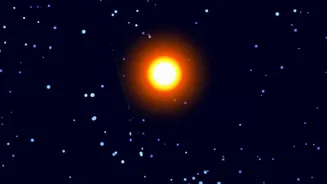
Venus, often called the 'Evening Star', will be unmissable this month, reaching its peak brightness for the year on September 22. Shining at a brilliant magnitude of -4.8, it will be one of the easiest objects to spot in the sky, even from light-polluted
cities. Look for this dazzling beacon in the western sky just after sunset. Though it appears brightest on this date, its stunning luminosity will be a highlight for several nights before and after. On September 14, a beautiful crescent Moon will have a close encounter with Venus, creating a stunning pair in the evening sky that will be visible to the naked eye.
Neptune's Closest Approach
September 26 offers a challenge for more dedicated observers: Neptune at opposition. This is when Earth passes directly between the Sun and the distant ice giant, making Neptune appear at its biggest and brightest for the entire year. While it will be at its closest point to Earth, don't expect a dramatic sight with the naked eye; Neptune is never visible without optical aid. You will need at least a good pair of binoculars or a small telescope to spot it in the constellation Pisces, where it will appear as a faint, star-like point of light. The planet will be visible all night long, rising in the east at sunset and reaching its highest point around midnight.
The Harvest Moon Spectacle
The month's celestial events are capped off by the famous Harvest Moon on September 26. This is the name given to the full moon that falls closest to the autumnal equinox. The peak illumination occurs during the day for India, so the best time to watch will be that evening as it rises. For several nights around this date, the moon rises at nearly the same time shortly after sunset, a phenomenon that historically gave farmers extra light to bring in their crops. Look for the full-looking moon in the constellation Pisces on the nights of September 25, 26, and 27. Nearby, you may also be able to spot the planet Saturn with your naked eye.
The Autumnal Equinox
Not a viewing event in itself, the Autumnal Equinox on September 23 is still a significant date for any sky-watcher. At 5:35 AM IST, the Sun will shine directly over the Earth's equator, marking the moment when day and night are of nearly equal length across the globe. For those in the Northern Hemisphere, this event signals the official start of autumn. The practical benefit for stargazers is that nights will now become progressively longer than days, offering more precious hours of darkness for observing the wonders of the cosmos.
Best Nights for Deep-Sky Viewing
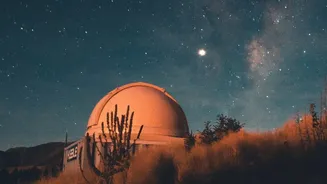
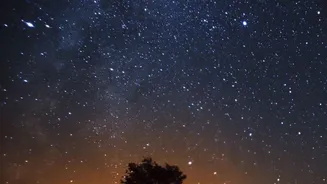
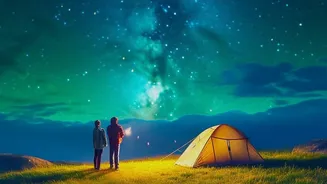
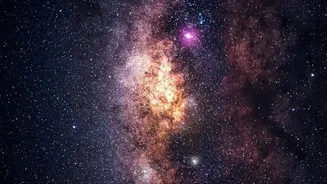
While bright moons and planets are exciting, sometimes the best event is the absence of light. The New Moon falls on September 11, creating the darkest skies of the month. This is the ideal time to venture away from city lights to see fainter objects. With no moonlight to wash them out, the star-dusted lane of the Milky Way, distant galaxies like Andromeda, and faint star clusters become much easier to spot. As the post-monsoon clarity improves air transparency, these moonless nights in September are a golden opportunity for deep-sky observation, especially from darker locations like Hanle, Spiti Valley, or the Rann of Kutch.