





From a Still Photo to a Movie
Not long ago, in 2019, the world was mesmerized by the first-ever direct image of a black hole. The Event Horizon Telescope (EHT) collaboration, a global network of synchronized radio observatories, captured the shadow of the supermassive black hole at the heart
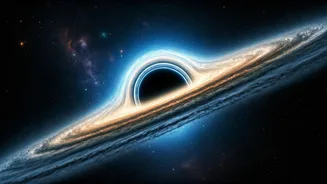
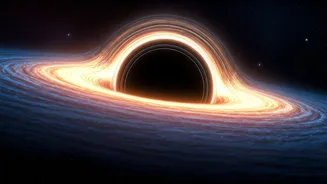
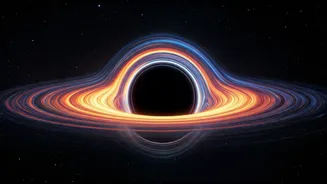
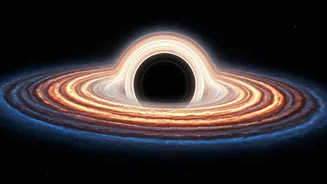
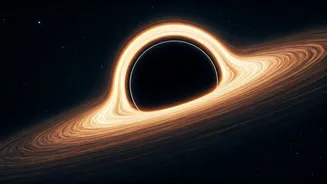
of the M87 galaxy. It was a monumental achievement, turning science fiction into fact. But it was a static image, a single moment frozen in time. The environment around a black hole is anything but static; it's a maelstrom of superheated gas, powerful magnetic fields, and warped spacetime. The latest breakthrough is the ability to create movies from this data, sequencing images captured over different periods to reveal the dynamic, turbulent dance of matter on the brink of infinity. This is not real-time in the sense of a live video feed, but it is a revolutionary step toward observing change and motion in one of the universe's most extreme environments.
The Technology That Makes It Possible
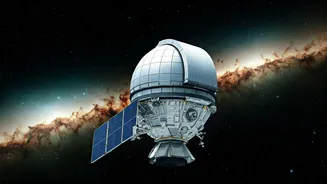
Capturing a black hole isn't like taking a picture with a normal camera. The EHT uses a technique called Very Long Baseline Interferometry (VLBI). This method links radio telescopes across the globe, effectively creating a virtual telescope the size of Earth. The incredible resolution this provides is what’s needed to see an object as distant and relatively small in the sky as a black hole's event horizon. To create dynamic views, scientists are refining this process. By adding more telescopes to the array, like the Africa Millimetre Telescope, and improving the algorithms that process petabytes of data, they can capture sharper data over shorter time scales. These complex algorithms sift through the noise and combine the signals from each telescope, accounting for the different arrival times of light, to reconstruct a coherent image—and now, a sequence of images that reveals motion.
What We Can See and Learn
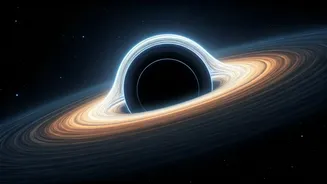
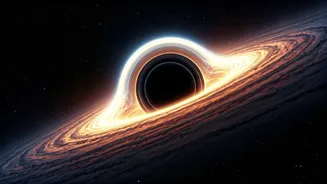
So what do these black hole movies show? They reveal the chaotic swirling of the accretion disk—the hot gas spiraling into the black hole. Scientists can now track how this material brightens, dims, and shifts, offering clues about how black holes feed. More importantly, they can observe the behavior of powerful magnetic fields near the event horizon. Recent observations have shown these magnetic fields can flip and change, which may explain how some black holes launch colossal jets of particles at nearly the speed of light. These jets are immensely powerful, capable of shaping the evolution of entire galaxies. By tracking these dynamics, astronomers can move from theoretical models to direct observation, testing which theories of plasma physics and magnetism hold up under such immense gravity.
Testing Einstein at the Edge of Reality
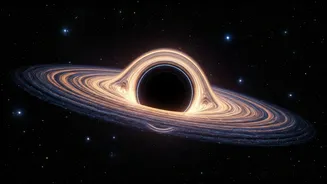
One of the most exciting implications of this new capability is the ability to test Albert Einstein's theory of general relativity in an environment where it's pushed to its absolute limit. General relativity has passed every test we've thrown at it so far, but it has never been directly observed under the extreme conditions of a black hole's edge. The shape and size of a black hole's shadow are direct predictions of Einstein's equations. By watching how that shadow wobbles or changes as the black hole spins and consumes matter, scientists can look for tiny deviations from what the theory predicts. Finding any such discrepancy could point the way to a new, more complete theory of gravity, potentially one that unifies relativity with quantum mechanics—the holy grail of modern physics.