





Beyond the 10-Minute Kirana
The first wave of quick commerce, led by giants like Blinkit, Zepto, and Swiggy Instamart, fundamentally rewired urban Indian consumption. The promise of 10-to-20-minute delivery for daily essentials turned a novelty into a household expectation. This
initial phase was all about replicating the neighbourhood kirana store's convenience, digitally and at speed. Customers grew accustomed to ordering milk, bread, and vegetables on a whim. Now, these platforms are leveraging the vast delivery infrastructure and consumer trust they've built to ask a bigger question: if you can get potatoes in 10 minutes, why not a pair of headphones or a t-shirt?
The New Quick Commerce Basket
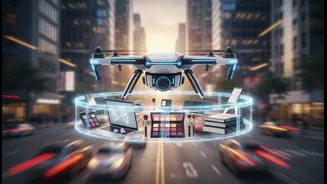
The diversification is already underway. Blinkit, Zepto, and Swiggy Instamart are aggressively expanding into higher-value, non-grocery categories. Zepto, for instance, has been vocal about its plans to become a “Super Mall,” delivering electronics, beauty products, and fashion. Swiggy has integrated its 'Mall' feature into Instamart, offering products from brands like HP, Croma, and Puma in select areas. This new basket includes phone chargers, basic apparel like t-shirts, beauty and personal care items, small home appliances, and even toys. Some reports indicate that non-grocery items already contribute a significant portion of gross merchandise value for these platforms, a share that is expected to grow. This signals a strategic pivot from low-margin groceries to more profitable product lines.
Why Now? The Drivers of Diversification
This expansion isn't just about offering more choice; it's a strategic necessity. Firstly, grocery delivery operates on razor-thin margins, making profitability a constant challenge. High-margin categories like electronics, beauty, and fashion offer a much clearer path to improving unit economics. Secondly, these companies have invested billions in creating dense networks of 'dark stores'—hyperlocal warehouses that power rapid deliveries. To get a better return on these fixed costs, they need to increase the average order value (AOV) and the frequency of purchases. Selling a INR 1500 pair of headphones is more profitable than a INR 50 packet of milk. The goal is to capture a larger share of the consumer's wallet, moving from being an emergency grocery app to the default platform for any urgent urban need.
Not Just a Faster Amazon
It's crucial to understand that quick commerce for electronics or fashion is not trying to be a faster version of Amazon or Flipkart. Traditional e-commerce is built for planned purchases, relying on large, centralized warehouses and slower delivery timelines. Quick commerce, in contrast, is optimized for impulse buys and immediate needs. You don't use Blinkit to research and buy a new TV; you use it when your phone charger breaks an hour before a meeting. This model thrives on a curated, limited selection of high-demand items stored locally, rather than an endless aisle. Success depends on predicting what a neighbourhood will need urgently and having it ready to go, a fundamentally different logistical puzzle than that of mass e-commerce.
Hurdles on the Hyper-Fast Highway
Despite the opportunity, the road ahead is filled with challenges. Managing inventory for diverse categories like fashion—with its multiple sizes and colours—is far more complex than for standardized groceries. The issue of product returns, a standard practice in fashion e-commerce, is a logistical nightmare for a 10-minute delivery model; some platforms are experimenting with no-return policies to combat this. Furthermore, the environmental impact, including packaging waste and vehicle emissions from frequent, small-ticket deliveries, is a growing concern. Above all, the core economic model remains under pressure. While high-value items can boost margins, the high operational costs associated with maintaining a massive, on-demand delivery fleet mean that the path to sustainable, long-term profitability is still being paved.