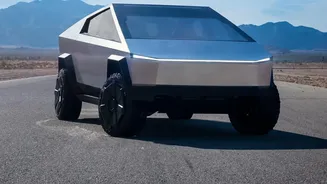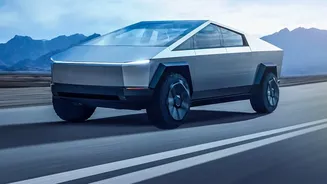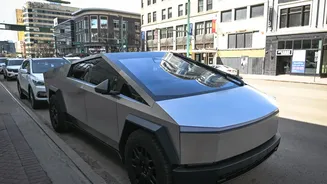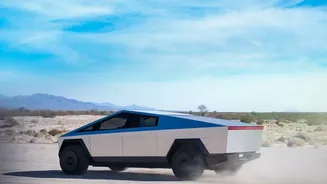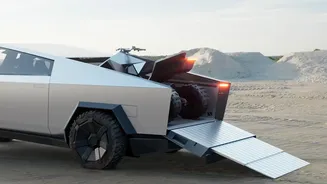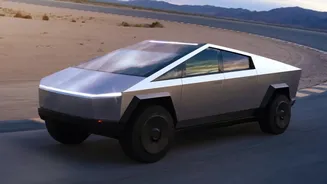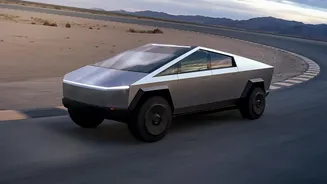






It is one of the most polarizing and recognizable vehicles on the road, but the long-term future of the Tesla Cybertruck is shrouded in uncertainty. Recent announcements have confirmed its production is being wound down at its only factory.
A Radical Shift in Strategy
In a move that
surprised many, CEO Elon Musk announced in early November 2026 that Tesla will wind down production of the Cybertruck at its Gigafactory in Texas by mid-2027. The reason given was to free up manufacturing capacity for the 'Cybercab', the company's planned two-seat autonomous robotaxi. This announcement effectively ends the Cybertruck's production run at its sole manufacturing site, leaving its ultimate fate in question. Musk did not clarify whether production would move elsewhere or cease entirely, creating significant ambiguity for investors, employees, and the thousands of customers who placed reservations. While Musk noted the existing fleet will be 'around for a long time', the project's lead engineer has suggested the truck's innovations will live on through the Cybercab, hinting at a definitive end.
A Victim of Its Own Ambition
From the very beginning, the Cybertruck was a manufacturing nightmare by design. Its stainless-steel exoskeleton, while visually striking, is notoriously difficult to work with, leading to challenges in achieving consistent panel gaps and quality finishes. Even before the first customer delivery in late 2023, Musk admitted the company had 'dug our own grave with Cybertruck', citing the 'enormous challenges' in ramping up production and making it profitable. The truck's production was plagued by multiple delays, quality concerns, and numerous recalls for issues ranging to accelerator pedals to exterior trim panels. The initial production ramp-up was slow and never came close to the ambitious targets Musk had set.
Falling Short of Lofty Goals
Tesla initially projected it could produce and sell as many as 250,000 Cybertrucks annually. However, the reality fell dramatically short. Sales have been underwhelming compared to the initial hype, which once included over a million refundable reservations. In 2025, Tesla sold just over 20,000 Cybertrucks in the U.S., a significant drop from the nearly 39,000 sold in 2024. For context, Ford often sells over 70,000 of its F-Series trucks in a single month. The vehicle is not sold in Europe due to failure to meet safety standards. Tesla does not report Cybertruck sales directly, bundling them into an 'Other Models' category that only saw 8,300 total deliveries in the third quarter of 2026.
Shifting Priorities and the Mexico Question
The decision to prioritize the Cybercab is part of a larger strategic shift at Tesla towards autonomous driving, robotics, and artificial intelligence. This pivot directs immense capital and engineering resources away from solving the Cybertruck's complex scaling issues. For a time, it was believed that Tesla's next Gigafactory in Mexico could play a role in the company's future vehicle plans, potentially including a version of the Cybertruck. However, the Mexico project has faced significant delays. Announced in early 2023, plans for the factory were reportedly paused amid global economic uncertainty and political considerations, with the site remaining largely undeveloped for years. While Tesla finally confirmed its investment decision for the Mexico plant in May 2026 with a target for first production in late 2027, the focus is on other vehicles like a smaller, next generation car, not saving the Cybertruck.