
The Moon’s Two Faces
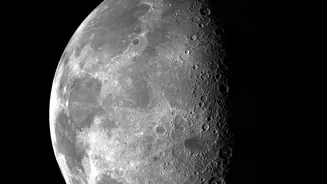
Look up at the full Moon, and you’ll see a familiar pattern of dark patches and bright highlands—the 'Man in the Moon'. These dark areas are vast, smooth volcanic plains called 'maria', formed by ancient lava flows. This near side is relatively flat with
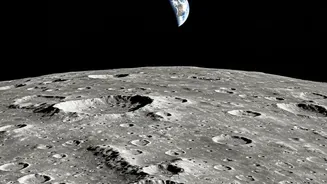
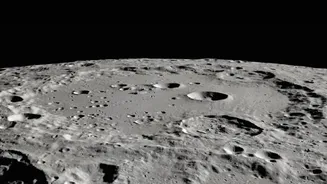
a thinner crust. In stark contrast, the far side, hidden from Earth’s view, is a different world. First revealed by spacecraft in 1959, it is rugged, almost entirely covered in craters, and has a crust that is significantly thicker and geologically distinct. For decades, scientists have debated why our Moon has such a split personality, a puzzle known as the lunar dichotomy.
A Mission to the Hidden Side
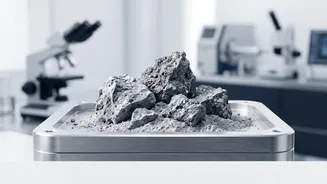
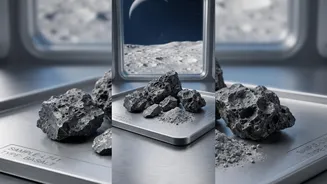
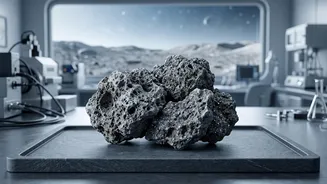
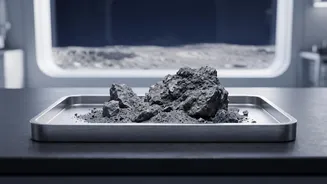
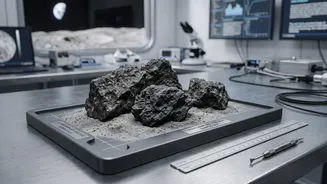
Getting answers required getting our hands dirty—with lunar dust. The breakthrough came with China’s Chang’e-6 mission, which in 2024 successfully landed in the South Pole-Aitken (SPA) basin on the far side and returned nearly two kilograms of rock and soil to Earth. This was a monumental achievement, as all previous samples from the Apollo, Luna, and Chang'e-5 missions came from the near side. The SPA basin is the largest and oldest impact crater on the Moon, a colossal scar from an ancient collision that likely punched deep into the lunar crust, and possibly even the mantle, making it a prime location to hunt for geological clues.
What the Farside Rocks Revealed
The first analyses of these precious farside samples, published in late 2026, delivered a major surprise. Scientists led by a team from Nanjing University compared the new rocks to existing near-side samples and found that while the crusts were very different, the deeper mantle material from which they originated was broadly similar. The far side's crustal rocks were richer in magnesium, while the near side is famously concentrated in elements like potassium, rare earth elements, and phosphorus (collectively known as KREEP). This finding ruled out the idea that the entire Moon was built asymmetrically from the inside out. The difference, it seems, developed after the mantle formed.
Earth's Gravity as the Sculptor
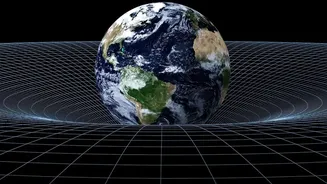
The new leading theory points a finger at our own planet. Shortly after its formation, the Moon’s rotation slowed until it became tidally locked, with one side permanently facing Earth. When this happened, the Earth and Moon were much closer, and Earth’s powerful gravity exerted a stronger tidal pull on the near side. According to the new model, this created uneven heating within the Moon’s ancient, molten magma ocean. This thermal imbalance triggered vast, slow-moving currents. Hotter material and lightweight, floating crust were effectively pushed from the near side towards the far side. This process gradually piled up crustal material on the far side, making it thicker and more magnesium-rich, while the heat-producing KREEP elements became concentrated on the near side, fuelling the volcanism that created the dark maria we see today.
Solving a Decades-Old Puzzle
This model elegantly explains how a chemically similar mantle could produce two vastly different surfaces. It wasn't that the building blocks were different, but that Earth's influence redistributed them during the Moon's infancy. The tidal forces essentially scraped the lighter crustal material over to one side, like foam being pushed to the edge of a cup. While scientists note that these samples come from one location and more research is needed to confirm the theory, the evidence from the Chang'e-6 rocks provides the strongest explanation yet for the Moon's lopsided landscape. By directly comparing rocks from both hemispheres for the first time, we have gained a new understanding of the powerful planetary processes that shaped our closest celestial neighbour.