





A Brain in Orbit
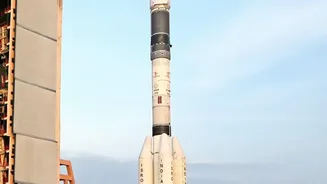
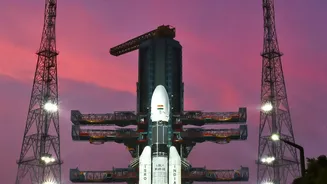
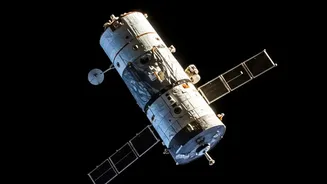
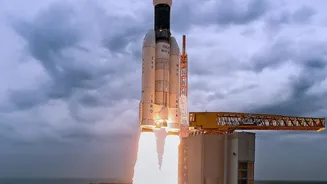
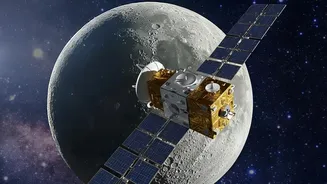
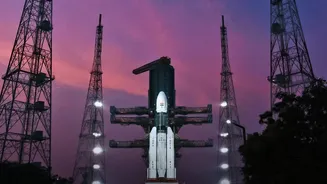
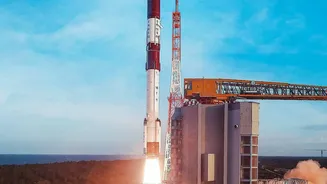
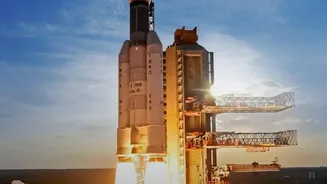
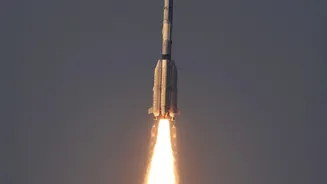
India's space agency, ISRO, has been successfully testing a novel concept: moving a satellite's brain from the ground into orbit. Using the PSLV Orbital Experimental Module (POEM), a platform created from the spent fourth stage of its workhorse rocket,
ISRO has been hosting payloads that test new technologies. Among these have been experiments with on-board AI processing. Instead of just capturing vast amounts of data and beaming it all back to Earth, these systems use AI chips to analyze information directly on the satellite. For example, an AI can be trained to pre-process imagery, identifying ships, classifying vegetation, or flagging changes on the ground without human intervention. This shift from a simple data collector to an intelligent orbital analyst represents a fundamental change in how we conduct missions in space.
Solving the Data Dilemma
The primary problem that orbital AI solves is the data bottleneck. Modern Earth observation satellites generate terabytes of information, but the bandwidth available to send it back to ground stations is limited and costly. Often, much of this data is unusable—think of images completely obscured by clouds or vast, unchanging stretches of open ocean. On-board AI acts as an intelligent filter. It can autonomously sort through the data, discarding what's irrelevant and prioritizing what's important. This means only valuable, actionable insights are transmitted to Earth, saving bandwidth, reducing latency, and getting critical information to decision-makers faster. In disaster management scenarios like wildfires or floods, shrinking the delay from hours to minutes can be life-changing.
The Dawn of Autonomous Spacecraft
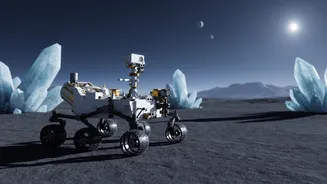
The implications of on-board AI extend far beyond Earth orbit. For deep space missions, such as rovers on Mars or probes heading to the outer planets, the communication lag is immense. It can take over 20 minutes for a signal to travel one way between Earth and Mars, making real-time remote control impossible. An AI-powered spacecraft can navigate these alien environments on its own. NASA’s Perseverance rover already uses an autonomous navigation system to plot its course safely around hazards. Future missions could use AI to make scientific decisions independently, such as identifying a geologically interesting rock formation and deciding to analyze it without waiting for instructions from scientists millions of miles away. AI can also monitor the spacecraft's own health, predict component failures, and perform autonomous collision avoidance maneuvers, crucial in the increasingly crowded environment of low Earth orbit.
From Startups to National Security
India's experiments are part of a global trend, with both government agencies like ESA and private companies developing their own on-orbit AI capabilities. Indian startups are also playing a significant role. Companies like TakeMe2Space are developing AI-powered star trackers for precise satellite navigation, while Pixxel is building satellites with on-board hyperspectral image processing. These capabilities are not just for scientific exploration; they have profound commercial and strategic value. Real-time monitoring can be used for precision agriculture, tracking illegal fishing, or monitoring infrastructure. For defence and national security, having a satellite that can identify and flag activity autonomously provides a significant intelligence advantage.
Challenges on the Final Frontier
Putting a sophisticated computer in space is not easy. The hardware must be 'radiation-hardened' to withstand the harsh environment of orbit, where solar flares and cosmic rays can damage electronics. AI systems are also power-hungry, a significant constraint on satellites that rely on solar panels. Furthermore, developing and training AI models for space applications requires extensive testing and validation before launch, as there is no easy way to fix a software bug once the spacecraft is in orbit. Despite these hurdles, the path is clear. The ability to process data at the 'edge'—directly where it is collected—is unlocking a new paradigm of faster, more resilient, and more intelligent space missions.