

The Moon’s Most Valuable Commodity
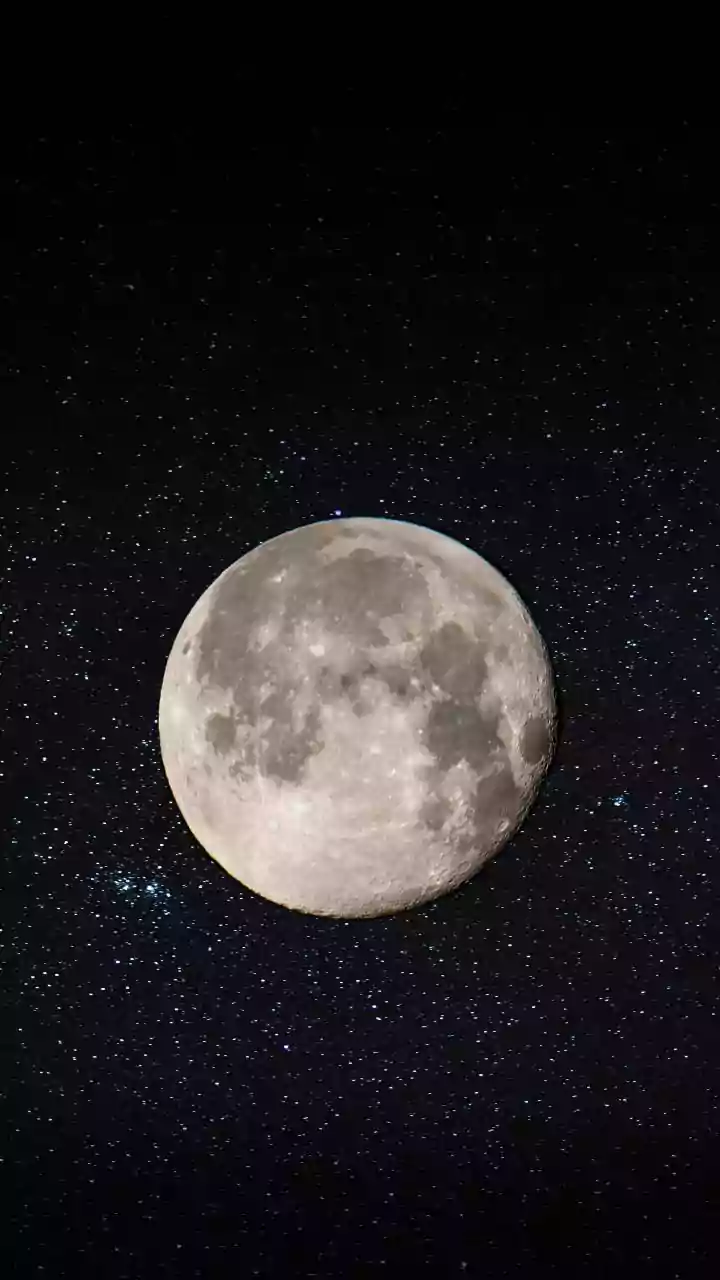
For decades, the Moon was thought to be completely dry. But data from missions, including India's Chandrayaan-1, proved that our celestial neighbour holds significant quantities of water, primarily as ice hidden in permanently shadowed craters near the poles.
This discovery changed everything. This isn't just about finding drinking water for astronauts. Lunar water is a strategic resource that can be split into its components: hydrogen and oxygen. These elements provide breathable air for habitats and, crucially, can be combined to create powerful rocket propellant. The ability to refuel on the Moon—a concept called in-situ resource utilization (ISRU)—could dramatically lower the cost of deep-space missions, turning the Moon into a vital interplanetary refueling station.
Charting the Hidden Reserves
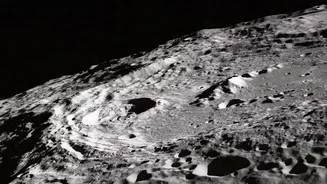
Finding this ice requires a new kind of cartography. Lunar water ice maps are not like traditional maps with lines and borders; they are complex data visualisations built from multiple sources. Orbiters like NASA's Lunar Reconnaissance Orbiter (LRO) and India's Chandrayaan-2 use instruments like spectrometers and radar to detect the chemical signature of hydrogen below the surface. Data from these missions is layered to create detailed maps that show areas with a high probability of containing water ice. These maps often use colour-coding to represent the concentration and depth of these deposits, which are mostly found in permanently shadowed regions (PSRs) near the lunar poles, where temperatures are cold enough to preserve the ice for billions of years.
From Map to Mission Blueprint
These resource maps are the foundational blueprints for long-term lunar operations. Mission planners for programs like NASA's Artemis use them to identify the most promising and safest landing sites for both robotic and human missions. Instead of landing blindly, space agencies can now target locations that are scientifically rich and resource-abundant. This data-driven approach is critical for mission success. A map indicating a large, shallow ice deposit near a well-lit ridge (for solar power) is an ideal candidate for a future lunar base. By knowing where to go, missions can be designed more efficiently, carrying less water from Earth and dedicating more payload to scientific instruments and habitat infrastructure.
The Next Step: Ground Truth
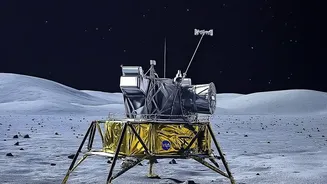
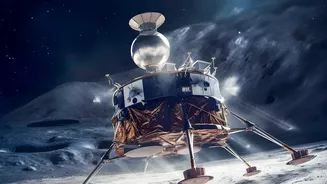
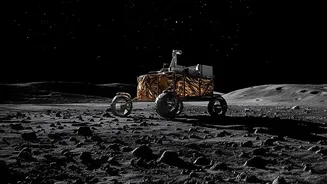
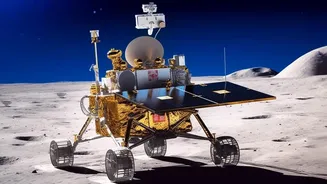
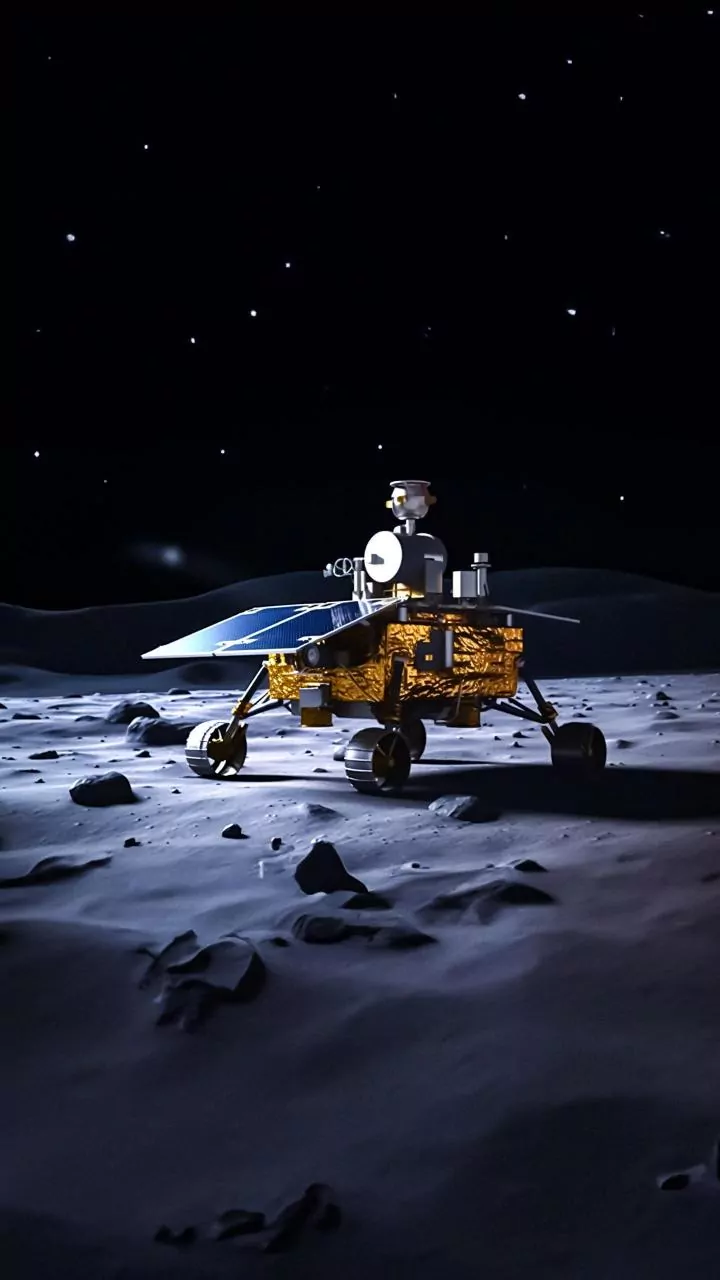
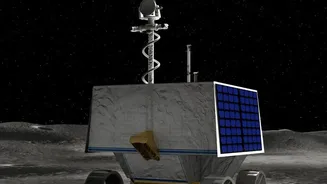
While orbital maps are essential, they are only the first step. The next phase involves 'ground-truthing'—sending rovers to confirm the presence, quantity, and purity of the water ice. Upcoming missions from NASA, the European Space Agency (ESA), and a joint effort by Japan and India (JAXA and ISRO) are designed to do just that. Rovers equipped with drills and spectrometers will be sent to the most promising locations identified by the maps. These robotic prospectors will drill into the lunar regolith (soil), analyse the composition of the material, and send back high-resolution data that will refine our understanding and create even more accurate maps for future extraction operations. This on-the-ground verification is the bridge between knowing the water is there and being able to use it.
India’s Key Role in the Lunar Economy
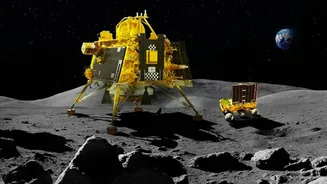
India has emerged as a crucial player in this new era of lunar exploration. The groundbreaking discovery of water by Chandrayaan-1 in 2008 fundamentally shifted our understanding of the Moon. More recently, data from the Chandrayaan-2 orbiter's advanced radar has provided strong evidence of subsurface ice deposits, further enhancing the maps used by the global scientific community. With the historic soft-landing of Chandrayaan-3 near the south pole in 2023, India proved its capability to operate in this strategically vital region. As the world plans for a multi-billion dollar lunar economy, India's scientific contributions and technical prowess position it not just as a participant, but as a leader shaping the future of off-world resource utilisation.