


More Than a Packed Lunch
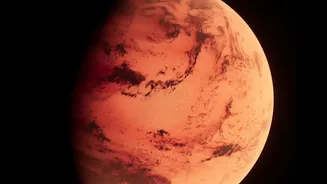
A mission to Mars is a multi-year commitment. Packing enough freeze-dried meals for the entire journey is logistically daunting and incredibly expensive due to weight. More importantly, pre-packaged food degrades over time, losing vital nutrients like
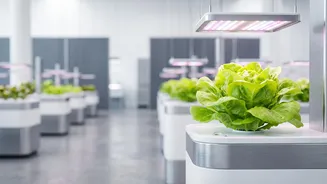
vitamins C and K. For astronauts to stay healthy on a years-long mission, they need a source of fresh, nutrient-rich food. Experiments on the International Space Station (ISS), like the 'Veggie' and 'Plant Habitat' systems, have successfully grown lettuce, cabbage, kale, and even chili peppers. These space gardens provide essential nutrition and a welcome change from standard space rations. For a Mars colony, the ability to cultivate staple crops like potatoes, wheat, and soybeans would be non-negotiable for long-term survival.
The Ultimate Life Support System
Plants do much more than provide food; they are nature's own life support technology. Through photosynthesis, they absorb the carbon dioxide that astronauts exhale and convert it into breathable oxygen. On a long-duration mission, this biological process is a crucial component of a self-sustaining habitat, known as a Bioregenerative Life Support System (BLSS). Instead of relying entirely on mechanical systems and finite oxygen tanks shipped from Earth, a Martian greenhouse would continuously recycle the air. Furthermore, through a process called transpiration, plants release water vapor, which can be captured and recycled, helping to manage humidity and conserve a precious resource on a dry planet. This makes plants an indispensable part of creating a closed-loop ecosystem, dramatically reducing the need for resupply missions from Earth.
Solving the Soil Problem
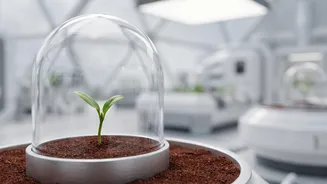
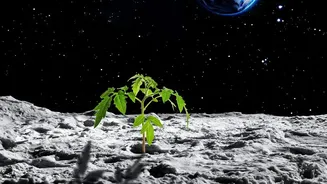
You can't just stick a seed in Martian ground and expect it to grow. The surface of Mars is covered in 'regolith,' not soil. This fine, dusty material lacks the organic matter and essential nutrients, like nitrogen, that plants need to thrive. Worse, it contains toxic perchlorate salts, which are harmful to both plants and humans. Scientists are tackling this challenge from multiple angles. One strategy involves 'washing' the regolith to remove the harmful salts. Another promising approach is to use pioneer plants like alfalfa, which can grow in the nutrient-poor simulant and then be used as a biofertilizer to enrich the regolith for other food crops like radishes and lettuce. Researchers are also exploring the use of beneficial fungi and microbes to break down toxins and make nutrients available, kickstarting the process of turning alien dust into living soil.
A Touch of Home in a Harsh World
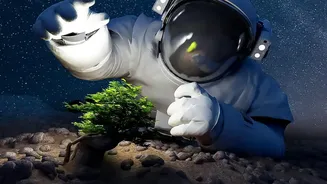
The psychological toll of being isolated for years, millions of miles from home, cannot be overstated. Astronauts live in sterile, engineered environments. Introducing plants offers a vital connection to nature. Studies conducted with astronauts on the ISS and in analogous isolated environments like Antarctica show that gardening reduces stress, improves mood, and provides a meaningful, engaging task. The simple act of caring for a living thing can combat feelings of isolation and boredom. Astronauts have reported finding the experience of tending to plants relaxing and enjoyable. The sensory stimulation—the sight of green leaves, the smell of fresh herbs—provides a powerful boost to morale and well-being, a small piece of Earth to make the alien landscape feel more like home.