







Step 1: Prepare Before You Leave
A safe monsoon commute begins long before you turn the key in the ignition. The single most stressful season for vehicles in India is the monsoon, and preparation is your best defence. Start with a thorough vehicle check. Your tyres are your only contact
with slick roads, so ensure they have adequate tread depth. A simple check can be done with a one-rupee coin; if the top of the Ashoka Pillar is hidden by the rubber, your treads are likely sufficient. Next, inspect your brakes. Wet roads significantly increase braking distances, so your brakes must be in top condition. Listen for any unusual sounds and get them checked if you have any doubts. Visibility is non-negotiable. Test your wiper blades; if they squeak, chatter, or leave streaks, replace them immediately. Likewise, ensure all your lights—headlights, taillights, brake lights, and indicators—are clean and functional. During a downpour, you need to see and be seen. Finally, check your route. Use apps that provide real-time traffic and weather alerts to identify waterlogged areas and plan alternatives.
Step 2: Master Safe Driving on Wet Roads
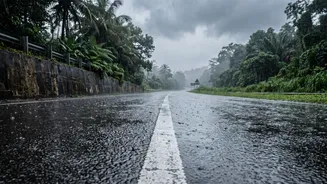
Once you are on the road, your driving style needs to adapt to the conditions. The most important rule is to slow down. Roads are slickest during the first 15 minutes of rainfall, as the water mixes with oil and grime on the asphalt, creating a treacherous film. Reduce your speed by at least 10-15 km/h below the limit and double your following distance from the vehicle in front. This gives you more time to react and brake safely. Avoid sudden braking or sharp turns, which can cause your car to skid. If you feel the car hydroplaning—a sensation of gliding on water as the tyres lose contact with the road—do not panic or slam the brakes. Ease off the accelerator and steer gently in the direction you want to go until you feel the tyres regain traction. Keep your headlights on low beam even during the day to increase your visibility to other drivers.
The Golden Rule: Turn Around, Don't Drown
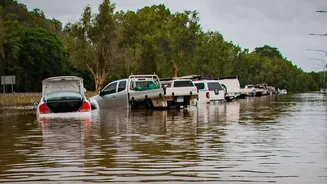
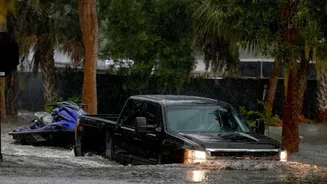
You will inevitably encounter waterlogged streets. The most critical piece of advice is simple: do not drive through standing water if you cannot judge its depth. It is incredibly difficult to tell how deep the water is just by looking. As little as six inches of water can stall most cars, and just a foot of water can be enough to float a vehicle, causing you to lose all control. Two feet of rushing water can carry away even larger vehicles like SUVs. Floodwater also hides dangers like open manholes, deep potholes, and submerged debris that can cause catastrophic damage or an accident. If you approach a flooded area, the only safe option is to turn around and find an alternative route, even if it’s longer. Do not assume your car can handle it; the risk is never worth it.
Step 3: What to Do If You Get Stuck
Even with the best planning, you might find yourself stalled in rising water. If this happens, your priority is safety, not saving the car. Do not try to restart the engine. Attempting to do so can draw water into the cylinders and cause irreversible damage. Turn on your hazard lights to make yourself visible to others. Assess the situation. If the water is not rising rapidly and is shallow, it may be best to stay in the vehicle and call for help. However, if the water level is rising, you must abandon the vehicle and move to higher ground. Unlock the doors and try to open a window to escape. If the electronics fail and the window won't open, you may need to wait for the water pressure to equalize inside and outside the car before you can open a door. Your personal safety is always more important than your vehicle.