





The Annual Celestial Challenge
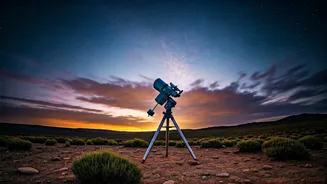
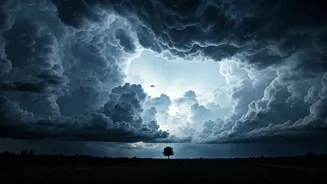
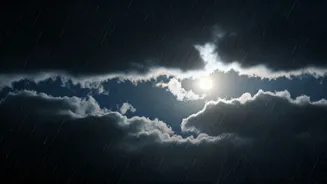
The southwest monsoon is a lifeline for India, but for astronomers, it marks a challenging period of waiting and patience. The heavy cloud cover, high humidity, and atmospheric instability that characterize the season make observing stars, planets, and meteor
showers nearly impossible. Light from distant celestial objects is scattered and blocked by water droplets in the thick cloud layers, turning what should be a clear, dark canvas into an opaque grey ceiling. This annual phenomenon forces the vibrant community of amateur and professional astronomers to change their tactics, shifting from active observation to other engaging aspects of their passion.
What's Hidden Behind the Clouds This July
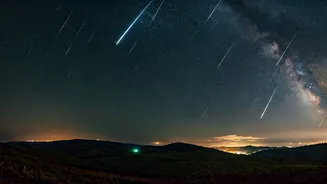
This July, the clouds are obscuring a particularly busy cosmic schedule. Early in the month, a close conjunction of Mars and Uranus would have been a target for observers. The month also features notable pairings of the Moon with bright planets like Saturn on July 7 and Venus on July 17. Perhaps the biggest disappointment for many will be the disruption to two meteor showers peaking at the end of the month: the Southern Delta Aquariids and the Alpha Capricornids. While the Delta Aquariids is a steady shower best viewed from the Southern Hemisphere, it's a reliable part of the summer sky. Unfortunately, its peak on July 30-31 coincides not only with monsoon clouds but also a bright, nearly full moon, which would have washed out the fainter meteors anyway.
Hunting for a Gap in the Grey
All hope is not lost. The monsoon doesn't always bring relentless, unbroken cloud cover. Brief, clear windows often appear, especially right after a spell of heavy rain when the atmosphere is washed clean of dust and pollutants. To take advantage of these fleeting moments, technology is your best friend. Weather apps with detailed satellite and cloud cover forecasts can help you predict when a break might occur. Locations at higher altitudes or in rain-shadow regions may experience less cloud cover. Places like Malshej Ghat in Maharashtra or parts of Coorg in Karnataka are known to offer clearer skies between rain spells. The key is to be prepared and ready to head out at a moment's notice when a clear patch is forecasted.
Bring the Universe Indoors
When the sky outside is uncooperative, you can bring the cosmos to you. This is the perfect time to explore the wealth of digital tools available. Virtual telescope software like Stellarium or mobile apps like SkyView can simulate the night sky in perfect clarity, helping you learn constellations and track celestial events from your screen. It is also an excellent opportunity to visit one of India's fantastic planetariums. Major cities like Kolkata, Mumbai, Chennai, and Delhi have world-class facilities that offer immersive shows about the universe. The M.P. Birla Planetarium in Kolkata, for instance, is the largest in Asia. These indoor domes provide a guaranteed starry sky, regardless of the weather outside.
A Time for Learning and Preparation
Think of the monsoon as astronomy's off-season—a time for study and preparation. You can dive into astronomy books, watch documentaries, or even try your hand at processing raw data from space telescopes like the Hubble or James Webb Space Telescope, which is freely available online. It's also an ideal time to clean and maintain your equipment, like telescopes and binoculars, so they are in perfect condition when the skies finally clear. By using this cloudy period to deepen your knowledge and hone your skills, you'll be an even better astronomer when observing season returns with the post-monsoon clear skies of October and November.