




More Than a Phone Call Home
When we imagine astronauts on the Moon, we might picture them talking to Mission Control. While crew voice communication is essential, modern lunar missions require a data pipeline far more powerful than what the Apollo era could provide. Scientists on Earth
need to receive vast amounts of data from lunar experiments, including high-resolution imagery and video. Future missions like Artemis plan to use advanced optical laser communications to stream 4K video from the Moon, offering unprecedented detail for both scientific analysis and public engagement. This high-bandwidth connection is crucial for controlling robotic assets, monitoring the health of outpost systems, and transmitting the discoveries that are the very reason for going.
A 'Lunar GPS' to Prevent Getting Lost
On Earth, we take GPS for granted. On the Moon, no such system exists. The GPS signals that reach the Moon are incredibly weak and unreliable, making them unsuitable for precise navigation. This poses a significant risk. Astronauts on extravehicular activities (EVAs) or operating rovers need to know their exact position in a landscape that can be disorienting, with few landmarks and harsh lighting conditions that create deep, dark shadows. An error of a few meters could mean missing a scientific target or, more dangerously, failing to return to the lander safely. To solve this, NASA and its international partners are developing LunaNet, an architecture designed to provide reliable Positioning, Navigation, and Timing (PNT) services, essentially creating a dedicated 'GPS for the Moon' using a network of lunar-orbiting satellites.
The Lifeline for Crew Safety
A constant, reliable link to a lunar outpost is, above all, a lifeline. This connection is used to monitor the biometric data of astronauts, providing an early warning system for health issues. In an emergency, it ensures that alerts are transmitted instantly. But safety goes beyond physical health. The psychological well-being of a crew isolated millions of miles from home is paramount. Reliable video conferencing with family, mental health professionals, and mission support teams is a critical capability for long-duration stays. Furthermore, a networked system like LunaNet will provide real-time alerts for dangers like solar radiation events, giving crews time to take shelter—a feature impossible without a dedicated lunar network.
Building the Lunar Internet
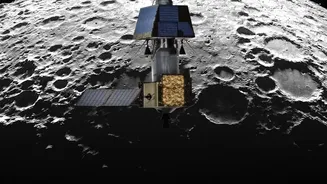
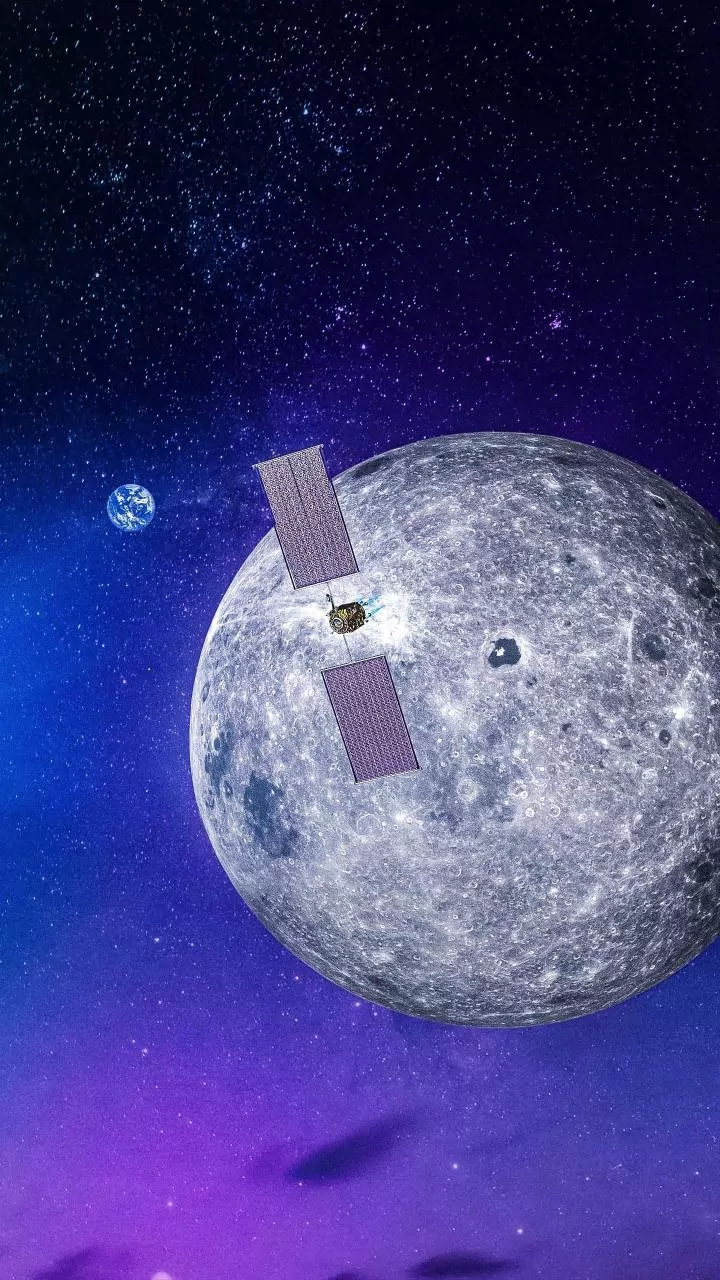
The vision extends beyond simple point-to-point communication. The goal is to create a 'lunar internet'. Projects like LunaNet are designed as a flexible, scalable network of networks. This means that missions from different space agencies (like NASA, ESA, and JAXA) and commercial companies can all interoperate and share the same infrastructure. It will use technologies like Delay/Disruption Tolerant Networking (DTN), which allows data to be stored and forwarded if a direct link is temporarily unavailable, ensuring information eventually gets through. This eliminates communication blackouts, such as when a craft is on the far side of the Moon, by relaying signals through orbiting satellites like the Lunar Gateway or dedicated commercial relays.
The Foundation for a Lunar Economy
Ultimately, robust communications and navigation infrastructure are what will enable a true lunar economy to emerge. Any future commercial activities, from resource prospecting and mining to tourism and scientific support services, will depend on reliable data transfer and precise location services. Just as the internet and GPS unlocked trillions of dollars in economic activity on Earth, a dependable comms and navigation network on the Moon is the foundational utility required for enterprise. By investing in shared infrastructure now, space agencies are laying the groundwork for a future where commercial partners can operate safely and efficiently, transforming the Moon from a place of temporary visits to one of sustained economic activity and human presence.