

More Than Just a Dusty Rock
For years after the Apollo missions, the Moon was considered almost completely dry. Any water was expected to be broken down by sunlight and lost to space. But recent missions have confirmed what scientists had long suspected: water exists on the Moon,
primarily as ice in 'permanently shadowed regions' (PSRs) near the poles. These are areas within craters that never see direct sunlight, creating 'cold traps' where temperatures can plunge below -160°C, allowing ice to remain stable for potentially billions of years. Missions like India's Chandrayaan-1 and NASA's Lunar Reconnaissance Orbiter (LRO) provided definitive proof, with one experiment even deliberately crashing a probe into a crater to analyze the resulting plume, which confirmed the presence of water ice. This discovery has transformed our view of the Moon from a simple destination to a vital resource depot.
The Ultimate Off-World Resource
The existence of water ice is a game-changer because it can be used for far more than just drinking. Through a process called electrolysis, water (H2O) can be split into its component elements: hydrogen and oxygen. Oxygen is crucial for breathable air in a lunar habitat, a fundamental requirement for sustaining human life. Both elements are the primary components of rocket propellant. The ability to create breathable air and manufacture rocket fuel on-site would dramatically reduce the cost and complexity of lunar missions. Every kilogram of supplies launched from Earth is incredibly expensive, so producing these essentials on the Moon itself makes long-term settlement much more economically viable. Astronauts could live there for extended periods, and missions could be refuelled for return journeys or even for trips deeper into the solar system.
A Refuelling Station in the Sky
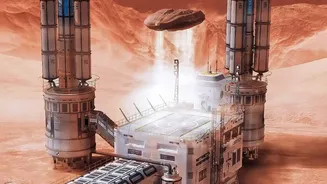
The most profound implication of lunar water is the potential to turn the Moon into a refuelling station for other space missions. Launching a rocket from Earth requires immense energy to overcome our planet's strong gravity. The Moon's gravity is only about one-sixth as strong, meaning it takes far less energy—and therefore fuel—to launch from its surface. If future missions can manufacture rocket propellant from lunar ice, they could launch from the Moon to explore destinations like Mars. This 'pit stop' model would revolutionize the architecture of deep-space exploration. Instead of a single, massive rocket carrying all its fuel from Earth, a mission could travel to the Moon, refuel, and then continue on its journey. This makes missions more efficient and opens up new possibilities for exploring the solar system.
The New Lunar Gold Rush
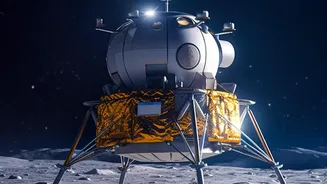
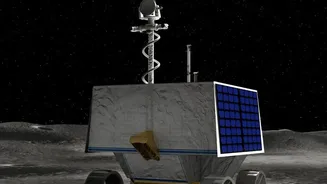
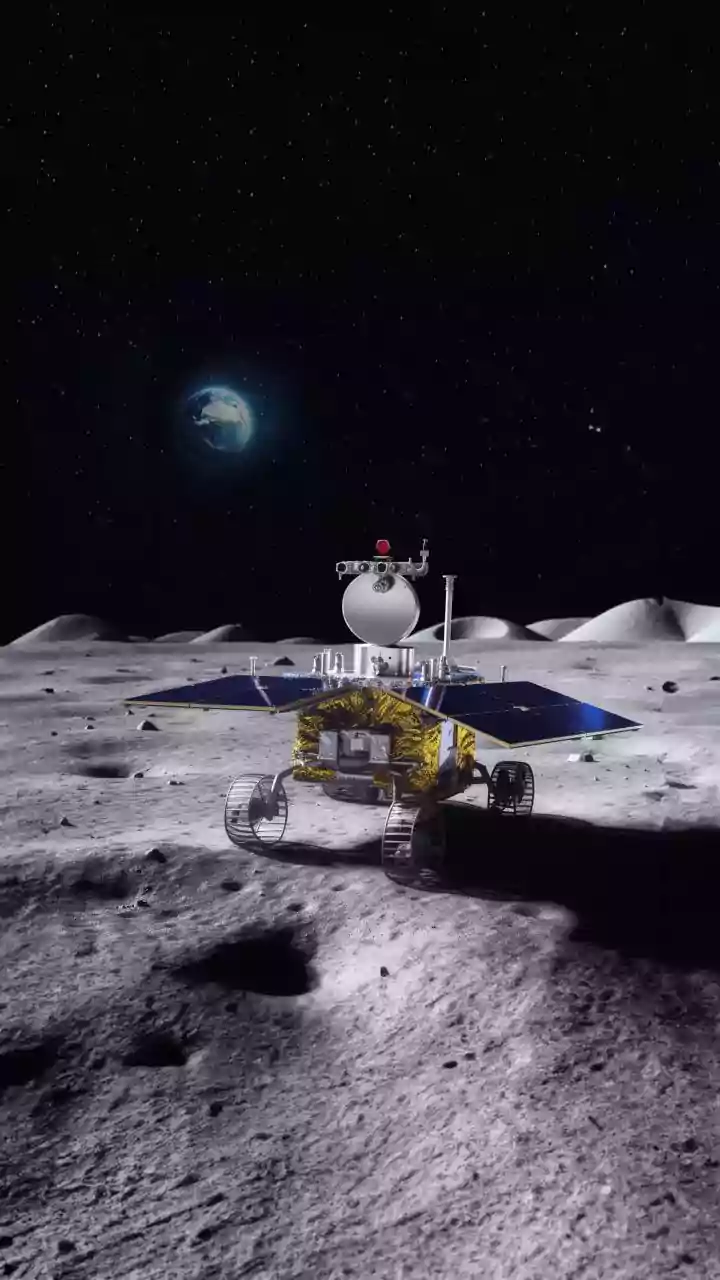
Recognizing the strategic importance of this resource, space agencies and private companies worldwide are now focused on the lunar poles. NASA's Artemis program, which aims to establish a long-term human presence on the Moon, has specifically targeted the South Pole because of its water ice potential. Future missions, including robotic explorers like the VIPER rover, are being designed to map the distribution and concentration of this ice. However, extracting it won't be easy. The ice is located in some of the coldest places in the solar system and is likely mixed with abrasive lunar soil, or regolith. Engineers are developing innovative mining and purification technologies, from drills that can operate in extreme cold to systems that can melt the ice and filter out contaminants to make it safe for use. These efforts are part of a broader push for 'in-situ resource utilization' (ISRU), the concept of living off the land in space.