




A Strategic Shift in Policy
The transformation of India's space sector from a government-led programme to a collaborative public-private arena began with key policy reforms in 2020. This strategic shift culminated in the Indian Space Policy 2023, which was designed to institutionalise
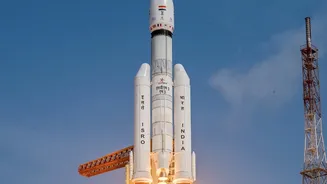
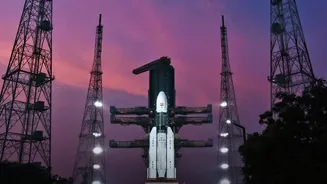
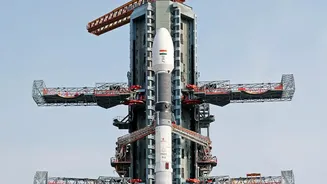
private sector participation and unlock the nation's commercial potential. The policy aims to augment India's space capabilities, foster a competitive commercial market, and leverage space technology for national development. It clearly defines the roles of different bodies to ensure a smooth transition. ISRO will now increasingly focus on advanced research and development, deep-space exploration, and national security missions, while transitioning its mature technologies to the commercial sector. This move allows private companies, defined as Non-Governmental Entities (NGEs), to undertake end-to-end space activities, from building and launching rockets to operating satellites and providing space-based services.
The Rise of a Private Fleet
Since the sector opened up, India has seen a surge in space-tech startups, with the number growing to over 400. These companies are not just suppliers anymore; they are innovators building their own launch vehicles, satellite constellations, and propulsion systems. Hyderabad-based Skyroot Aerospace made history by launching Vikram-1 in July 2026, the country's first orbital rocket from a private firm. The company, founded by former ISRO scientists, aims to serve the booming global small satellite market. Another key player, Chennai-based Agnikul Cosmos, has pioneered the world's first single-piece 3D-printed rocket engine, the Agnilet. This innovation drastically reduces manufacturing time and complexity. Other notable startups include Pixxel, which is building a constellation of hyperspectral Earth-observation satellites, and Dhruva Space, which focuses on satellite manufacturing.
Meet the New Enablers: IN-SPACe and NSIL
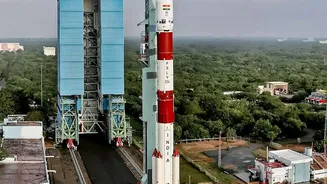
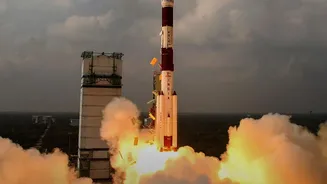
To manage this new ecosystem, the government established two crucial bodies. The Indian National Space Promotion and Authorisation Centre (IN-SPACe) acts as a single-window agency to promote, authorise, and supervise all space activities by private companies. It ensures that startups and other NGEs get equitable access to ISRO's world-class facilities, testing infrastructure, and expertise, essentially acting as a bridge between the public and private sectors. Meanwhile, NewSpace India Limited (NSIL) operates as the commercial arm of ISRO. Its primary role is to market ISRO's proven technologies and services globally. This includes the production of workhorse rockets like the PSLV through industry partnerships, marketing launch services, and managing satellite-based services like transponder leasing. By handling the commercial aspects, NSIL allows ISRO to concentrate on its core scientific and exploratory mandate.
A Symbiotic and Growing Ecosystem
The relationship between ISRO and the new wave of private players is designed to be symbiotic, not adversarial. ISRO's decades of experience, established infrastructure, and proven track record provide a strong foundation that private companies can build upon. In turn, the agility and innovation of startups are helping to expand India's capacity and cater to the growing global demand for services like small satellite launches, a market ISRO cannot serve alone. This collaboration allows for a more diversified national space portfolio: ISRO can tackle ambitious projects like the Gaganyaan human spaceflight mission and deep space exploration, while private firms drive commercialisation in low-Earth orbit. This approach is already yielding economic results, with India's space economy valued at around $8.4 billion and projected to grow to $44 billion by 2033.