

The Persistent Threat of Martian Dust
Mars is a dusty planet, and its storms are the stuff of science fiction. While not powerful enough to tip over equipment as sometimes depicted, their real threat is more insidious. Martian dust particles are tiny and electrostatically charged, meaning
they stick to everything. For a solar-powered rover or lander, this is a critical problem. Dust accumulation on solar panels acts like a blanket, blocking sunlight and reducing the energy the spacecraft can generate. This can lead to a slow starvation of power. At a larger scale, continent-sized dust storms can kick up so much material that they darken the entire Martian sky for weeks or even months, drastically cutting the sunlight that reaches the surface. These storms, which can grow to encircle the entire planet, are a major operational risk for any mission relying on the sun for energy.
The Weather Watchers in Orbit
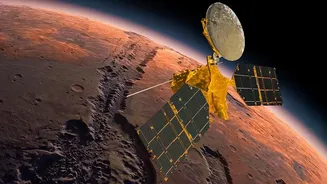
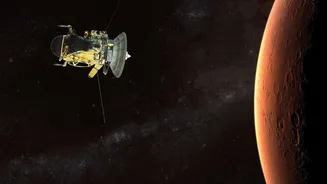
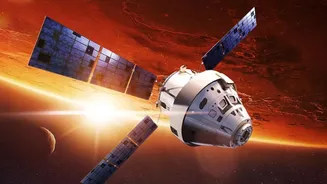
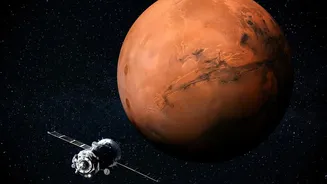
Fortunately, we aren't flying blind. A fleet of orbiters acts as a sophisticated, interplanetary weather service. Spacecraft like NASA's Mars Reconnaissance Orbiter (MRO), Mars Odyssey, and MAVEN constantly monitor the planet from above. Key instruments play a crucial role in this process. The Mars Color Imager (MARCI) aboard the MRO captures a daily global map of the planet, allowing scientists to spot storms as they begin to form. At the same time, the Mars Climate Sounder measures atmospheric temperatures. Since airborne dust absorbs sunlight, it heats the atmosphere, so a temperature spike can indicate the size and height of a dust storm, helping scientists understand how it might spread. This multi-pronged approach provides a comprehensive view of Martian weather patterns, transforming raw data into actionable intelligence.
From Data to Crucial Decisions
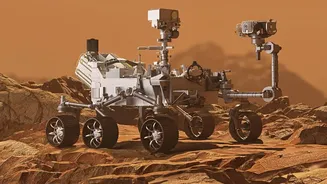
When an orbiter detects a burgeoning storm, the information is relayed to Earth. Mission planners and scientists analyze the data to forecast the storm's trajectory and intensity. They can see where the storm is headed and predict how much it will darken the sky. This forecast is a lifeline for missions on the ground. For a solar-powered rover, an early warning could trigger a series of commands to conserve energy. Planners might halt non-essential science activities, cancel drives, and position the rover to wait out the storm in a low-power state. This proactive management is essential for survival, turning orbital observations into ground-level strategies that protect these multi-billion dollar assets from harm.
A Cautionary Tale: The Loss of Opportunity
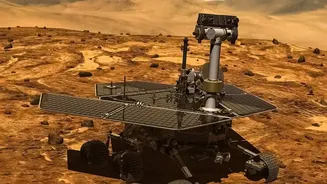
The importance of this system is highlighted by the fate of the Opportunity rover. Designed for a 90-day mission, the remarkably resilient rover operated for nearly 15 years. It survived numerous dust storms thanks to a combination of careful energy management and fortunate gusts of wind that occasionally cleaned its solar panels. However, in 2018, a planet-encircling dust storm proved to be its final challenge. The storm grew so large and thick that it blotted out the sun over Opportunity's location for an extended period. Unable to recharge its batteries, the rover went into hibernation to protect itself. On June 10, 2018, it sent its final transmission and fell silent. The loss of Opportunity serves as a stark reminder of the stakes involved and why accurate weather forecasting is not a luxury, but a necessity for Martian exploration.
Protecting Current and Future Missions
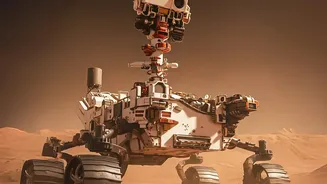
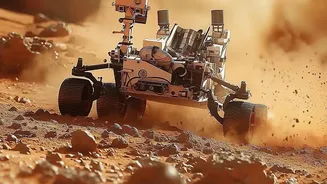
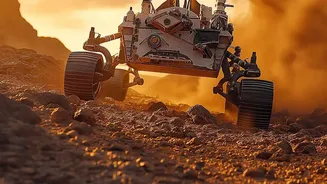
The lessons learned from missions like Opportunity directly influence how current and future operations are planned. While rovers like Curiosity and Perseverance are nuclear-powered and thus not dependent on sunlight for energy, they still benefit from dust storm tracking to protect sensitive instruments and plan safe driving routes. For the InSight lander and the Ingenuity helicopter, both solar-powered, these forecasts were critical for their operations and survival. As NASA and other agencies plan for future missions to Mars, including eventual human exploration, this orbital monitoring system is more important than ever. Understanding and predicting Martian weather is a foundational capability, ensuring that we can not only reach the Red Planet but operate there safely and effectively for years to come.