





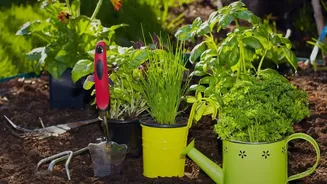
Setting Up Your Windowsill Garden
Your journey to a winter herb garden begins with choosing the right location and materials. Most herbs need at least four to six hours of sunlight daily, making a south-facing windowsill the best choice. East- or west-facing windows that get strong morning
or afternoon sun can also work. Next, select your containers. Ensure every pot has drainage holes at the bottom to prevent water from pooling, which can cause root rot. Terracotta pots are classic, but plastic or glazed pots retain moisture better, which is helpful in dry winter air. For soil, always use a high-quality potting mix, not garden soil. Potting mix is lighter and allows roots to breathe, ensuring your herbs have a healthy foundation to grow. You can improve drainage further by mixing in some perlite.
Caring for Sacred Tulsi (Holy Basil)
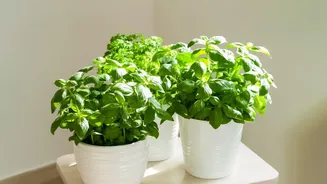
Tulsi, or Holy Basil, is revered in Indian households and thrives indoors with the right care. This sun-loving plant needs at least four to six hours of direct sunlight every day to flourish. If your windowsill doesn't provide enough light, especially on shorter winter days, consider supplementing with a grow light. Tulsi prefers its soil to be consistently moist but never soggy. A good rule is to water when the top inch of soil feels dry to the touch. Overwatering is a common mistake and can lead to yellowing leaves and root rot. To encourage a bushier, fuller plant, regularly pinch off the top sets of leaves. It’s also crucial to remove the flower buds, or 'manjari', as soon as they appear. This directs the plant's energy into producing more flavourful leaves rather than seeds.
Mastering Mighty Mint (Pudina)
Mint is one of the most rewarding herbs for beginners because it grows so vigorously. In fact, its tendency to spread makes it perfect for container gardening, where its growth is contained. Mint is more tolerant of partial shade than Tulsi but still does best on a bright windowsill. It prefers consistently moist soil, so don't let the pot dry out completely. A self-watering pot can be a great option for mint. Harvest your mint frequently by snipping off the top leaves and stems. Regular trimming encourages the plant to grow bushier and provides you with a constant supply for chutneys, teas, and garnishes. You can easily start a new mint plant from a cutting placed in a glass of water; it will develop roots within a week or two.
Cultivating Fresh Coriander (Dhania)
Growing coriander, or dhania, indoors can be tricky as it is prone to 'bolting' (flowering prematurely), especially in warm conditions. To succeed, it's best to sow seeds directly into their final pot, as coriander dislikes having its roots disturbed. Choose a container that is at least 8 inches deep to accommodate its long taproot. Place it in a spot that receives full sun but stays relatively cool. Keep the soil consistently moist but not waterlogged. For a continuous supply, sow a new batch of seeds every two to three weeks. You can start harvesting the outer leaves when the plant is about six inches tall. This method allows the inner leaves to continue growing, extending your harvest before the plant eventually flowers.
General Winter Care Tips
Indoor heating can make the air very dry in winter, which is not ideal for herbs. To increase humidity, you can mist your plants daily or place their pots on a tray filled with pebbles and a little water. As the water evaporates, it creates a more humid microclimate. Be mindful of watering; plants grow slower in winter and generally require less water than in summer. Always check the soil moisture before watering. Keep plants away from cold drafts from the windowpane and direct heat from radiators, as sudden temperature fluctuations can cause stress. Finally, most herbs don't need much fertilizer during the winter resting period. A light feeding with an organic liquid fertilizer every six weeks is usually sufficient if the plant looks like it needs a boost.