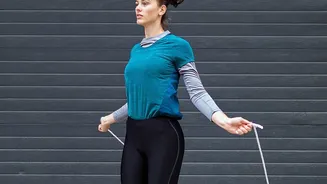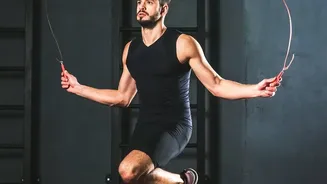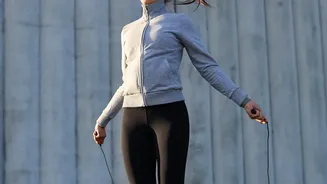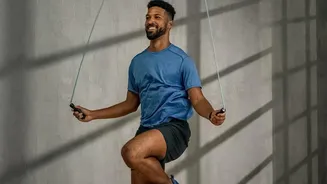







Often dismissed as a playground pastime, the jump rope is one of the most efficient, portable, and powerful tools for building serious cardiovascular endurance. It’s a full-body workout that can elevate your stamina, coordination, and overall fitness.
Why Skipping Is an Endurance Powerhouse
Jumping rope is a high-intensity cardiovascular exercise that elevates your heart rate rapidly, strengthening your heart muscle and improving blood circulation. This makes it incredibly effective for building stamina. The exercise engages multiple muscle groups at once—including your legs, core, and upper body—making it a full-body workout. Regular practice improves your body's ability to use oxygen efficiently, allowing you to sustain physical activity for longer periods. It's also a weight-bearing exercise, which helps improve bone density, and it enhances coordination and agility, which are crucial components of overall fitness.
Choosing the Right Jump Rope
The type of rope you use can significantly impact your training. For beginners, a slightly heavier rope, like a beaded rope or a weighted PVC rope, provides better feedback, making it easier to learn timing and rhythm. Lighter speed ropes are better for advanced users looking to increase speed and perform complex moves like double-unders. To find the right length, stand on the middle of the rope with both feet. The ends of the rope, not including the handles, should reach your armpits or sternum. A rope that's too long will drag and slow you down, while one that's too short won't hit the ground properly.
Mastering the Proper Form
Efficient form is key to building endurance and preventing injury. Stand tall with a neutral spine, keeping your shoulders relaxed and your gaze straight ahead. Your elbows should be held close to your sides, with your hands positioned near your hips. The rotation should come from your wrists, not large arm movements. Jump only an inch or two off the ground, just high enough to clear the rope. Land softly on the balls of your feet with your knees slightly bent to absorb the impact. This technique conserves energy, allowing you to jump for longer periods.
Common Mistakes to Avoid
Many beginners hinder their progress with a few common errors. One is jumping too high, which wastes energy and puts unnecessary stress on your joints. Another is using your entire arms to swing the rope instead of your wrists, which leads to rapid fatigue. Also, avoid landing flat-footed or on your heels; always stay on the balls of your feet. Finally, ensure your posture remains upright. Hunching your shoulders or looking down at your feet can throw off your balance and rhythm. Filming yourself can be a great way to spot and correct these mistakes.
A Beginner's Endurance Workout
To build endurance, consistency is more important than intensity at the start. Begin with interval training to allow your body to adapt. A great starting point is to focus on a simple 'work-to-rest' ratio. Try this workout to get started:
1. Warmup: 3–5 minutes of light jogging in place and dynamic stretches like arm circles and leg swings.
2. Workout: Jump at a steady pace for 30 seconds. Rest for 30–60 seconds. Repeat this cycle for 10 rounds.
3. Cooldown: 3–5 minutes of walking and static stretching, focusing on your calves, hamstrings, and shoulders.
As this becomes easier, you can gradually increase the jump time or decrease the rest time to continue challenging your cardiovascular system.
How to Progress Your Training
Once you've mastered the basic bounce and can comfortably complete the beginner workout, you can start adding variety and intensity. To continue building endurance, try increasing the duration of your continuous jumping sessions. You can also introduce new footwork patterns like the alternate–foot step, which mimics running in place. For a greater challenge, incorporate high–intensity intervals (HIIT) by mixing in faster jumping, high knees, or even attempting double–unders, where the rope passes under your feet twice in a single jump. Using a slightly heavier rope can also increase the resistance and demand on your upper body and core.