

The Sun's Restless Surface: What Are Sunspots?
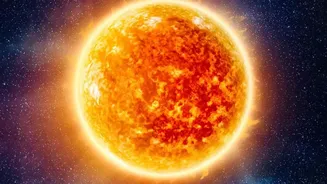
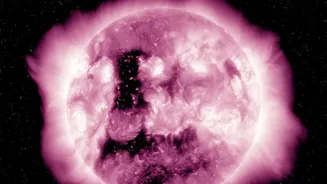
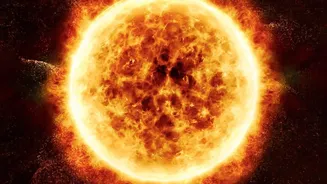
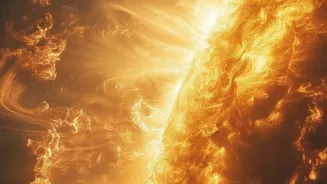
The story begins on the surface of our Sun. Sunspots are temporary, dark patches that are cooler than their surroundings. But don't let the term 'cooler' fool you; they are still incredibly hot, at around 3,500 degrees Celsius. These spots are born from
intense magnetic activity deep within the Sun. The Sun’s magnetic field gets twisted and tangled as it rotates, and sometimes these powerful magnetic fields poke through the surface, inhibiting the flow of hot gas from the interior and creating a sunspot. The number of sunspots visible on the Sun isn't constant; it ebbs and flows in a roughly 11-year pattern known as the solar cycle. We are currently in Solar Cycle 25, which began in December 2019 and is approaching its peak of activity, known as the solar maximum. This means we are seeing more sunspots now than we have in years.
From Sunspots to Solar Storms
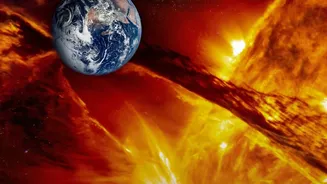
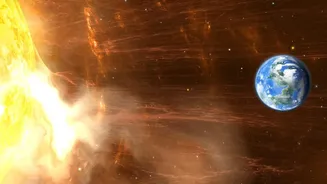
Sunspots themselves don't directly cause auroras, but they are the breeding grounds for colossal solar explosions. The highly complex and unstable magnetic fields around large sunspot groups can suddenly snap and realign, releasing immense amounts of energy. This release can happen in two main ways. The first is a solar flare, which is a brilliant flash of radiation traveling at the speed of light. The second, and more impactful for creating auroras, is a Coronal Mass Ejection, or CME. A CME is a massive eruption that hurls billions of tonnes of plasma and magnetic fields from the Sun's outer atmosphere (the corona) into space at speeds of millions of kilometres per hour. The more sunspots there are, the higher the chance of these powerful CMEs occurring.
A Disturbance Travels Through Space
The Sun constantly emits a stream of charged particles called the solar wind. This wind flows outward through the solar system. A CME acts like a powerful tsunami plowing through this stream, creating a major disturbance. When a CME is aimed at Earth, this wall of energetic particles and magnetic fields races towards our planet. The journey can take anywhere from one to several days. This traveling disturbance is what scientists refer to as a solar storm or a geomagnetic storm in the making. Forecasters monitor these events closely, as they carry the potential to significantly impact our planet's magnetic environment. Recent activity includes a filament eruption that hurled a chunk of solar material toward Earth, with an expected arrival around September 17, 2026.
Earth's Magnetic Shield at Work
Fortunately, Earth has a built-in defence system: the magnetosphere. This is a protective magnetic bubble generated by our planet's molten iron core. The magnetosphere deflects most of the constant solar wind. However, when a powerful CME arrives, it's a different story. The CME's magnetic field slams into and merges with Earth's magnetosphere, transferring a massive amount of energy. This interaction compresses and shakes our magnetic shield, triggering a geomagnetic storm. During such a storm, the magnetosphere is disturbed, allowing some of the highly energetic solar particles to leak through, particularly near the north and south magnetic poles where the field lines funnel inwards.
The Grand Finale: Bright Sky Lights
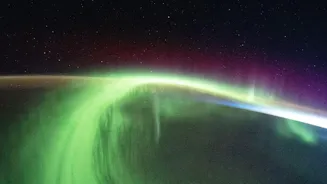
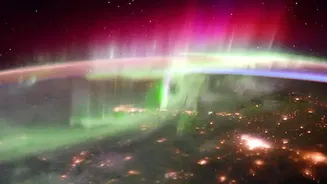
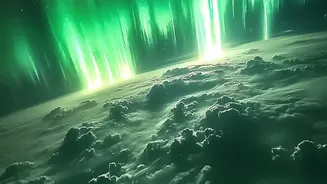
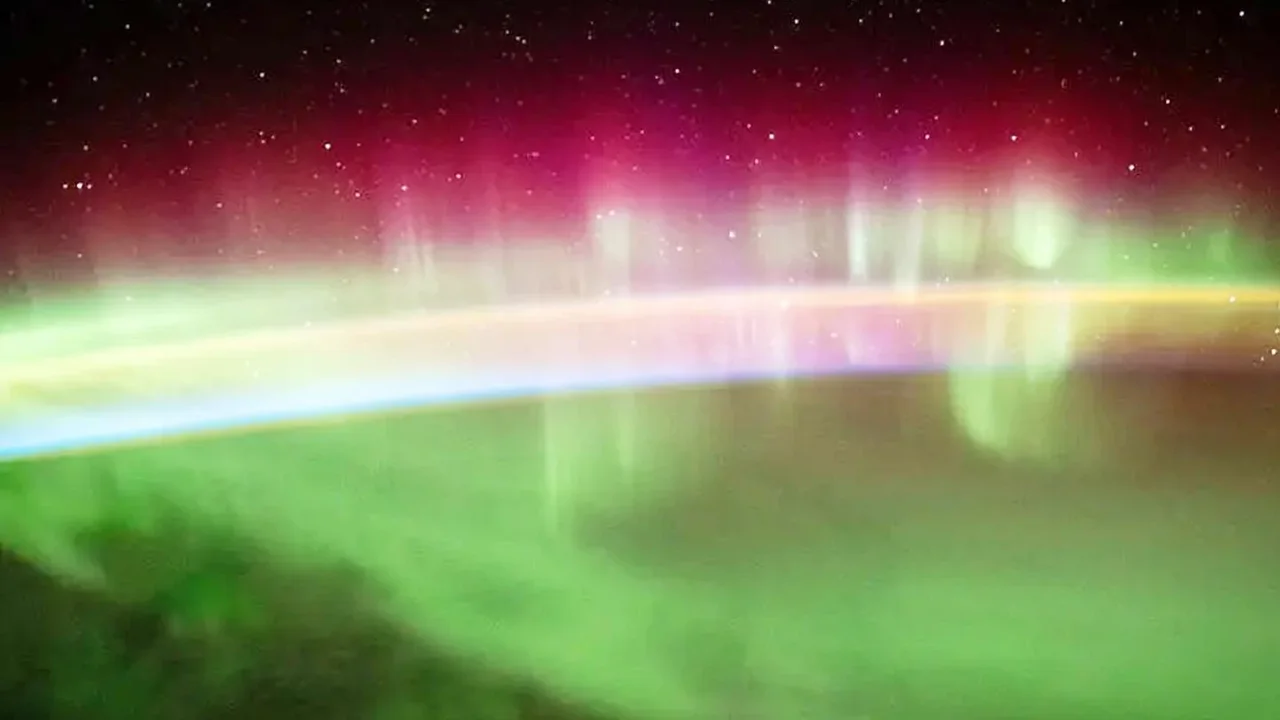
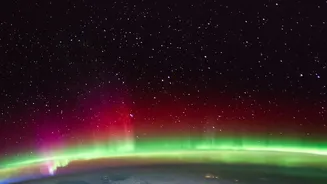
Those captured solar particles, mainly electrons and protons, are guided down Earth's magnetic field lines into the upper atmosphere at high speeds. When these particles collide with gas atoms and molecules—primarily oxygen and nitrogen—in our atmosphere, they transfer their energy, 'exciting' the atoms. As the atoms relax back to their normal state, they release this excess energy in the form of photons, or particles of light. This process is similar to how a neon sign glows. The beautiful, dancing lights we see are the collective result of countless such collisions. The colour of the aurora depends on which gas is being excited and at what altitude. Oxygen typically produces the common green and yellow colours, and sometimes red at very high altitudes, while nitrogen can create shades of pink, blue, and violet.
More Than Just Pretty Lights
While auroras are the most beautiful effect of solar storms, these events have other, more disruptive consequences. Geomagnetic storms can induce currents in power grids, potentially causing damage to transformers and leading to blackouts. They can disrupt radio communications and GPS navigation systems by altering the ionosphere. The increased radiation can pose a risk to astronauts and even damage satellite electronics, while the heating of the upper atmosphere increases drag on low-orbiting satellites, causing their orbits to decay. These potential impacts are why agencies around the world constantly monitor 'space weather' to provide warnings and protect our increasingly technology-dependent society.