





The Essential Trifecta
The headline says it all, and it’s the absolute bare minimum for avoiding freezer chaos. Every single item that enters your freezer needs a label with these three pieces of information. First, the dish name. Be specific. “Chicken Soup” is good, but “Spicy
Chicken and Rice Soup” is better. Second, the date it was frozen. Your memory is not as reliable as you think, and this is crucial for knowing what to use first. Finally, the portion size. Note if it’s a single serving for a quick lunch or a family-sized portion for four. This simple step prevents you from thawing a massive block of chili when you only need one bowl.
Level Up Your Labeling
Once you’ve mastered the basics, a few extra details can turn your freezer into a highly efficient meal-planning machine. Consider adding a “use by” date. While frozen food is safe indefinitely at the proper temperature, its quality degrades over time. A “use by” date (typically 3-6 months for most prepared meals) helps ensure you eat things at their best. Another pro tip is to include brief reheating instructions. A simple “Thaw, then bake at 180°C for 20 mins” saves you from having to look up a recipe later. For households with dietary restrictions, noting key ingredients or allergens can also be a helpful addition.
The Right Tools for the Job
A great label is useless if it falls off or becomes unreadable. Your choice of tools matters. The classic, and surprisingly effective, method is masking tape and a permanent marker. It’s cheap, accessible, and generally gets the job done. For a cleaner approach, you can buy dedicated freezer labels, which use an adhesive designed to withstand cold and moisture. These come in several varieties: single-use paper labels, removable labels that peel off without leaving residue, and even dissolvable labels that wash away cleanly in water. For reusable containers, erasable labels paired with a chalk or grease marker are a sustainable option, allowing you to wipe the slate clean for each new batch.
Application and Best Practices
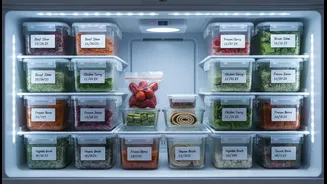
How and where you apply the label is as important as what’s on it. For best results, apply labels to containers when they are at room temperature and dry; adhesive struggles to stick to frozen or wet surfaces. If you forget and need to label an already-frozen item, you can try applying a bit of water to a paper label and pressing it onto the frozen package, letting the water freeze and act as glue. Place the label in a visible spot, ideally on the lid and a side of the container, so you can identify the contents whether they’re stacked or filed side-by-side. This makes it easier to scan the contents of your freezer at a glance without having to dig through everything.
Embrace the System
A well-labeled freezer is the foundation of a “First-In, First-Out” (FIFO) system, a simple method for reducing food waste. When you put new items in, place them at the back, moving older items to the front. This makes it easy to grab the oldest item first, ensuring that food gets eaten instead of being forgotten in a frozen abyss. This organized approach not only prevents food waste but also saves you money on groceries by allowing you to clearly see what you already have. Turning this into a habit can transform your freezer from a chaotic storage unit into a valuable kitchen resource.