








The Polite Trees of Crown Shyness
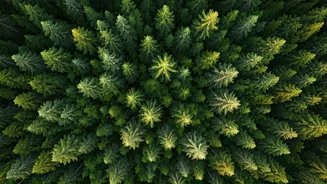
Imagine looking down on a forest canopy and seeing distinct, river-like channels of light separating the outermost branches of each tree. This isn’t a bug in a video game; it’s a real, mesmerising phenomenon known as 'crown shyness'. The canopies of certain
tree species, like eucalyptus and camphor, meticulously avoid touching each other, creating a stunning mosaic effect. Scientists have a few compelling theories as to why this happens. The first is abrasion: as trees sway in the wind, the delicate new buds on their branches rub against each other, causing damage that inhibits growth in those areas. Another popular theory suggests it’s a clever strategy for survival. By leaving a gap, trees may be preventing the spread of leaf-eating insects and parasitic vines from one crown to the next. It could also be a way to optimise light exposure for lower leaves. Whatever the reason, these forests look like they’re politely practicing social distancing, creating a puzzle-like pattern that’s truly magical from the air.
Nature’s Annual Firework Display
For a few fleeting weeks each year, deciduous forests across the world put on a show that is arguably best appreciated from a great height. The autumnal transformation from green to a riot of red, orange, and yellow is a familiar sight, but an aerial view reveals its true scale and artistry. This isn't magic, but chemistry. As days shorten and temperatures drop, trees stop producing chlorophyll, the pigment that makes their leaves green. As the green fades, other pigments that were there all along—carotenoids (yellows and oranges) and anthocyanins (reds and purples)—are finally revealed. From above, you see not just individual trees changing colour, but entire hillsides and valleys painted in broad, sweeping strokes. It’s a landscape-level masterpiece, a vibrant tapestry woven from millions of individual leaves, each contributing to a spectacle that changes daily until the winds of late autumn carry it all away.
The Enigma of the Crooked Forest
Venture near the town of Gryfino in western Poland, and you’ll find a grove of about 400 pine trees that defy explanation. Planted around 1930, each tree grows normally for a few inches before bending sharply northward in a J-shape, then curving back up to grow straight towards the sky. From above, the canopy appears fairly normal, but the ground level reveals a bizarre, almost sculptural uniformity. What caused this? No one knows for sure. One theory suggests that a specific snowstorm or weather event weighed the saplings down when they were young, forcing them to grow this way. A more intriguing hypothesis points to human intervention. It’s possible the trees were deliberately shaped by local foresters, perhaps to create naturally curved wood for furniture or boat building. With the outbreak of World War II disrupting the region, whoever started this project likely never finished it, leaving behind a silent, mysterious, and utterly captivating forest grove.
The Upside-Down Giants of Madagascar
The Avenue of the Baobabs in Madagascar is one of the world's most iconic natural landmarks. These ancient, massive trees, with their thick trunks and sparse, root-like branches, look as if they’ve been plucked from the ground and shoved back in upside-down. While stunning from ground level, an aerial perspective offers a different kind of magic. From above, you can appreciate their sheer scale and isolation. These aren't trees in a dense forest; they are solitary giants dotting a landscape that was once a much richer forest. Their canopies, small and condensed at the very top of their colossal trunks, look like little pom-poms from the sky. This view tells a powerful story of conservation, showing the last magnificent remnants of a baobab forest that has been cleared for agriculture. They are a beautiful but stark reminder of what has been lost, standing as ancient sentinels on the African island.