



A Sugar Found in Space
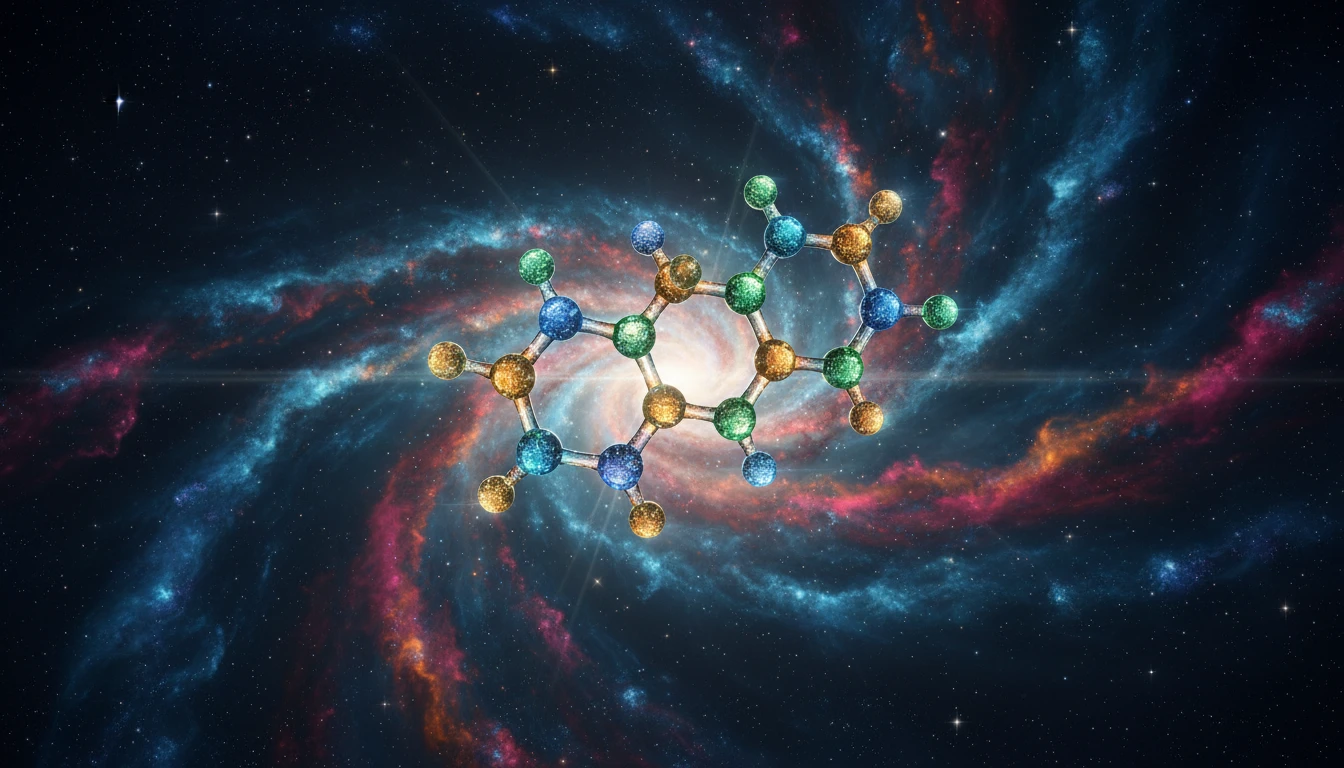
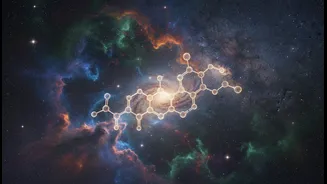
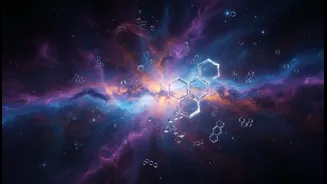
Erythrulose is a four-carbon sugar, a relatively simple molecule with the chemical formula C4H8O4. On Earth, it's found in small quantities in fruits like raspberries and is even used in some sunless tanning products. What makes its discovery in space
so remarkable is that until now, no true sugar had been directly detected in the interstellar medium—the vast expanse of gas and dust between stars. While sugars like glucose and ribose have been found in meteorites that have landed on Earth, this is the first time a sugar has been spotted free-floating in a molecular cloud, a stellar nursery where stars and planets are born. The detection was made by an international team using the Yebes 40-m and IRAM 30-m radio telescopes, which scanned a chemically rich cloud called G+0.693-0.027, located about 26,745 light-years from us.
An Unexpected Abundance
One of the most surprising aspects of the discovery was what scientists didn't find. The prevailing theory in astrochemistry suggested that complex molecules form by sequentially adding one carbon atom at a time. This would lead one to expect that simpler, three-carbon sugars would be more abundant than more complex four-carbon sugars like erythrulose. However, the opposite was true. Scientists found that erythrulose is at least eight times more plentiful than any three-carbon sugars, which were not detected at all. This unexpected result challenges existing models and suggests that larger prebiotic molecules can form efficiently on the icy surfaces of interstellar dust grains, perhaps by combining smaller, two-carbon molecules. It points to a more robust and varied chemical factory operating in the cosmos than previously imagined.
Fueling the 'RNA World' Hypothesis
This discovery provides significant support for the 'RNA World' hypothesis, a leading theory on the origin of life. This hypothesis posits that before DNA and proteins became the dominant molecules of life, self-replicating RNA molecules were the key players. RNA, like DNA, can store genetic information, but it can also act as an enzyme to catalyse chemical reactions—a dual role that makes it a prime candidate for the first self-sufficient biological molecule. However, a major puzzle has been how the building blocks of RNA, including sugars like ribose (a five-carbon sugar), could have formed in sufficient quantities on early Earth. Finding a simpler sugar like erythrulose in space strengthens the idea that these crucial components weren't made on Earth but were delivered here by asteroids and comets. The presence of erythrulose shows that complex sugars, a step up from previously detected precursors, can indeed form in space.
From Galactic Cloud to Early Planets
The molecular cloud where erythrulose was found is a stellar nursery—a place where the material will eventually collapse to form new stars and planetary systems. This means that the prebiotic molecules forming there, including sugars, can be directly incorporated into the asteroids, comets, and protoplanetary disks that give rise to new worlds. Researchers estimate that during a period known as the Late Heavy Bombardment, some 4.1 to 3.8 billion years ago, millions of tonnes of erythrulose could have been delivered to early Earth. This cosmic delivery service would have seeded the young planet with a rich inventory of organic compounds, essentially giving life a chemical head start. Rather than needing to synthesise these complex molecules from scratch in hostile early-Earth conditions, life could have started with a pre-existing toolkit from space.