



The Myth of Pure Power
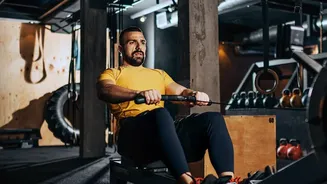
Many beginners approach the rowing machine with a single goal: pull as hard as possible. This often leads to a jerky, arm-dominant motion that causes back strain and rapid fatigue. The reality is that a powerful rowing stroke gets about 60% of its power from
the legs. The secret isn't raw strength, but coordinated rhythm. Instead of a frantic pull, think of it as a dance. Each stroke is a choreographed sequence of movements—legs, core, then arms—that flows together seamlessly. This mindset shift from muscling through to flowing through the movement is the first step to mastering the machine.
The Four-Part Choreography
Every rowing stroke is composed of four distinct phases: the Catch, the Drive, the Finish, and the Recovery. Forgetting this order is like trying to waltz by just stomping your feet. To make it a dance, you need to learn the steps in the right sequence. The power phase is the Drive, and the controlled reset is the Recovery. A simple mantra to remember the sequence is: legs-body-arms on the way back, then arms-body-legs on the way forward. Mastering this rhythm ensures you generate maximum power efficiently and safely.
The Catch: Your Starting Pose
The Catch is your poised starting position. Slide forward on the seat until your shins are nearly vertical, but don't crunch yourself into a ball. Sit up tall, engaging your core, and lean forward slightly from your hips to a '1 o'clock' position. Your arms should be straight as you grip the handle, and your shoulders relaxed. This isn't a passive slump; it's an active, coiled position, like a dancer ready to spring into motion. A strong Catch sets up the entire stroke for success.
The Drive: A Powerful Push
This is the explosive part of the dance. The power comes from your legs first. Begin the Drive by pushing forcefully through your feet, as if you're performing a leg press. Your arms stay straight and your core remains braced during this initial push. Once your legs are nearly extended, then you begin to swing your torso back to an '11 o'clock' position. Only after your legs and core have done their jobs do your arms come into play, pulling the handle smoothly toward your lower ribs. This sequence—legs, body, arms—is non-negotiable for a powerful and safe stroke.
The Finish: A Confident Flourish
The Finish is the brief moment at the end of the Drive. Your legs are fully extended (but not locked), you're leaning back slightly, and the handle is drawn to the bottom of your rib cage. Your wrists should be flat, not curled, and your elbows drawn past your body. Avoid the temptation to lean too far back, as this wastes energy and can strain your lower back. This position is the apex of the movement, a confident and strong 'flourish' before you begin the graceful return.
The Recovery: A Graceful Reset
The Recovery is where the 'dancing' analogy truly shines and where most people’s rhythm falters. Many beginners rush back to the starting position, but the Recovery should be controlled and take longer than the Drive. The sequence is the exact reverse of the Drive: first, extend your arms fully. Second, pivot your torso forward from the hips. Only when the handle has cleared your knees do you bend your legs and slide the seat forward, returning to the Catch position. Rushing this phase or bending your knees too early kills the rhythm and can lead to hitting your own knees with the handle.
When the Dance Goes Wrong
A few common mistakes can turn your fluid dance into a clumsy stumble. One is 'shooting the slide,' where your butt slides back before your legs, back, and arms work together. Another is opening your back or pulling with your arms too early, which robs your powerful legs of their role and puts the strain on smaller muscles. Hunching your back instead of sitting tall breaks your posture and risks injury. Finally, a 'death grip' on the handle will fatigue your forearms and create unnecessary tension. Keep your grip relaxed and let the power flow from your legs.