






What is the Space Economy?
When you hear “space,” it’s easy to think only of astronauts and rockets. But the reality is far broader and economically significant. The space economy refers to the entire network of activities involved in producing goods and services that have to do
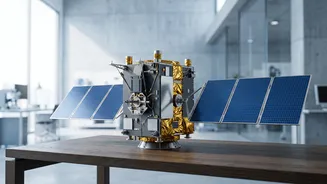
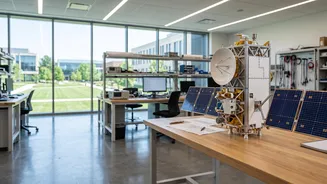
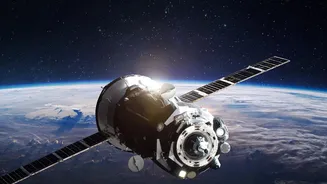
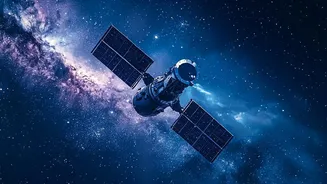
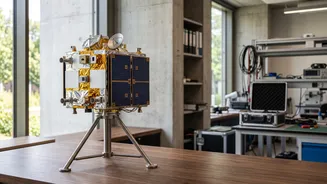
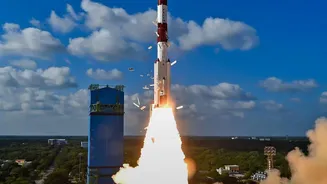
with space. This includes manufacturing satellites, building launch vehicles, operating ground stations, and providing satellite-based services like navigation (GPS), telecommunications, and weather forecasting. A rapidly growing segment involves analysing the vast amounts of data sent back from space to inform agriculture, urban planning, disaster management, and climate monitoring. India's space economy, currently valued at around $8.4 billion, is projected to surge to nearly $44 billion by 2033, creating a massive demand for skilled professionals.
ISRO's Mission to Educate
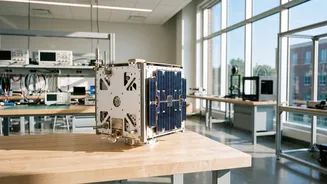
To prepare the next generation for this boom, ISRO has implemented a strategy to “catch them young.” Its flagship initiative is the Young Scientist Programme, or YUVIKA (YUva VIgyani KAryakram). This two-week residential program invites meritorious Class 9 students from across the country to various ISRO centres. Participants get a firsthand look at space science and technology through lectures by senior scientists, hands-on activities like building model rockets, and visits to cutting-edge labs. The goal is to ignite curiosity and encourage students to pursue careers in Science, Technology, Engineering, and Mathematics (STEM). Beyond YUVIKA, ISRO also runs internship schemes, student satellite programs, and online knowledge portals like 'Antriksh Jigyasa' to make space education more accessible.
From Classroom Curiosity to a Career in Space
These outreach programs are the first step on a clear pathway to a career. The space sector is no longer limited to government jobs at ISRO. Following policy reforms in 2020, India's space industry has been opened to private participation, leading to an explosion of startups. Today, hundreds of private companies like Skyroot Aerospace, Pixxel, and Dhruva Space are building everything from rockets and satellites to the software that controls them. This has created a vibrant job market hungry for talent. ISRO’s initiatives directly feed this ecosystem by providing students with foundational knowledge and inspiration, making them ideal candidates for roles in both the public and private sectors.
The In-Demand Skills for Tomorrow's Space Sector
A career in the space economy doesn't just mean being an aerospace engineer or a physicist. While those roles remain crucial, the industry's expansion requires a diverse range of skills. Computer science and software engineering are in high demand for developing mission control software, analysing satellite data with AI, and ensuring cybersecurity for space assets. Data scientists who can interpret geospatial information are needed by companies in agriculture, insurance, and urban planning. As the private sector grows, so does the need for professionals in business development, finance, marketing, and even space law to navigate international treaties and regulations. This diversification means students from various academic backgrounds can find a place in India's cosmic journey.