



A New Dawn for Indian Wildlife Tourism
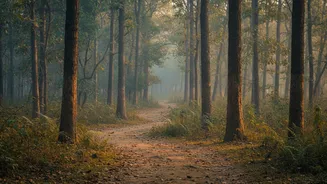
The Uttar Pradesh government's ambitious plan to establish India’s first-ever urban night safari is finally becoming a reality. Inspired by the world-renowned Singapore Night Safari, the project will be developed within the sprawling 2,027-hectare Kukrail
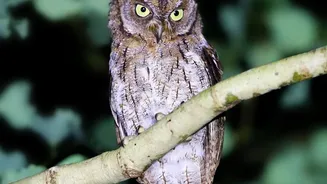
Reserve Forest on the outskirts of Lucknow. This initiative positions Lucknow as a pioneer in innovative urban ecology, aiming to offer a unique experience distinct from any existing zoo or day safari in the country. The project is not just a first for India, but one of only a handful of such nocturnal wildlife parks in the world. The vision is to create an immersive environment where visitors can observe animals that are naturally active after sunset, offering a completely different perspective on wildlife behaviour.
The Long Road to a Green Light
The project's journey has been a long one, marked by significant legal and environmental examination. First announced in 2022, the proposal immediately faced challenges due to its location within an ecologically sensitive reserve forest. As per a Supreme Court order from February 2024, any new zoo or safari requires the apex court's prior permission, leading to a detailed review process. Environmental groups and petitioners raised valid concerns about commercialisation within a protected forest, the potential impact on wildlife, and the felling of trees. A three-judge bench headed by the Chief Justice of India heard the case, acknowledging the concerns but stating that development should not come to a complete standstill. The court’s approval, granted in mid-July 2026, is therefore conditional, mandating strict compliance with safeguards recommended by the Central Empowered Committee (CEC), the Central Zoo Authority (CZA), and the Ministry of Environment.
What Was Approved (And What Wasn't)
The final approved project looks different from the initial proposal, reflecting the rigorous review process. The state government's plan to relocate the century-old Nawab Wajid Ali Shah Zoological Park (Lucknow Zoo) to Kukrail was firmly rejected by the CEC and the court. The historic zoo will remain at its current location. Furthermore, a proposal for a wide four-lane road through the forest was scaled back to a more modest two-lane route to minimise the ecological footprint. An 'adventure zone' that was part of the original design, featuring an augmented-reality theatre and other entertainment facilities, has also been removed from the plan. The project that moves forward now consists of two main components: the night safari and a new, modern day zoo to be constructed at the Kukrail site, with over 70% of the designated area to be maintained as green cover.
An After-Dark Safari Experience
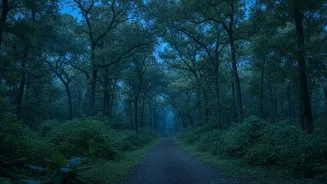
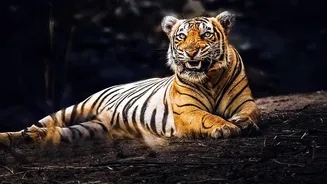
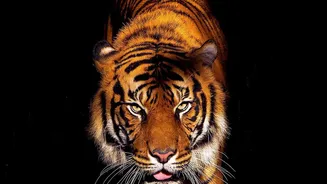
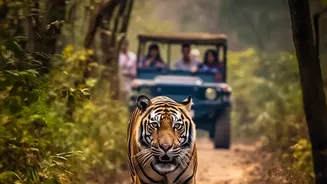
Visitors to the Kukrail Night Safari can anticipate a truly unique wildlife encounter. The experience is being designed to allow observation of nocturnal animals during their most active hours, a stark contrast to conventional daytime zoos where many species are often resting. Guests will travel on silent, battery-operated trams along a planned 5.5-kilometre trail, with the tour expected to last about 40 minutes. A special lighting system designed to mimic natural moonlight will illuminate the enclosures, ensuring visitors can see the animals clearly without causing them disturbance or discomfort. The habitats for species like the Asiatic lion, Bengal tiger, leopard, and hyena will be large and naturalistic, using open-air enclosures with moats instead of traditional cages to provide an immersive experience.
More Than Just an Attraction
Beyond being a major tourist attraction, the Kukrail project is framed around conservation and education. The Kukrail forest is already home to a highly successful Gharial Rehabilitation Centre, established in 1975, which has played a crucial role in conserving the critically endangered species. The new development aims to build on this legacy. The master plan includes conservation breeding facilities, wildlife interpretation centres, and educational programmes to raise public awareness about nocturnal wildlife and the importance of habitat protection. The entire project will be solar-powered, reinforcing its eco-friendly credentials. With a cost of approximately ₹1,500 crore, the safari is a significant investment in creating a hub for both tourism and wildlife research. The Supreme Court has also instituted a strict monitoring mechanism, with the CEC tasked with conducting periodic site visits to ensure all environmental conditions are met.