


A New Cosmic Perspective
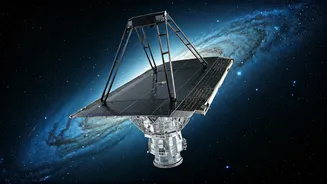
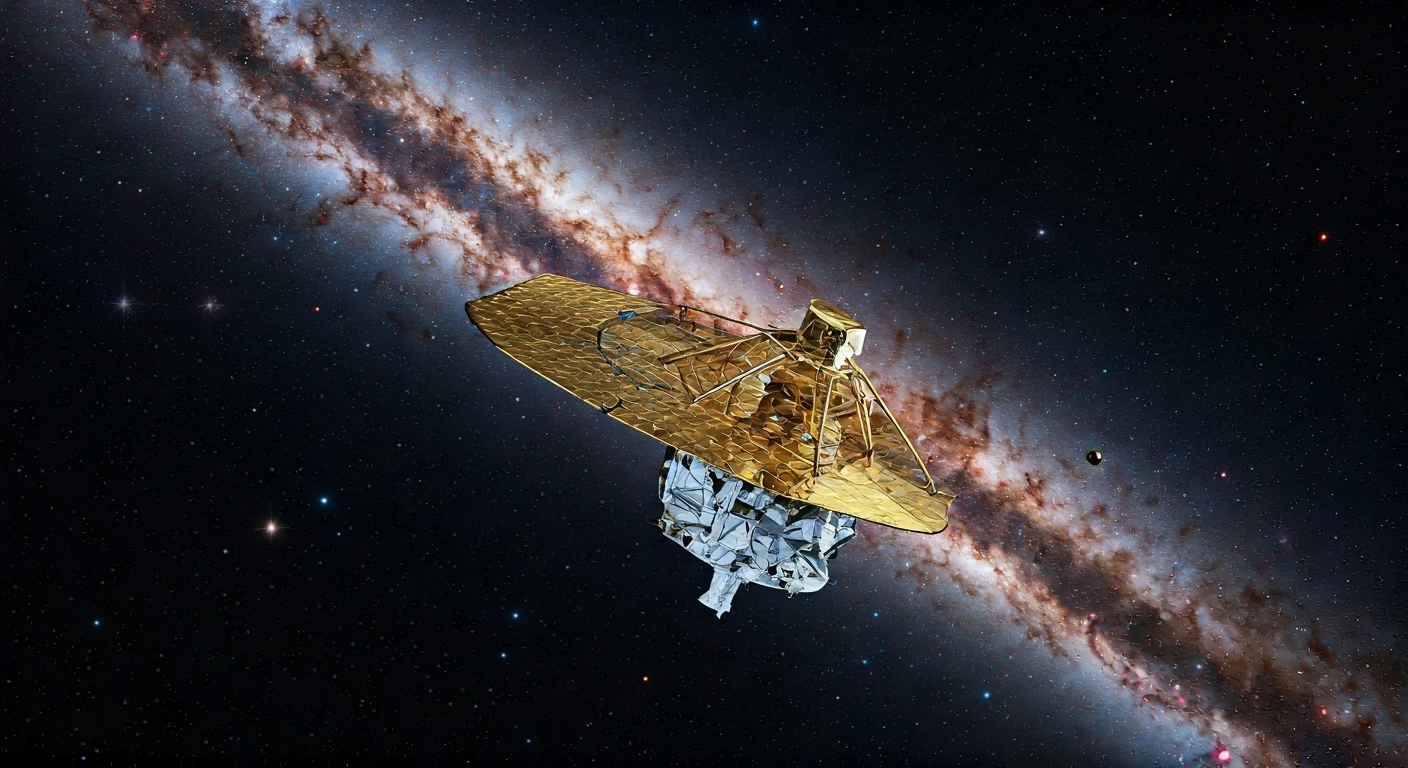
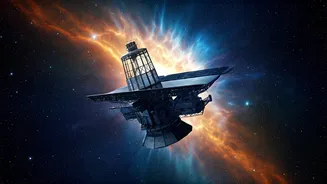
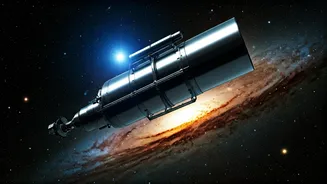
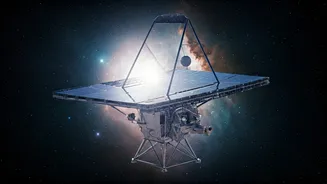
Set to launch as early as August 30, 2026, the Nancy Grace Roman Space Telescope is NASA's next-generation observatory, named after the agency's first chief of astronomy. [1, 13, 16] While the James Webb Space Telescope was designed to peer deep into
cosmic history with a narrow, focused gaze, Roman is built for breadth. [11, 21] Its primary mirror is the same size as Hubble's—2.4 meters in diameter—but its technology allows it to see a much larger slice of the sky at once. [3] The telescope's Wide Field Instrument (WFI) will have a field of view at least 100 times larger than Hubble’s infrared camera, enabling it to map the sky more than 1,000 times faster. [2, 13, 22] A single image from Roman will contain the detail of 100 Hubble pictures, creating vast, high-resolution panoramas of the universe. [3, 19]
Unraveling the Dark Universe
Two of the biggest mysteries in cosmology are dark energy and dark matter. Together, they are thought to make up about 95% of the universe, yet we know very little about them. [20] Roman's primary mission is to tackle these puzzles head-on. [1, 6] Dark energy is the mysterious force believed to be causing the universe's expansion to accelerate. [20] Roman will study it in three ways: by measuring the distances to thousands of exploding stars called Type Ia supernovae, by mapping the 3D positions of millions of galaxies to spot the faint imprint of sound waves from the early universe (Baryon Acoustic Oscillations), and by studying how the light from distant galaxies is bent by the gravity of unseen matter—a technique called weak gravitational lensing. [1, 20] By creating enormous maps of the cosmos, Roman will allow scientists to trace the history of cosmic expansion and the growth of structures, testing whether dark energy's influence has changed over time. [9, 20]
A Galactic Planet Census
Beyond the grand scale of cosmology, Roman is also set to be an unparalleled planet hunter. [4] It will conduct a massive survey of the Milky Way's central bulge, monitoring hundreds of millions of stars to find thousands of new exoplanets. [8, 10] It will use two main techniques. The first is the transit method, where it will watch for the slight dimming of a star as a planet passes in front of it. [4] Astronomers anticipate Roman could find as many as 100,000 transiting planets this way. [4, 10] The second method is gravitational microlensing, which occurs when a star and its planets pass in front of a more distant star, briefly magnifying its light. [4, 8] This technique is sensitive enough to find planets with a wide range of sizes and orbits, including rocky, Earth-sized worlds and even 'rogue' planets that don't orbit a star at all. [12, 17] This will provide the first true statistical census of the planets in our galaxy. [4, 8]
A New Tool for Discovery
In addition to its two main instruments, Roman will also feature a Coronagraph Instrument. [3] This tool is a technology demonstration designed to block the overwhelming glare from a star, allowing the telescope to directly image the faint planets orbiting it. [3, 22] While still experimental, it will be able to detect planets up to a thousand times better than what is possible with other observatories. [10] The telescope has already arrived at NASA's Kennedy Space Center in Florida for its final preparations. [15, 18] Construction and integration were completed ahead of schedule, with the observatory now targeted for launch on a SpaceX Falcon Heavy rocket. [1, 15] With a primary mission of five years and the potential for a five-year extension, Roman is set to create a vast archive of data that will fuel astronomical discoveries for decades to come. [3, 14]