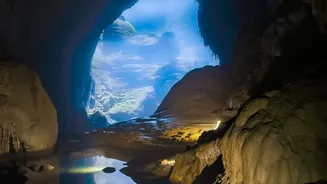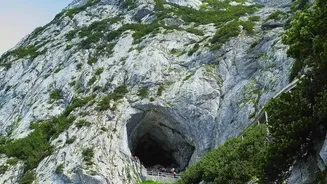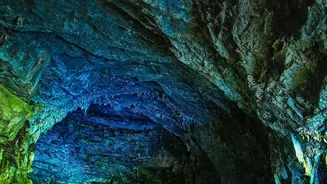







Deep beneath the forested hills of Slovenia lies a world sculpted not by hand, but by water and time. Postojna Cave is more than a natural wonder; it's a journey into a subterranean paradise where every corner reveals a new geological marvel.
The Journey Begins by Train
Your adventure
into this 24-kilometre-long karst cave system begins unlike any other. Instead of a steep descent on foot, you board the world's only double-track cave railway. For over 140 years, a train has been whisking visitors deep into the mountain, a tradition that started with guides manually pushing carts in 1872 and has since evolved into a modern electric train. The 3.7-kilometre ride winds through immense, illuminated caverns and narrow tunnels, offering a cinematic preview of the wonders ahead. You'll glide past vast halls where rock formations glitter under strategic lighting, building anticipation for the walking tour to come. The constant cool temperature, around 10 degrees Celsius, serves as a crisp reminder that you are entering a different realm.
A Cathedral Carved by Water
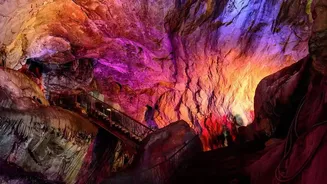
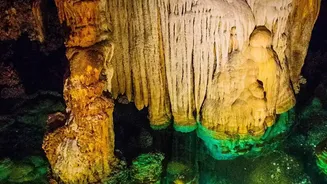
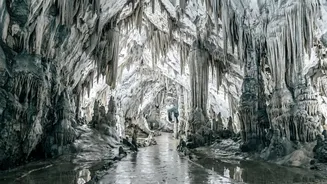
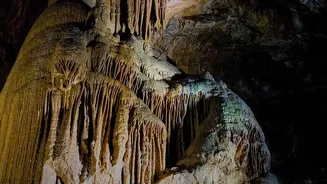
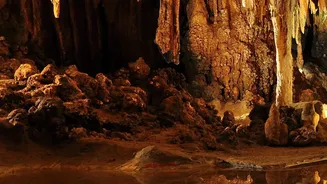
Once you disembark, a guided walk begins through a labyrinth of natural art. The cave is a gallery of speleothems—the catch-all term for mineral deposits in caves. You'll see delicate, hollow 'spaghetti' stalactites hanging like petrified rain, and massive curtains of stone that appear to ripple in the soft light. These formations are created by the slow drip of water carrying dissolved calcite, a process so gradual it can take a century to form a single centimetre of rock. The chambers vary in colour, from the rust-tinged Red Hall, coloured by iron minerals, to the White Hall, where pure calcite creates dazzlingly bright formations. The sheer scale is breathtaking, culminating in the Concert Hall, a cavern so vast and with such remarkable acoustics it can hold up to 10,000 people and has hosted symphony orchestras.
Brilliant, A Chandelier of Stone
While the entire cave is a spectacle, one formation holds the title of its official symbol: the 'Brilliant'. This magnificent five-metre-tall stalagmite stands alone, a shimmering, snow-white beacon in a hall of reddish stone. Its bright white appearance is due to a thin layer of calcite that is continuously deposited by dripping water, giving it a fresh, glistening coat. Nearby stands another giant, the 16-metre 'Skyscraper' stalagmite, estimated to be around 150,000 years old. These formations are not just geological curiosities; they are ancient sculptures that tell the story of the Pivka River, which carved this underground world over millions of years.
Meet the Cave’s Oldest Residents
Postojna is not just a place of stone; it is a living ecosystem home to over 100 species. The most famous resident is the olm, or Proteus anguinus, an aquatic salamander affectionately known as the 'human fish' for its pale, translucent skin. Ancient folklore even suggested they were baby dragons washed out from a dragon's lair deep within the mountain. These blind, cave-dwelling creatures are perfectly adapted to a life in darkness, can live up to 100 years, and can survive for years without food. Towards the end of the tour, visitors can see these remarkable animals in a specially maintained aquarium, offering a rare glimpse into the unique biology of the subterranean world. In 2016, the cave became a global sensation when olm eggs hatched in the aquarium for the first time in centuries, a historic event that highlighted the fragility and wonder of this hidden ecosystem.