




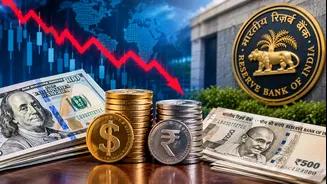


The RBI's Primary Weapon: The Repo Rate
At the heart of the RBI's toolkit is the 'repo rate'. In simple terms, this is the interest rate at which the central bank lends money to commercial banks. Think of it as the master switch for borrowing costs in the country. When the RBI wants to control
rising prices (inflation), it increases the repo rate. This makes borrowing more expensive for banks, a cost they pass on to consumers and businesses through higher loan EMIs and credit card rates. Conversely, to stimulate a slowing economy, the RBI cuts the repo rate, making money cheaper to borrow and encouraging spending and investment.
Connecting Interest Rates to the Rupee's Strength
The repo rate has a powerful, if indirect, effect on the Indian rupee's value against other currencies like the US dollar. The mechanism works through foreign investment. When the RBI raises interest rates, it makes investing in Indian financial assets more attractive to global investors seeking higher returns. This increased demand for rupee-denominated assets means more foreign currency (like dollars) is converted into rupees, strengthening our currency. On the other hand, if India's interest rates are low compared to other major economies like the US, foreign investors might pull their money out, selling rupees to buy dollars. This outflow weakens the rupee.
From a Weaker Rupee to Higher Import Bills
So, why does a weaker or stronger rupee matter? It directly impacts the cost of everything India buys from the rest of the world. India is heavily reliant on imports for critical commodities, including crude oil, electronics, and machinery. These goods are typically paid for in US dollars. When the rupee weakens, it means we need to spend more rupees to buy the same number of dollars. For instance, if the exchange rate moves from ₹95 to ₹96 per dollar, an imported item costing $1,000 now costs ₹96,000 instead of ₹95,000. This increase in cost is known as imported inflation.
What It Means for Your Household Budget
This isn't just a problem for large corporations. The impact trickles down to every citizen. Since India imports over 80% of its crude oil, a weaker rupee quickly leads to higher petrol and diesel prices. This raises transportation costs for everything from vegetables to consumer goods. The prices of imported electronics like smartphones and laptops, which rely on components bought in dollars, also rise. Even planning for overseas education or foreign travel becomes more expensive, as you need more rupees to cover dollar-denominated fees and expenses.
The RBI's Delicate Balancing Act
The RBI's job is a constant balancing act. If it raises interest rates too aggressively to strengthen the rupee and fight inflation, it risks slowing down economic growth by making credit too expensive for businesses and consumers. If it cuts rates to boost growth, it may weaken the rupee and fuel inflation through higher import costs. The central bank must also consider global factors, such as interest rate decisions by the US Federal Reserve, geopolitical tensions, and crude oil price volatility, all of which influence capital flows and the rupee's value. Therefore, the RBI often uses a combination of tools, including direct intervention in currency markets, to manage volatility without derailing its primary goals of price stability and economic growth.