


A New Chapter in Low Earth Orbit
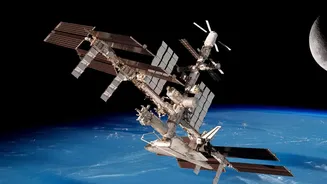
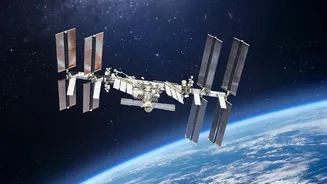
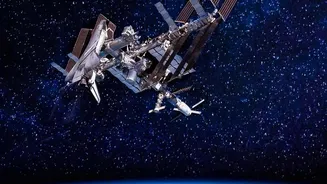
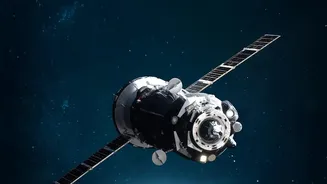
For over two decades, the International Space Station (ISS) has been humanity's sole continuous outpost in space. But with the iconic station scheduled for deorbiting around 2030, a critical question arises: what comes next? Instead of building a government-funded
successor, NASA is championing a new approach. Through its Commercial Low Earth Orbit Destinations (CLD) program, the agency is seeding a competitive commercial marketplace, fostering the development of privately owned and operated space stations. The goal is to avoid a gap in U.S. presence in orbit and transition NASA from being a landlord to one of many customers in a bustling LEO economy. This strategic pivot is igniting a new space race, not between nations, but between innovative companies vying to build the orbital business parks, research labs, and habitats of the future.
The Key Players and Their Visions
Several companies are at the forefront of this commercial charge. Axiom Space is pursuing a unique strategy, initially building modules that will attach to the ISS. These modules will later detach to become a free-flying station, Axiom Station, as early as 2028. Another major contender is Orbital Reef, a joint venture by Blue Origin and Sierra Space, envisioned as a "mixed-use business park" in orbit offering services to research, industrial, and tourism customers. A key feature of Orbital Reef will be Sierra Space's Large Integrated Flexible Environment (LIFE) modules—inflatable habitats that launch in a compressed state and expand to the size of a multi-story apartment in space. Meanwhile, the company Vast is developing its Haven-1 station, with the ambitious long-term goal of building larger spinning stations that can generate artificial gravity, potentially mitigating the negative health effects of long-duration spaceflight.
More Than Just a View: The Science of Zero-G
While space tourism grabs headlines, the primary driver for these new stations is research. Microgravity is a unique environment that allows scientists to study phenomena impossible to replicate on Earth. The absence of gravity affects everything from fluid dynamics to crystal growth and cellular biology. This makes orbital labs invaluable for breakthroughs in materials science, developing new alloys, and producing purer fiber optics. In medicine, zero-g research helps scientists understand disease progression, such as osteoporosis and muscle atrophy, and develop new drugs. Companies will be able to lease space on these commercial stations to conduct proprietary research, potentially leading to new products and manufacturing techniques. For example, pharmaceutical companies can study protein crystallization to design more effective drugs, a process greatly enhanced in a weightless environment.
The Business of Orbit
The success of these next-generation stations hinges on a viable business model. Unlike the ISS, which is primarily funded by taxpayers, these commercial outposts must be profitable. Their customer base is expected to be diverse. National space agencies like NASA will be anchor tenants, purchasing services and astronaut time to continue their research. However, the real growth is expected to come from the private sector. This includes universities, research institutions, and companies in fields like biotechnology and materials manufacturing. Even sovereign nations without their own space programs could become customers, sending their astronauts for research and training. While the upfront costs are immense and the market is unproven, these companies are betting that by providing reliable and more affordable access to orbit, they can unlock a torrent of innovation and commercial activity, creating a self-sustaining economy hundreds of miles above the Earth.