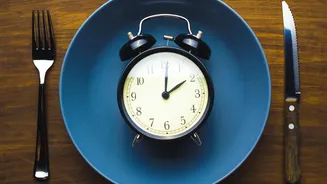







Understanding Your Body's Clocks
Your body operates on a 24-hour internal master clock in the brain, known as the circadian rhythm. This rhythm, primarily synced by light, tells you when to wake up and when to feel sleepy. But it’s not the only clock you have. Organs like your liver,
pancreas, and gut have their own “peripheral clocks,” which are strongly influenced by your meal timing. When you eat late, you send a signal to these digestive clocks that it's an active, energetic time, even as your brain’s clock is trying to wind down for sleep. This clash, called circadian misalignment, can disrupt functions like glucose control and, crucially, your ability to rest.
The Problem with a Heavy Late Dinner
Eating a large or heavy meal within three hours of bedtime forces your body to multitask. Instead of focusing on rest and repair, your digestive system is forced to work overtime. This process, known as thermogenesis, can raise your core body temperature just when it should be dropping to facilitate sleep. A full stomach also increases the risk of acid reflux when you lie down, leading to discomfort and micro-arousals that fragment your sleep, even if you don't fully wake up. Research shows that people who eat at consistent times and finish their meals several hours before bed tend to sleep better and report lower stress levels.
The Power of an Afternoon Main Meal
Shifting your largest meal to the early afternoon—say, between 1 p.m. and 3 p.m.—aligns your food intake with your body’s natural metabolic peak. At this time, your digestive system is primed to handle a larger load of calories and nutrients efficiently. By the time evening rolls around, the heavy lifting of digestion is already done. Your body isn't spending precious energy breaking down a big meal. Instead, it can fully dedicate its resources to the restorative processes of sleep, allowing for a smoother transition into deeper sleep stages.
Why Deep Sleep Matters So Much
Deep sleep, also known as slow-wave sleep, is the most physically restorative stage of sleep. It's when your body repairs tissues, builds bone and muscle, strengthens the immune system, and consolidates memories. During deep sleep, your heart rate and breathing are at their slowest, and your muscles are fully relaxed. Most of this crucial stage occurs in the first half of the night. By finishing your digestive tasks early, you give your body a clear runway to enter and sustain this vital phase, helping you wake up feeling genuinely refreshed and restored.
Making the Practical Switch
Transitioning your eating schedule doesn't have to be an overnight overhaul. Start by gradually making your lunch more substantial and your dinner lighter. A heavy afternoon meal should be rich in protein, healthy fats, and complex carbohydrates to keep you full. Your evening meal can then become something smaller and easier to digest, like a soup, a salad, or a small portion of lean protein and vegetables. Studies suggest that a higher-fiber diet is linked to more time spent in deep sleep, while higher saturated fat and sugar can lead to lighter, more broken sleep. Listen to your body and adjust portion sizes as needed. The goal is to finish dinner at least two to three hours before you plan to go to bed, giving your digestive system ample time to wind down.