



The Farmer's New Eyes in the Sky
For generations, farming has been a hands-on, ground-level endeavor. Farmers walked their fields, relying on experience and a trained eye to spot trouble. But in a high-value crop like grapes, where quality is everything, problems like water stress, nutrient
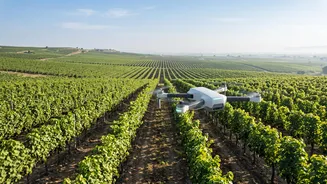
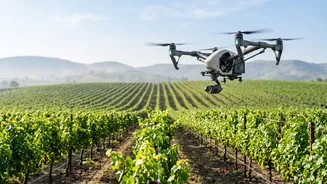
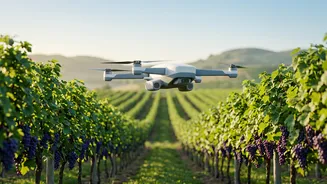
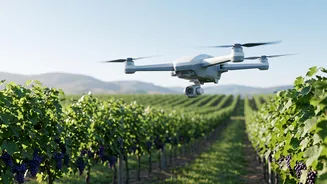
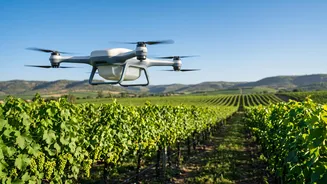
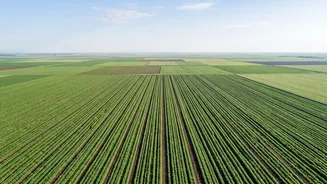
deficiencies, or pest attacks are often invisible until it's too late. Precision agriculture is changing this paradigm. At its heart is the idea of using technology to give crops exactly what they need, precisely when and where they need it. Drones have become the primary tool in this revolution, acting as a farmer's 'eyes in the sky'. They fly over vast vineyards, capturing a level of detail impossible to achieve from the ground, transforming farm management from guesswork into a data-driven science.
Seeing the Unseen with Advanced Sensors
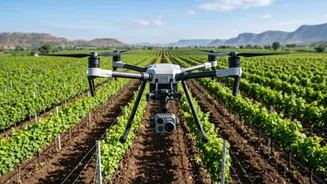
These are not just camera drones. Agricultural drones are equipped with advanced multispectral and thermal sensors that see beyond the visible spectrum. One of the most critical technologies they use is NDVI, or the Normalized Difference Vegetation Index. In simple terms, healthy, vigorous plants reflect light differently than stressed ones. NDVI analysis creates a detailed map of the vineyard, color-coding areas based on plant health. A farmer can instantly see which specific rows or even individual vines are struggling long before their leaves start to yellow. Thermal cameras add another layer of insight, detecting temperature variations that can indicate water-stressed zones in a field, allowing for optimised irrigation.
From Data Maps to Actionable Decisions
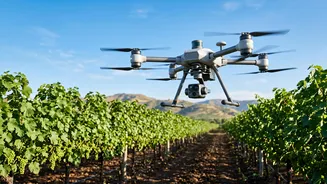
Collecting data is only half the battle; the real magic happens when that information is turned into action. The detailed health maps generated by drones empower Nashik's farmers to move from broad, field-wide treatments to highly targeted interventions. Instead of blanket-spraying an entire vineyard with pesticides or fertilisers, they can now dispatch sprayer drones to treat only the specific, identified problem areas. This precision approach has multiple benefits. It dramatically reduces the amount of chemicals and fertilisers used—by as much as 30-40%—which cuts costs and lessens the environmental impact. It also saves immense quantities of water, a critical advantage in a water-scarce region. Reports show drone spraying can be done up to five times faster than traditional methods, freeing up labour for other critical tasks.
The Link Between Precision and Quality Grapes
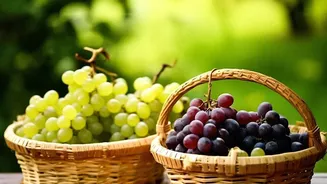
So how does this translate to a better grape? The key is uniformity. For winemaking, consistency is paramount. Grapes that ripen at different rates create an unbalanced final product. By using drone data to address issues proactively, farmers can ensure their entire crop reaches optimal health. Targeted nutrient application ensures all vines have the resources to develop sugars properly. Precise irrigation prevents water stress that could hinder grape development, while also avoiding overwatering that can dilute the fruit's flavour. Early and targeted pest control prevents damage that can compromise the quality of the harvest. The result is a more uniform vineyard, leading to a harvest where grapes reach their ideal sugar, acidity, and phenolic ripeness at the same time—the very definition of a high-quality yield.
Nashik's Vineyards Embrace the Future
This technological shift is not just theoretical; it's actively being deployed across Nashik. Local drone service companies are providing farmers with the tools and expertise needed for precision spraying and crop monitoring. While adoption is still growing, the benefits are clear. Farmers report not just cost savings but also significant improvements in crop health and yield. By blending the centuries-old art of viticulture with cutting-edge aerial technology, Nashik’s grape growers are securing their position on the world stage. They are proving that embracing innovation is key to enhancing the quality of their product, ensuring profitability, and cultivating a more sustainable future for one of India's most celebrated agricultural regions.