




What is a Super-Earth?
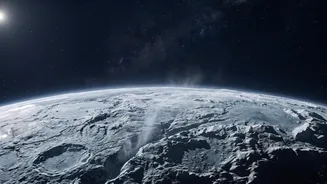
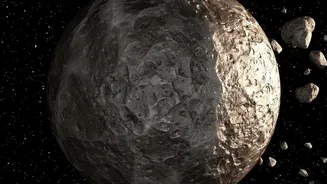
Imagine a planet bigger than Earth, but smaller and denser than icy giants like Neptune. This is a 'super-Earth', one of the most common types of planets found in our galaxy, yet absent from our own solar system. These worlds are fascinating targets for
astronomers. Take 55 Cancri e, a super-Earth about 41 light-years away. It's nearly twice Earth's diameter and slightly more dense, suggesting a rocky composition similar to our own world. However, its proximity to its star makes it a hellish landscape, with a surface likely covered in a magma ocean. Despite the extreme conditions, studying the atmospheres of planets like 55 Cancri e is crucial, as it provides the best evidence to date for atmospheres on rocky planets outside our solar system.
Reading an Alien Atmosphere
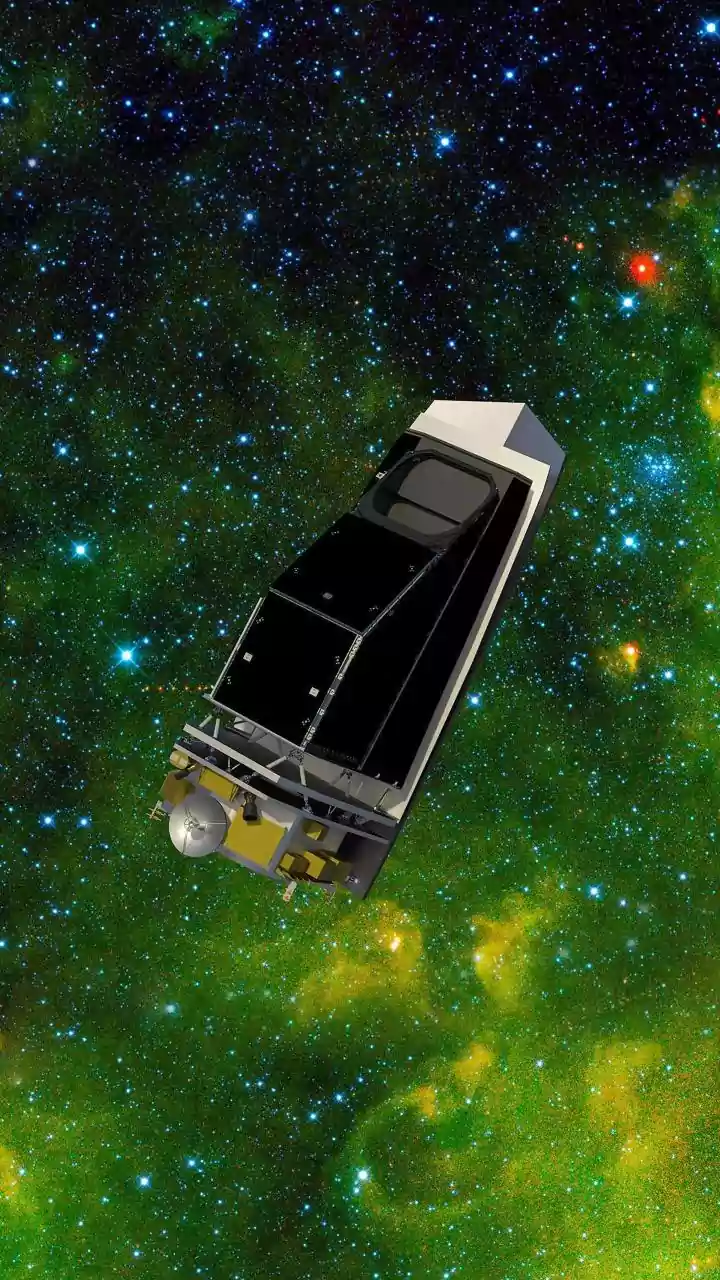
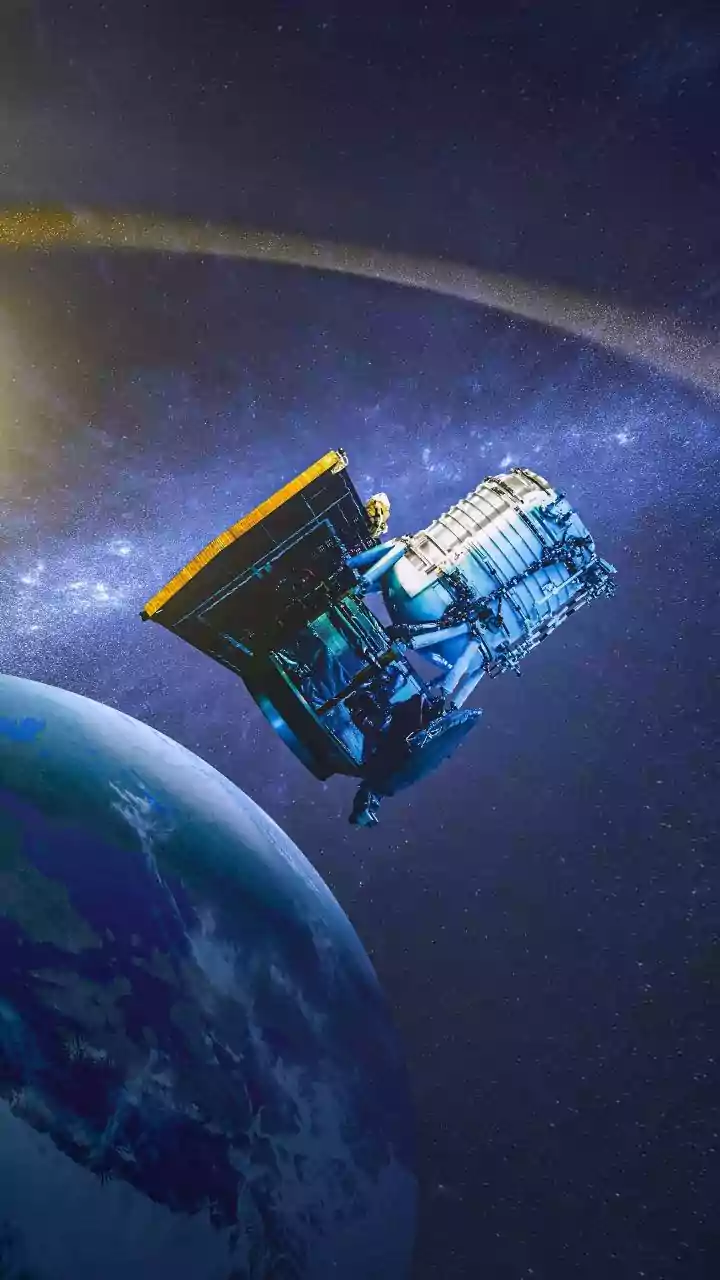
So how does JWST 'see' an atmosphere from light-years away? It uses a technique called spectroscopy. When a planet passes in front of its star from our perspective, a tiny fraction of the starlight filters through the planet's atmosphere. Different gases in that atmosphere absorb specific wavelengths, or colours, of light. The JWST's powerful infrared instruments can detect these minute dips in the starlight, creating a spectrum—a sort of chemical fingerprint of the atmosphere. This allows scientists to identify molecules like carbon dioxide, methane, and even water vapour. For 55 Cancri e, this method revealed a cooler-than-expected temperature, suggesting a substantial atmosphere is present to distribute heat, instead of just bare, superheated rock.
The Significance of Gases
The headline of the story is often water vapour, as it is a key ingredient for life as we know it. However, the recent compelling findings on rocky super-Earths have focused more on carbon-based gases. On 55 Cancri e, the evidence points towards a thick atmosphere rich in carbon dioxide or carbon monoxide. Scientists theorize this is not a primordial atmosphere from the planet's formation, which would have been blasted away by stellar radiation long ago. Instead, it is likely a 'secondary' atmosphere, constantly being replenished by gases bubbling out of the planet's vast magma ocean. This discovery is revolutionary because it shows that even intensely irradiated rocky worlds can maintain an atmosphere through geological activity.
Habitable? Not So Fast
Finding an atmosphere, even one with potential biosignatures, does not mean we've found a habitable world. Planets like 55 Cancri e are far too hot for life as we know it, with dayside temperatures estimated around 1,540 degrees Celsius. Similarly, another intriguing target, GJ 486 b, is also scorching hot at around 430 degrees Celsius. While initial observations hinted at water vapour, scientists are cautious, noting the signal could have come from the star itself rather than the planet. The goal of studying these 'hell worlds' is not to find aliens there, but to understand the processes that create and sustain atmospheres on rocky planets. This provides crucial insight into the early conditions of planets in our own solar system, like Earth and Venus, and helps refine the search for life elsewhere.
A New Era of Discovery
The James Webb Space Telescope is truly enabling a new type of science. Before JWST, confirming an atmosphere around a rocky exoplanet was exceptionally difficult. Now, we are entering an era where we can characterize them. Other targets are also yielding fascinating, though sometimes conflicting, results. For LHS 1140 b, a rocky world in its star's habitable zone, ground-based telescopes detected helium, suggesting an atmosphere. However, subsequent, more detailed observations by JWST did not find helium, highlighting the complexity of this research. Each new observation, whether it confirms or challenges our models, pushes the frontiers of what we know. These early findings are not the final answer in the search for life, but rather the first, essential chapters in a much longer story.